

I scroll through the news on my phone, hands shaking as I read. I’m oscillating between grief and rage.
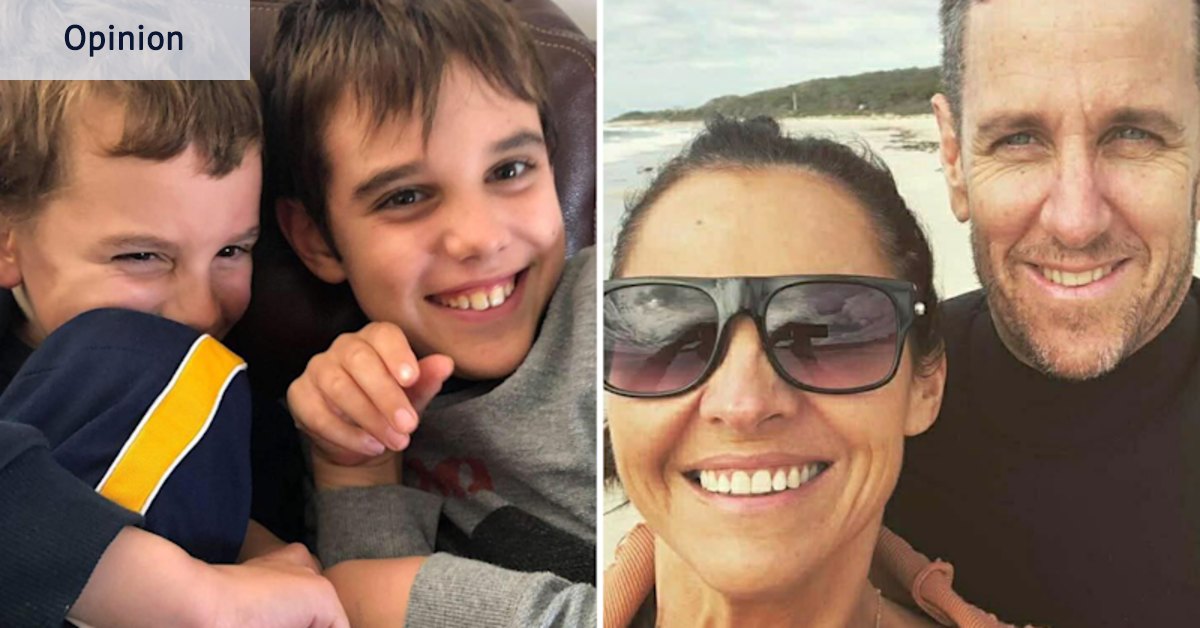
Two autistic children, Leon and Otis Clune, are dead. Evidence suggests their parents killed them in a murder-suicide after cuts to their NDIS funding. Their deaths were tragic and preventable, and I feel such sorrow at their loss.
But I don’t have a chance to sit with that, because the coverage of their murder leaves me incensed and hurting in a whole new way.
Headlines proclaimed: “No choice: parents reached breaking point,” and, “Mother’s tragic struggle.” Almost every article mentions that the brothers had “significant health challenges”. One article quoted the boys’ neighbour, who said, “It is a very, very sad thing, but in this case, you know the two teenagers there were non-verbal.”
Whether Leon, 16, and Otis, 14, communicated verbally or non-verbally is in no way relevant to their murder (though Leon, reportedly, was verbal).
This kind of viewpoint is dangerous. And it’s not disabled people alone who are affected. For too long we saw perpetrators of domestic violence blithely described as an otherwise “good bloke”. We’re slowly learning that by failing to hold the perpetrator to account we minimise the victims, effectively blaming them for their fate.
We had the Royal Commission into Violence, Abuse, Neglect and Exploitation of Disabled people in Australia. Four years on, how are we still having this conversation?
Media Diversity Australia has a guide to responsible reporting on disability but we’re still getting this catastrophically wrong.
The articles are bad but the comments under them are even worse.
Writer and appearance activist Carly Findlay posted on social media about the litany of ableism in comments that called the murder “an act of love,” or where commenters noted that they, “understand why [the parents] did it,” or “don’t condone murder, but…”
But, what? Murder is murder. These commenters wouldn’t call themselves ableist and likely would have no understanding of the harm they’re causing. Or perhaps they do, and they don’t care.
As Findlay wrote, “No one would ever say these things about the murders of non-disabled people.”
I share Findlay’s distress at those comments, but I have years of disability pride behind me, as well as a psychologist and support network who affirm that my disability is not a problem, that it does not determine or diminish my value. How will this impact disabled people without my privileges, especially autistic children, up to 80 per cent of whom also experience mental illness?
We shouldn’t have to see the worth of our lives debated, our access needs used as justification for murder.
Let’s be clear: killing disabled people is not mercy, nor an “act of love”. Our murder is not excusable. Disabled people deserve to live.
But reading these articles without lived experience, without exposure to disabled people and community, could easily lead people to think otherwise.
Sadly, disabled people are used to this kind of media treatment. We saw it at the height of COVID-19, when some people highlighted that COVID posed the greatest risk for people with “underlying conditions,” as though our deaths were expected, and our lives mattered less. We see it when the NDIS and the people it supports are framed as a burden on the economy.
Leon and Otis Clune should be alive. That’s the story. Not their “special needs,” not their “health challenges” or the “struggle” they caused their family. Their lives mattered.
The system failed Leon and Otis Clune. We failed them.
I’m not alone in my despair and fury. Disability Discrimination Commissioner Rosemary Kayess denounced the “dangerous narrative” surrounding the case of Leon and Otis, and asserted that, “the fact that the children may have been autistic and required supports should not be the basis for any justification of their murder”.
CEO of Children and Young People with Disability Australia, Skye Kakoschke-Moore, urged individuals and organisations to “take every opportunity to affirm that children with disability are not a burden”.
Disabled people are not a burden on our parents. We’re not a burden on the economy. We’re not a burden, full stop. If you think otherwise, you should damn well reconsider. If not for other people, then for yourself. Disability is the only marginalised group that anyone can join at any time. Age disables all of us in different ways. One day, you’ll likely be one of us, and I guarantee you’ll be angry too.
We are all complicit in societal understandings of disability. Attitudes – about disability or anything else – are not inherent. They’re built and shaped by conversations, by policies and by media coverage.
Leon and Otis Clune are dead. The very least we can do – must do – is respect them. The very least we can do is challenge the way we think, talk and write about disability and disabled people.
We owe it to them. Non-disabled people, you owe it to us.
Laura Pettenuzzo is a disabled writer and accessible communications professional.
The Opinion newsletter is a weekly wrap of views that will challenge, champion and inform your own. Sign up here.
 Laura Pettenuzzo is a disabled writer and accessible communications professional.
From our partners
Read the full article here