



By Saturday, winds would be calmer in Victoria’s north, but still blustery across the state’s south, and drop to between 30km/h and 50km/h (compared with between 60km/h and 80km/h on Friday). Sunday would be calmer still, Hines said.
Crews will start taking stock of the damage across Victoria at first light on Saturday, after state response controller Alistair Drayton was faced on Friday with the most emergency warnings he has seen in years.
Smoke surrounds the town of Alexandra on Friday.Credit: Luis Enrique Ascui
“It being a catastrophic day, it would be really negligent of us to do what we would normally do on a normal fire, which is to go in immediately with impact assessment crews to understand losses,” Drayton said.
Firefighters spent much of Friday battling two huge blazes in the state’s centre and north-east, before strong winds and high temperatures in the afternoon ignited fast-moving grassfires across the state.
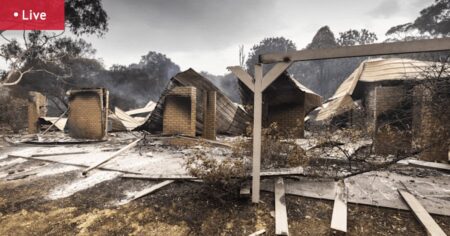
At 8pm, the state’s online bushfire dashboard was a sea of red alerts, with evacuation orders issued for towns including Harcourt, south of Bendigo, Skipton in western Victoria, as well as Kinglake and Marysville, which were devastated during the 2009 Black Saturday fires. Fires ripped through buildings in Harcourt, but the full extent of the damage won’t be known until the blaze is brought under control.
Footage of a drive through the small town revealed a mess of twisted metal and charred debris, with some fires still actively burning in the rear of businesses.
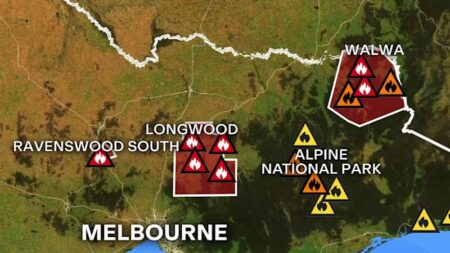
Of the two major blazes, it was the massive Longwood fire, sparked on Thursday, that was at the centre of firefighters’ worries. By Friday night, the Longwood fire covered 145,249 hectares, with an 182-kilometre edge that was marching steadily south-east towards larger centres, including Yea and Alexandra. On Friday night, fires surrounded Alexandra, with crews fighting desperately to save the town.
Premier Jacinta Allan’s community was among those evacuated.
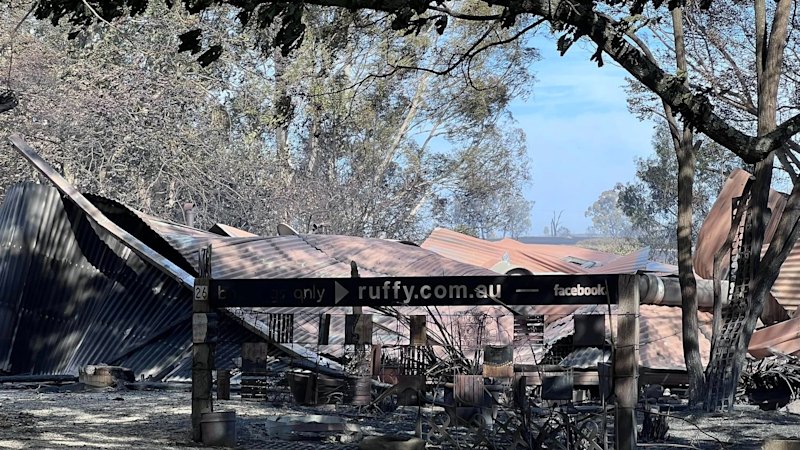
On Friday morning, reports emerged from the tiny hamlet of Ruffy, which lay directly in the fire’s path. At least 10 homes were destroyed there, along with the community centre and telephone exchange. A firefighter suffered third-degree burns and was taken to hospital. The true toll there will only be known when it is safe enough to get fire crews in to the town.
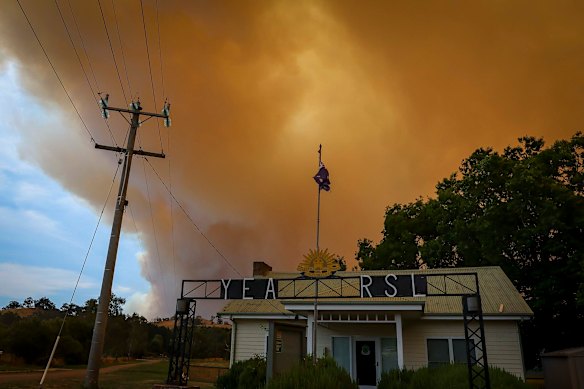
Rising smoke over the Yea RSL on Friday.Credit: Eddie Jim
“It looks like an atomic bomb has gone off,” local CFA captain George Noye told ABC Radio.
“[I’m] just down the main street at the moment, we’ve lost the old school, the old Ruffy produce store is gone, three houses on the main street. We’ve lost countless homes across the area. Ten of my firefighters that I know of have lost homes.” The destroyed former school had been converted to a community centre; Ruffy does not have a school.
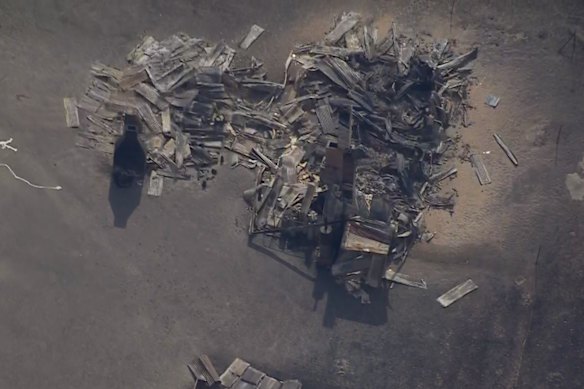
An aerial view of a property destroyed in Ruffy.Credit: Nine News
Just to Ruffy’s north, in Longwood East, authorities were mounting a search for three people – two adults and a child – who had earlier been urged to leave. When firefighters later returned to the same address, the house had been destroyed. In nearby Tarcombe, an unconfirmed story emerged of an animal-carer sheltering in a dam with six joeys as fire consumed her property.
In the Yarra Valley town of Marysville, the air was thick with smoke and ash coated the streets. By Friday night, most people had left the area, which usually attracts tourists heading to Lake Mountain Alpine Resort. But in the local Duck Inn pub, owner Hong Yoo stayed put, along with a couple of regulars.
An emergency warning urging residents to leave immediately was issued about 5.15pm on Friday.
“I can’t see anyone in the town, but there’s two people in the pub with me, checking the news,” Hong said, as the regulars chatted in the background. “It’s just smoky. We are very lucky – no wind, the temperature’s a bit down. Honestly, if something happens, I can go to the community centre.”
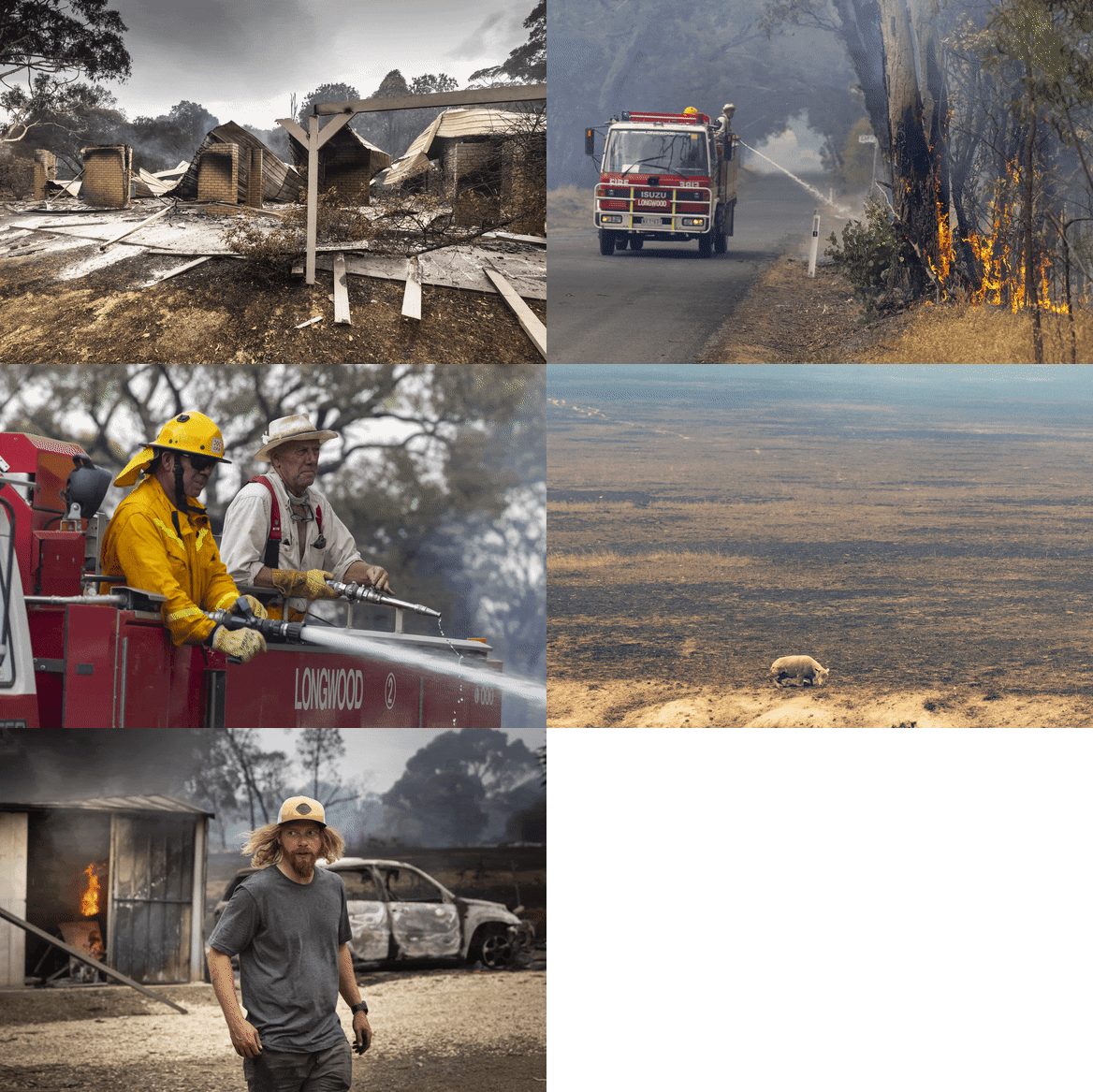
Scenes from the Longwood fire.Credit: Jason South
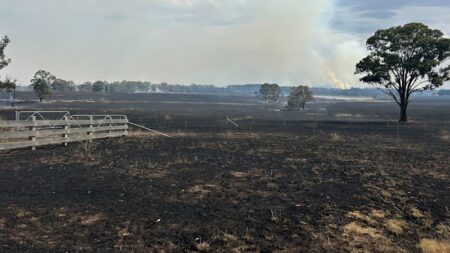
Elsewhere, survivors brought stories of scorched moonscapes, razed houses and dead sheep.
As the Longwood fire advanced, updated modelling suggested strong winds could push the fire towards the towns of Yea and Alexandra, which attracts summer holidaymakers and campers.
By 2pm on Friday, locals were told to stop using water “until absolutely necessary” – as firefighters needed the pressure for their hoses. By 5pm, maps released by authorities suggested the fire was lapping at the edges of Yea and had overrun the nearby hamlets of Molesworth (population 91) and Yarck (population 194).
In Yea, just west of Alexandra, the only sound was the roar of fire trucks beneath the orange sky choked with thick, grey smoke. Every shop was shuttered except service stations and a supermarket, which have stayed open for the fire crews battling blazes in areas surrounding the historic town.
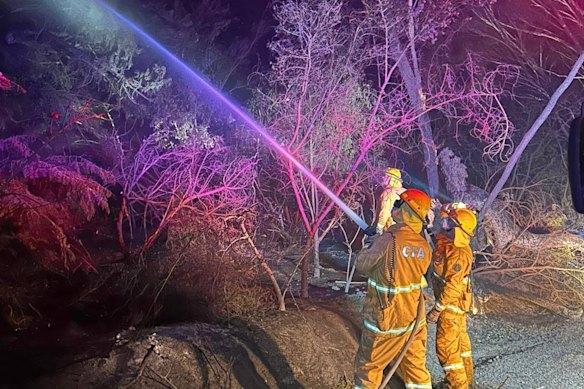
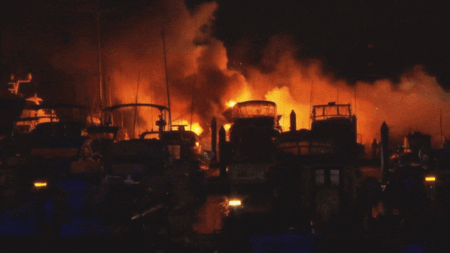
Firefighters battle the Longwood fire overnight on Thursday.Credit: Facebook
Most residents had left the town, but Paul Heyen stayed behind to protect the house he has lived in for more than 40 years. Heyen, who trained as a volunteer firefighter in Tasmania, filled his yard with buckets of water and has a battery-operated hose ready to put out any embers that could land on his home.
Dozens of people have sought shelter from the fires in the regional centre of Seymour, on the fire’s eastern edge. “We’ve got people sleeping in the basketball stadium. There are pets everywhere,” said Claire Ewart-Kennedy, Deputy Mayor of Strathbogie Shire. “It’s pretty confronting.”
As she spoke, the region’s mayor was fighting fires at his property. “This is catastrophic. There are three people missing. We’ve lost significant livestock, property and god knows what else in Ruffy and Longwood,” Ewart-Kennedy said. “This is beyond serious. I’ve never felt so helpless and scared of what’s still to come.”
Further north, a second major blaze covered 100,721 hectares near Walwa, near Albury-Wodonga.
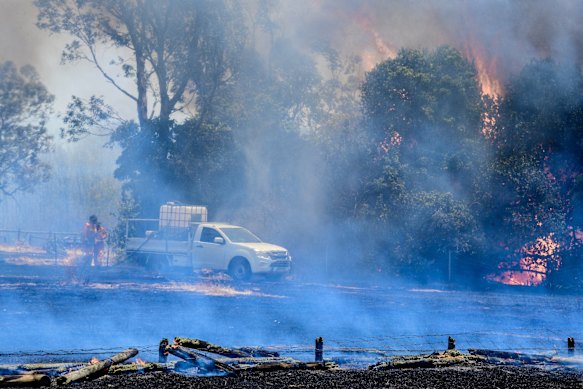
A fire crew battles a blaze in Longwood on Friday.Credit: AAP
The fire tore through bushland and pine plantations on Thursday before emerging on Friday and running south-east towards Corryong.
Firefighters were fearful of a weather change forecast for Friday night, which was expected to push the fire east onto the town. On Friday afternoon, firefighters were urging locals to leave immediately.
Cheryl Winter, owner of the Corryong Courthouse Hotel, said she planned to stay and recently picked up a generator from Albury to keep the town’s top pub running.“We’ll keep the air-cons and the beer tap going for anyone who needs to get in from the heat,” she said.
Weather changes are among the most-dangerous part of fighting a fire as they can turn a blaze’s flank into a long fire front. The cool change that swept through Melbourne about 5pm was not expected to hit the fire-affected regions until well into the night.
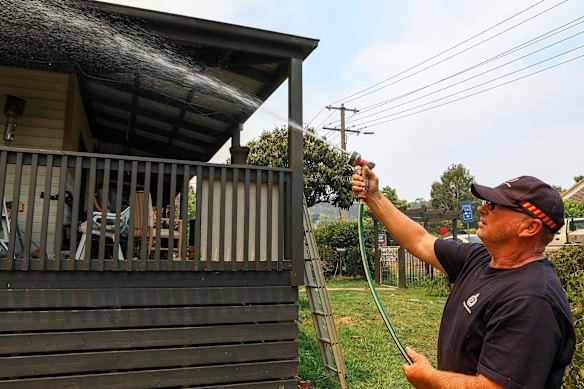
Paul Heyen hoses down his Yea home as fire advanced on the town on Friday.Credit: Eddie Jim
Longwood reached a top of 41.3 degrees, with wind gusts of up to 60km/h forecast across the afternoon. Near Walwa, it reached 37.3 degrees, with gusts approaching 40km/h.
In Natimuk, in Victoria’s west, at least five homes have been lost in a fire.
More than 75,000 houses are without power across Victoria, as major electricity supply companies continue to grapple with dynamic fire conditions. The State Emergency Service has fielded 539 calls for help across Victoria since midnight on Friday – 420 of them for fallen trees.
Damaging winds are only expected to get worse this evening following a wind change, but a 112km/h gust was recorded at Mount Gellibrand, in the state’s south-west, about 1.20pm.
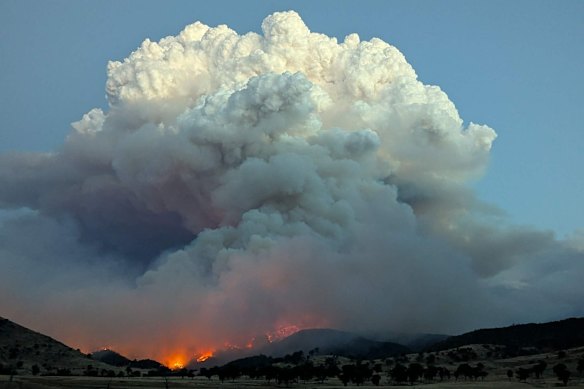
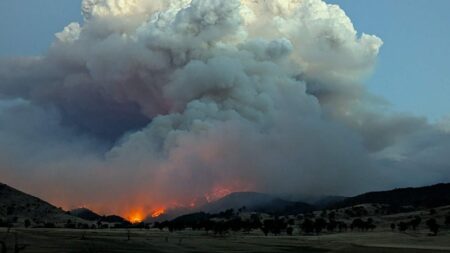
Enormous plumes of smoke above the Walwa bushfire.Credit: VicEmergency
In the heat of the afternoon, people in Skipton – just east of Ballarat – and Horsham were hit with sudden emergency warnings after fast-moving grassfires broke out and raced towards the towns.
Across the state, dozens of roads remain closed. The CFA will be working for weeks to extinguish the fires and make them safe, while there are months of work ahead for complete recovery after the fires.
Be the first to know when major news happens. Sign up for breaking news alerts on email or turn on notifications in the app.
Read the full article here