



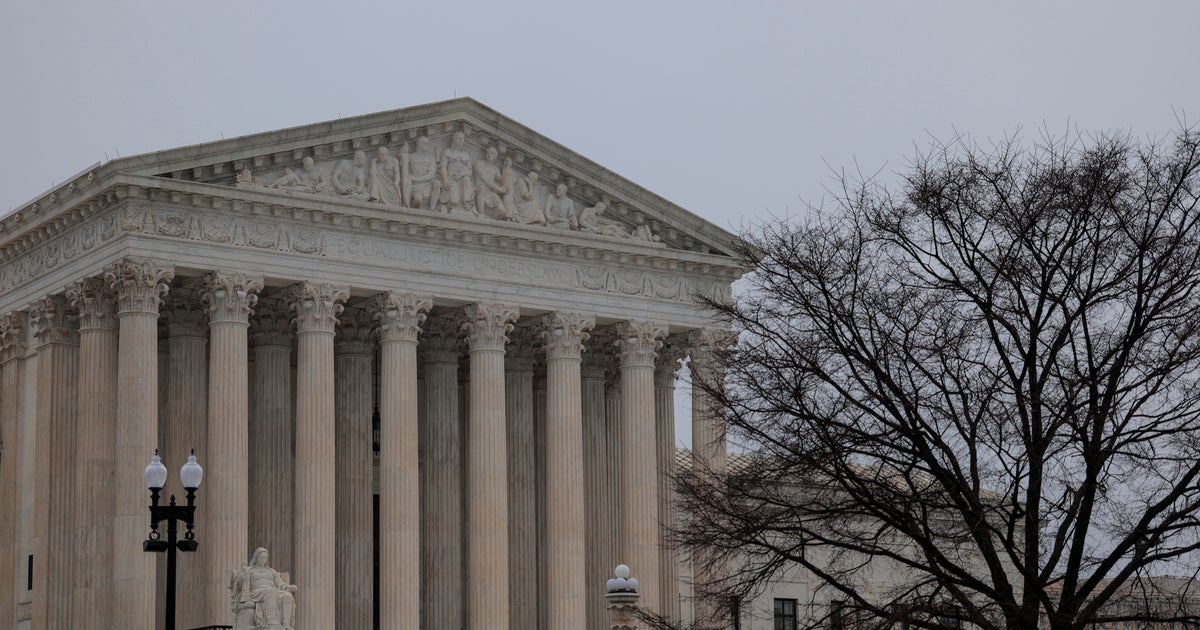
Washington — The Trump administration asked the Supreme Court on Thursday to allow it to end temporary deportation protections for thousands of Syrian immigrants living in the U.S.
In a request for emergency relief, the Justice Department urged the high court to lift a lower court order that postponed Homeland Security Secretary Kristi Noem’s termination of Temporary Protected Status designation for Syria, which was set to take effect last November.
The U.S. district court in New York ruled that Noem’s termination of the program for Syria likely violated federal law and found her decision to strip Syrians of their legal protections likely rested on “political influence.” A federal appeals court declined to pause that decision.
In the emergency appeal to the Supreme Court, Solicitor General D. John Sauer called the ruling from the U.S. Court of Appeals for the 2nd Circuit “indefensible” and said it flouts two earlier Supreme Court orders involving similar terminations of deportation protections for Venezuelans. Following those decisions from the high court, other appeals courts have allowed the Trump administration to end temporary protections for migrants from Afghanistan, Cameroon, Nepal, Honduras and Nicaragua.
Congress created the program known as TPS in 1990 to provide temporary immigration protections for migrants from countries beset by wars, natural disasters or other “extraordinary and temporary” conditions that make it dangerous for deportees to return. Migrants from a country designated for TPS generally cannot be removed from the U.S. and are authorized to work for the length of the designation, which can last for up to 18 months and be extended.
Syria was designated for TPS in 2012, during the Obama administration, as a result of a “brutal crackdown” by former Syrian President Bashar al-Assad. The protections were extended numerous times because of conditions in the country as well as an “ongoing armed conflict,” including during President Trump’s first term. There were 3,860 Syrian nationals covered by TPS as of March 31, 2025, according to a report from the Congressional Research Service.
Last September, Noem announced that the Trump administration would end deportation protections for thousands of Syrian immigrants living in the U.S., citing in part the fall of the Assad regime in December 2024, as well as the lifting of sanctions and a normalization of relations with Damascus that was announced by Mr. Trump last May. Noem also found that Syria no longer met the criteria for an ongoing armed conflict that posed a threat to Syrian nationals returning to the country, and said there were “sporadic, isolated episodes of violence.”
But soon after Noem’s announcement, a group of seven Syrians who were protected from deportation or had pending applications for TPS filed a lawsuit challenging the move. Lower courts then stopped the Trump administration from rescinding the protections.
“As in prior cases, the district court’s order interferes with the federal government’s determinations regarding foreign policy and the national interest in enforcing immigration laws — an area in which the Executive Branch has wide latitude,” Sauer wrote in a filing with the Supreme Court.
He warned the district court’s order blocked Noem’s implementation of a “core administration policy,” and put public safety and the national security of the U.S. at risk.
As part of his second-term immigration agenda, Mr. Trump’s administration has moved to end TPS protections for immigrants from numerous countries, including Afghanistan, Cameroon, Haiti, Honduras, Nepal, Nicaragua, Venezuela, Myanmar, Somalia and Yemen.
Read the full article here