



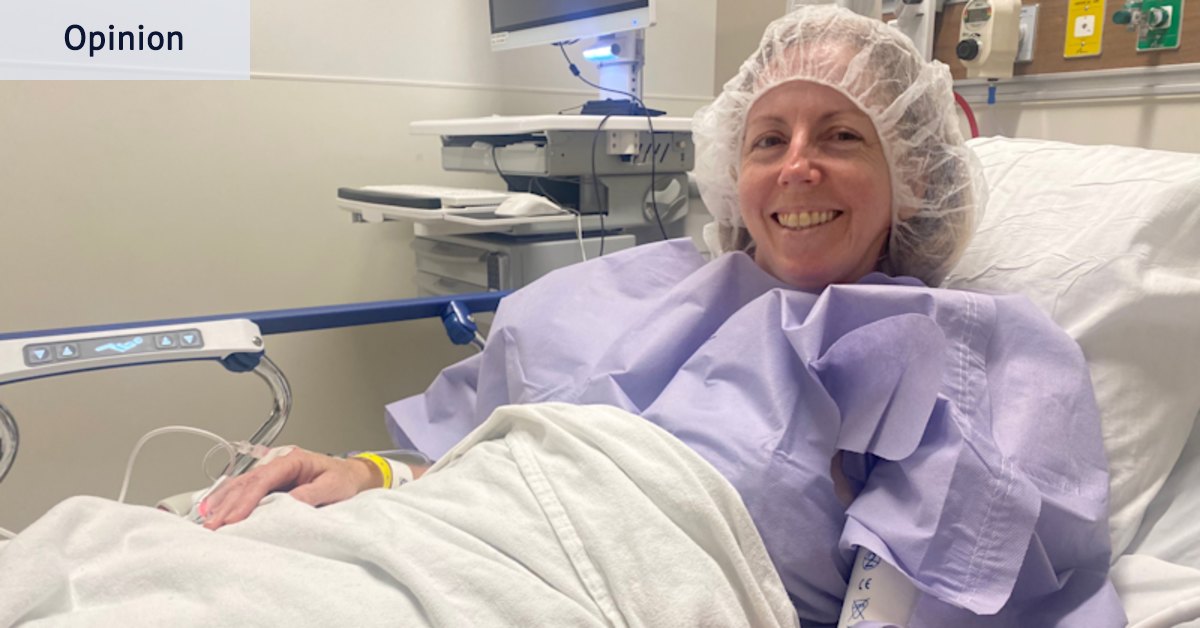
When I was first diagnosed with endometriosis in 2002, my response was: “endo what?” I’d gone into surgery at King George V Memorial Hospital in Camperdown to remove a dermoid cyst on an ovary and then I woke up with the surprise diagnosis – one that explained the horrible pelvic pain I’d been having. Endometriosis is an inflammatory disease where tissue similar to the lining of the uterus grows elsewhere in the body, typically in the pelvis, creating painful lesions.
Since 2002, I’ve had the same surgery – a laparoscopy to remove endometriosis – five more times, most recently this January. In the 25 years I’ve battled endo, treatment for the disease has not changed.
While excision surgery – where lesions are cut out rather than burned off via ablation – is considered the gold standard, endometriosis lesions can recur. Doctors aren’t sure why, because the disease is still not understood at a molecular or cellular level and disagreement about its origins persists.
This March, at the 2026 Endometriosis Summit in Orlando – a gathering of top endo surgeons, radiologists, physical therapists, and patients – founder Dr Sallie Sarrel opened proceedings with a damning assessment, saying: “We really haven’t had that much [advancement] since Sampson.” She was referring to early 20th-century gynaecologist John Sampson, who first coined the term “endometriosis” in 1925. That’s 100 years, Sarrel said, where endometriosis has been dismissed, psychologised and underfunded. Meanwhile, in the same time, research into diabetes has made leaps and bounds and for the first time in history, some with type 1 diabetes are living insulin-free after stem cell therapy.
Patients and endo experts agree that this sorry state of affairs is due to a lack of education among GPs and regular gynaecologists, and to misogyny in medical research, which typically uses only males in clinical trials and studies. The shortfall in research funding translates into delayed treatment. The average endometriosis patient waits seven to 10 years for a diagnosis. Even then, patients are often told “it’s just a bad period”. They’re handed birth control pills and told to live with the pain. Even someone like me, with a long, documented history of endo, was told by a doctor a few months ago that the pain was in my head.
According to the World Health Organisation, endometriosis affects about 10 per cent of women or 190 million women of reproductive age worldwide, but the number is probably higher, because the disease can persist beyond menopause. As one of the one in 10, I’ve spent huge swathes of my life in excruciating pelvic pain, and I have suffered infertility and a life-threatening ectopic pregnancy that was almost certainly caused by endometriosis. There is still no cure.
That’s why, eight weeks after my most recent surgery, I went to the Endometriosis Summit in search of hope. Looking ahead, what do the world’s endo experts see on the horizon?
The summit’s co-founder, surgeon Dr Andrea Vidali, says change starts with reframing the disease as a syndrome.
“We need to move away from this idea that endometriosis is purely hormone-driven,” he said. Instead, we need to understand that it is a complex neuroinflammatory condition, a theory supported by the lingering symptoms he sees in patients post-surgery.
To explain, Vidali compared endometriosis to COVID: just as a COVID infection can trigger long COVID, an immunological response in the body after the infection has cleared, endometriosis can cause changes to the immune and nervous systems that linger after the lesions are removed. Adopting this framework, Vidali says, will allow doctors and researchers to learn a lot more about the disease.
It’s already happening – one presentation at the summit by Mayo Clinic researcher Dr Kristen M. Smith-Edwards focused on the neural pathways of the gut-brain axis and how it leads to abdominal pain. Many endometriosis patients experience GI distress, which is why surgeons stress the need for multidisciplinary teams for optimal treatment. The summit also featured panels on advanced imaging, surgical techniques, fertility, patient advocacy, healing and how endometriosis causes widespread inflammation in the body. Some doctors are treating this with off-label use of GLP-1s, which can help down-regulate systemic inflammation. More data specific to GLP-1 use in those with endometriosis is needed, but Vidali and his colleagues consider it a thrilling new frontier.
“We’re not at a standstill,” he said, providing a much-needed dose of optimism.
There is still more to be done, however. More funding for endometriosis research is critical. So, too, is better education of GPs and regular gynaecologists. Take it from me – endometriosis is debilitating. But it doesn’t have to be. Not if we take it as seriously as we do hundreds of other medical conditions. Not if, Vidali says, we listen to patients.
Rebecca Wallwork is an Australian journalist living in Miami Beach, Florida
From our partners
Read the full article here