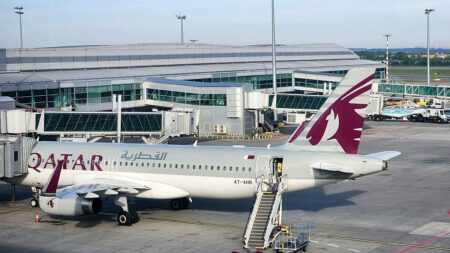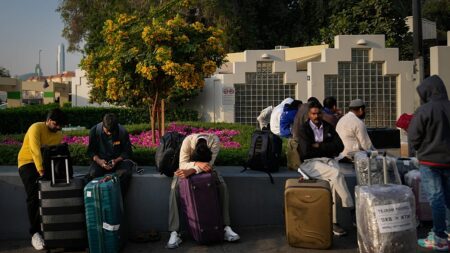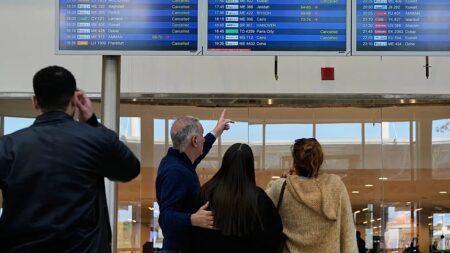




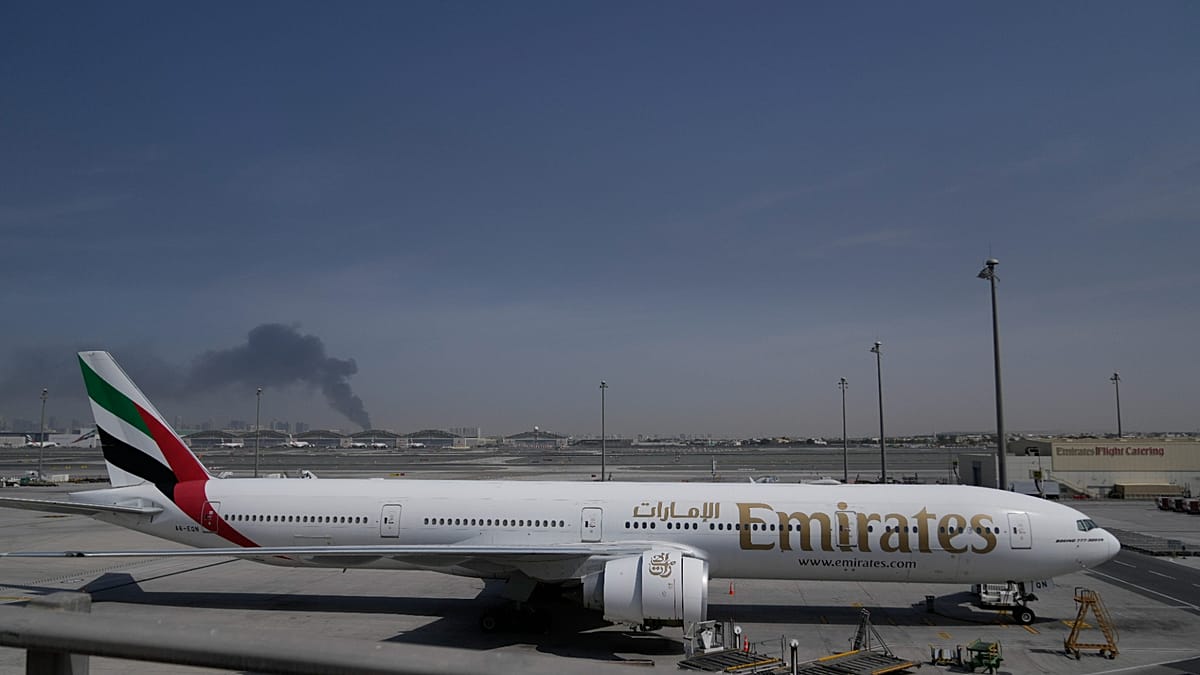
The escalation of the US-Israel and Iran conflict has thrown air travel in the Middle East and the Gulf into chaos.
A wide corridor of airspace remains closed in the region, including over Iran, Qatar and Israel. Several others are partially or intermittently closed, including the United Arab Emirates (UAE), Saudi Arabia and Jordan.
Posting on X on Tuesday, Flightradar24 said cancellations across seven major Middle East airports (including Dubai International, Hamad International Airport in Doha and Zayed International Airport in Abu Dhabi) have now exceeded 12,300 flights.
Many flights from Asia and Africa, which often route through the Middle East, are also affected.
Several international airlines cautiously resumed a small number of flights from the UAE on Monday and Tuesday.
Long-haul carriers Etihad Airways and Emirates, based in Abu Dhabi and Dubai, and budget carrier Flydubai, said they would operate select flights from the country.
Dubai’s government told passengers to head to airports only if they were contacted directly during what it said would be a “limited resumption of operations”.
More than 80% of the flights scheduled to and from Dubai and more than half of the flights to and from Abu Dhabi remained cancelled, according to flight tracking website FlightAware.
If you have a trip planned to affected countries or you are currently in the region, here’s what you need to know about travel insurance and passenger rights.
You can find full information about airspace closures and cancelled flights here.
What is the latest government advice for travelling to the Middle East?
The UK’s Foreign, Commonwealth & Development Office (FCDO) has issued a string of advisories warning travellers visiting Middle Eastern and Gulf destinations about rising tensions in the region.
It advises against all travel to Iran, Iraq and Israel, where it says “regional escalation poses significant security risks”, and all but essential travel to the UAE, Qatar and Kuwait.
Warnings were also issued for parts of Saudi Arabia, Lebanon and Jordan.
Travellers have been told to “monitor local and international media for the latest information” and “stay away from areas around security or military facilities”.
If you are advised to take shelter, stay indoors or find the nearest safe building or designated shelter. An interior stairwell or a room with as few external walls or windows as possible may provide additional protection.
The FCDO also warns travellers in Iran that “British and British-Iranian dual nationals are at significant risk of arrest, questioning or detention”.
Foreign ministries in other European countries, including France and Germany, have also issued similar warnings against travel to Israel and Iran.
Residents and visitors have been urged to register with their country’s local embassy to receive updates and, if necessary, assistance.
What are my passenger rights if I have a trip planned to the Middle East?
If you were planning to travel to or through the region, you do have some options to get your money back or reschedule your flight.
Many airlines have offered fee waivers for booking modifications.
British Airways, for example, has said passengers who are due to fly between London Heathrow and Abu Dhabi, Amman, Bahrain, Doha, Dubai or Tel Aviv up to and including 15 March can change their flight date free of charge to travel on or before 29 March.
Customers travelling up to and including 8 March may also request a full refund.
Lufthansa says customers holding tickets to Tel Aviv, Beirut, Amman, Erbil, Dammam, or Tehran issued on or before 1 March that have not been cancelled yet with original travel dates up to 15 March, may rebook free of charge onto any LHG-operated flights up to 31 March or refund their ticket.
Other carriers, including KLM, Air France, Turkish Airlines and Emirates, have also introduced temporary rebooking or refund policies.
If your flight has already been cancelled, you are entitled to be rebooked on another flight, even with a different carrier, or a full refund.
If your flight is still currently scheduled to go ahead, it is important not to cancel the booking yourself as it is unlikely you will be able to claim a refund if it is cancelled later by the airline.
Can I claim on travel insurance if I cancel my trip to the Middle East?
Standard travel insurance policies exclude cancellation coverage related to acts of war, military action and airspace closure, explains Lauren McCormick, PR Manager for provider Squaremouth.
You are unlikely to be able to claim on travel insurance if you cancel your trip due to fear of war or instability, or if you choose not to go because of disruption concerns.
However, the domino effect from military action, such as delayed flights or missed connections, may still be covered under standard travel delay benefits.
Covered reasons for delay can include the airline rerouting flights due to hub disruptions, crew rescheduling, or mechanical issues caused by tighter turnaround schedules.
Cancel For Any Reason (CFAR) and Interruption For Any Reason (IFAR) coverage are the only types of travel insurance that can still protect you for situations excluded by your standard cancellation and interruption coverage, McCormick says.
What are my rights if I am stuck in Doha or Dubai?
If you have already flown to the region and are now stranded in Doha or Dubai, you are entitled to support from the airline.
“Given the extraordinary circumstances, passengers on delayed or cancelled flights will not be entitled to compensation,” explains Jo Rhodes, a travel expert at consumer champion Which?.
“However, if you are flying with a UK or EU airline, or are departing a UK or EU airport with any carrier, your airline should provide assistance during your delay.”
Depending on the length of your delay, assistance may include food and drink and, where necessary, overnight accommodation. Due to the sheer volume of stranded passengers, you are likely to be asked to pay for this yourself and claim the expenditure back.
If your flight is cancelled, the airline is obligated to rebook you on the next possible flight, including with another carrier, or offer you a full refund.
Given the scale of the disruption in the region, this may not be for some time. However, the FCDO urges passengers to “keep your departure plans under review, and ensure your travel documents are up to date”, in case of an opportunity to depart earlier than expected, such as with one of the limited number of rescue flights now operating.
Both Qatar and the UAE have also said they will pay for the hotels and meals of passengers who are stuck in the country due to airspace closures.
Am I covered by travel insurance if I go ahead with my trip to the Middle East?
Foreign offices warn that your travel insurance could be invalidated if you travel against their advice. This means going to areas where they have issued a ‘no-go’ warning or advise against all but essential travel (currently Iran, Iraq, Israel, the UAE, Qatar and Kuwait).
If you do so, you are likely to be left without coverage for incidents, including medical emergencies and evacuations.
It may also mean that if you are arrested or put in detention, your country’s embassy or officials have limited ability to help you.
If you have booked with a travel agent or tour operator, contact the company directly to understand your options.
Read the full article here