


Published on
•Updated
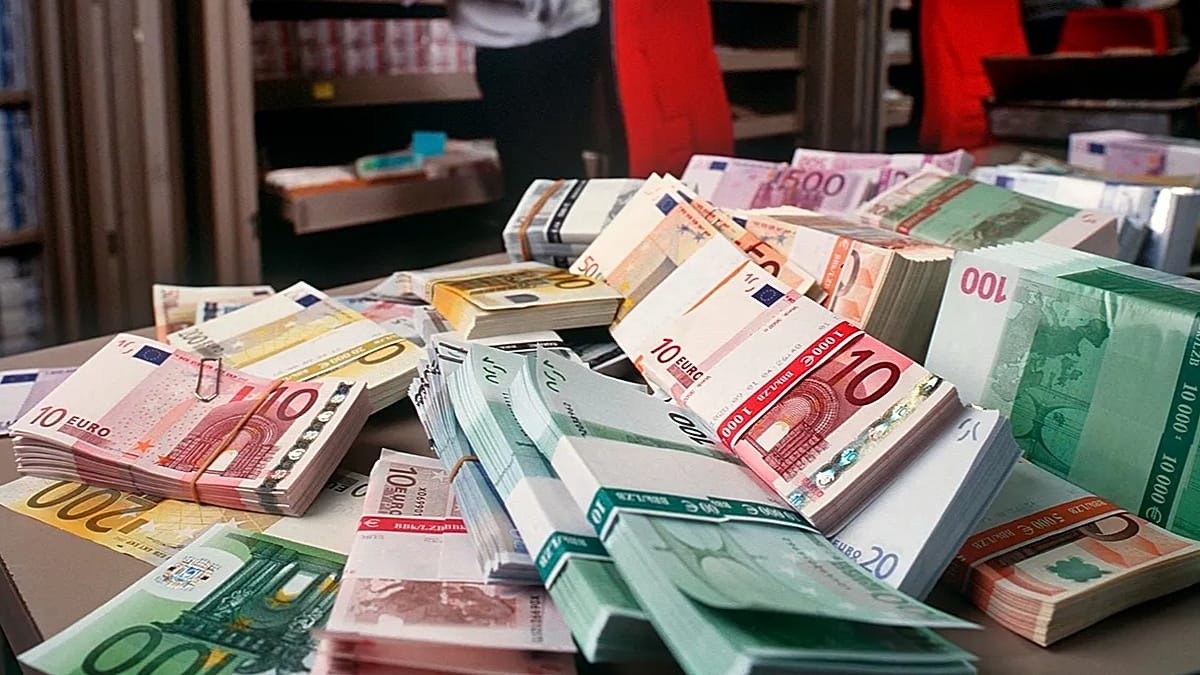
Starting on 1 January 2026, Bulgaria will replace the lev with the euro as its national currency.
The Balkan country of 6.5 million people joined the EU in 2007 and formally began the process of joining the eurozone in 2018.
Brussels and Sofia hope that joining the eurozone will boost the country’s economy and strengthen its integration into the European Union.
“The bigger effect is the long-term effect, basically boosting confidence when it comes to the currency, to the purchasing power of the currency, the confidence of foreign investors, people who buy Bulgarian debt, but also people who invest in the country, in different sectors,” Petar Ganev, Senior Research Fellow at the Institute for Market Economics told Euronews.
The adoption of the euro could also impact Bulgaria’s credit rating.
“Credit agencies deduct from our credit rating because of the currency board,” Ganev explained.
“They say that our debt is in a foreign currency, which is the euro (…) They say, if you have foreign debt, in a different currency, which is not yours, then we deduct from your credit rating. So we have a deduction of our credit rating for 28 years, which now will be gone.”
In addition, he believes that joining the eurozone will only marginally increase inflation.
“It’s not the main factor. The main factor is the consumption, which is supported by inflationary budget and by record high credits, especially for new homes,” he said.
Political turmoil
However, political instability could negatively impact Bulgaria’s economy. The government resigned in mid-December after weeks of anti-corruption protests.
Bulgaria had “seven elections in three years, now the government again resigns, so we cannot form a long-term political stability or government,” Ganev explained.
“This leads to problems with the budget because we cannot vote the budget on time. Four out of the last five years we entered without a budget,” he added.
The conversion rate will be fixed at 1.95 lev for €1.
Prices have been displayed in both lev and euro since August to allow consumers and businesses to adjust. In addition, both currencies will be accepted for cash payments in January to smooth the transition.
Sofia has met the four Maastricht criteria for joining the currency bloc: price stability (inflation rate of 2.7% in 2024), sound public finances (public debt and deficit at 24% and 3% of GDP in 2024), exchange rate stability, and long-term interest rate stability.
In 2024, Bulgaria was the poorest EU country by GDP per capita.
It is also the EU country most affected by poverty, with more than 21% of its population living below the poverty line.
Read the full article here