




NEWYou can now listen to Fox News articles!
An FBI advisory referencing an unverified tip about a potential Iranian drone concept off the California coast circulated to multiple California law enforcement agencies — only to be forcefully downplayed by the White House hours later.
The advisory, distributed through federal security channels, referenced intelligence suggesting Iran had “aspired” to launch unmanned aerial systems from a vessel offshore. The email did not identify specific targets, dates or operational details.
The advisory was shared with California state officials and forwarded to local law enforcement agencies, according to reporting by the San Francisco Chronicle, including police departments in San Francisco, Oakland, San Jose and Berkeley. Local officials emphasized there was no indication of a specific or imminent threat but confirmed they were coordinating with federal partners.
DHS SHUTDOWN MAY DELAY US TERROR RESPONSE AMID IRAN CONFLICT, EXPERT WARNS
FBI spokesperson Ben Williamson posted the alert to X Thursday, which he said went to joint terrorism task force partners.
“We recently acquired unverified information that as of early February 2026, Iran allegedly aspired to conduct a surprise attack using unmanned aerial vehicles (UAVs) from an unidentified vessel off the coast of the United States, specifically against unspecified targets in California, in the event of U.S. strikes on Iran,” the alert said, according to Williamson. “We have no additional information.”
After reports about the advisory surfaced publicly, White House Press Secretary Karoline Leavitt sharply criticized the coverage.
“This post and story should be immediately retracted by ABC News for providing false information to intentionally alarm the American people,” Leavitt wrote.
She said the reporting was based on “one email that was sent to local law enforcement in California about a single, unverified tip,” adding: “No such threat from Iran to our homeland exists, and it never did.”
California Gov. Gavin Newsom similarly said there was no verified threat to the state and that officials remained in communication with federal authorities as a precaution.
Former Department of Homeland Security official Tom Warrick said the wording of the advisory suggests the intelligence likely reflected aspirational discussion rather than operational planning.
FBI RAISES COUNTERTERROR TEAMS TO HIGH ALERT AMID IRAN TENSIONS
“When you see the word ‘unverified,’ that generally means this is aspirational,” Warrick said.
He emphasized that advisories of this kind are not routine occurrences, but during periods of heightened tensions — particularly involving Iran — federal authorities may err on the side of caution.
“It’s not a regular occurrence,” Warrick said. “But given the war with Iran, and given Iran’s known tendencies, it’s only prudent for the FBI to put out a notice to local law enforcement to be aware that this is what we know — but this is all we know.”
Warrick said such reporting often stems from intercepted communications in which foreign actors discuss potential attack concepts without evidence of capability or follow-through.
“Somehow the United States picked up information of Iranians talking to each other — who probably have some affiliation to the Islamic Revolutionary Guards Corps, Quds Force — talking about, ‘Wouldn’t it be nice to launch a drone attack on California?’” Warrick said, describing what he believes likely triggered the alert. “That’s where we are.”
He stressed that distributing such intelligence allows local authorities to connect suspicious activity — such as unusual drone purchases or maritime behavior — with broader federal reporting.
NATIONAL SECURITY EXPERT URGES DHS TO RAISE TERROR THREAT LEVEL, WARNS OF SLEEPER CELL RISKS IN US
At the same time, Warrick drew a distinction between large-scale military drone strikes and smaller improvised threats.
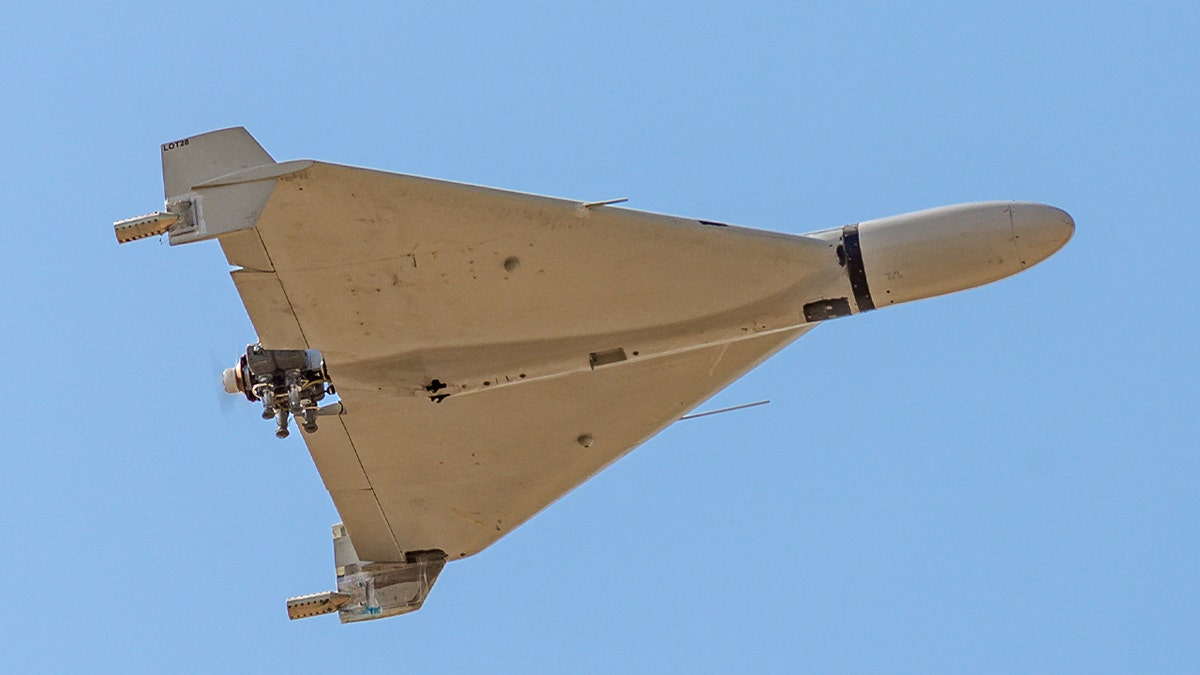
“We’re not talking about launching Shaheds at California. That’s not feasible,” he said.
“Using small-scale hobby drones to carry out a terrorist attack has always been a concern of homeland security,” he added. “That threat already exists.”
Current federal law limits the authority to actively disable or intercept drones to specific federal agencies, including the Department of Defense and Department of Homeland Security. State and local law enforcement agencies generally lack independent authority to jam or seize unmanned aerial systems without federal coordination.
Some state and local officials have in recent years pushed Congress to expand counter-drone authority beyond federal agencies, arguing that the proliferation of small drones has outpaced existing legal frameworks.
IRAN’S DRONE SWARMS CHALLENGE US AIR DEFENSES AS TROOPS IN MIDDLE EAST FACE RISING THREATS
While Warrick framed the advisory as precautionary, Iran specialists say the broader concept referenced in the alert is not entirely imaginary — though executing such an operation would be complex.
Michael Eisenstadt, a senior fellow at the Washington Institute for Near East Policy, said Iran has experimented with sea-based launch concepts in the past, including containerized missile systems deployed from modified merchant vessels.
“The idea is something they’ve clearly thought about,” Eisenstadt said. “They’ve demonstrated elements of this concept before.”
However, he cautioned that projecting such capability across the globe and positioning assets close enough to the U.S. coastline to make an operational difference would be difficult.
“To get it across the globe and close enough off the coast of California to make a difference — I’m pretty sure we track pretty closely ships coming out of Iran,” he said, adding that such an operation would likely be “a little too complicated for them to do at this point.”
Eisenstadt agreed that describing the advisory as aspirational was likely accurate.
“I think that’s probably correct,” he said.
He also questioned whether a direct drone strike on U.S. territory would align with Iran’s historical escalation patterns.
“If they were to retaliate on the homeland, it would more likely involve inspired or commissioned attacks,” he said, rather than a complex maritime drone launch.
California drones
Drone-related activity has drawn scrutiny along the West Coast in recent years, though analysts caution against drawing a direct connection between prior incidents and the unverified tip referenced in the advisory.
In 2019, multiple U.S. Navy destroyers operating near the Channel Islands of the coast of California reported encounters with groups of unidentified unmanned aerial systems during training operations.
Navy documents later released through the Freedom of Information Act showed that some incidents were assessed as potential surveillance activity, while others were attributed to commercial or hobbyist operators. In several cases, the operator was never definitively identified.
More recently, Marine Corps Base Camp Pendleton, California, confirmed multiple instances of unmanned aerial systems entering restricted airspace in late 2024, though officials said those incursions did not impact operations and were not assessed to pose an immediate threat.
CLICK HERE TO DOWNLOAD THE FOX NEWS APP
Security analysts say the proliferation of inexpensive drone technology has complicated airspace monitoring near both civilian and military facilities, a broader backdrop against which even low-confidence intelligence may prompt precautionary alerts.
The FBI and Coast Guard could not immediately be reached for additional comment.
Read the full article here