


Australian researchers believe they have finally cracked the cause of lethal blood clots caused in extremely rare cases by AstraZeneca’s COVID vaccine – and they think new jabs can be designed to avoid the problem.
Australia pinned its hopes on AstraZeneca’s COVID vaccine, only to discover a link to a very rare clotting syndrome mid-rollout. People under 60 were eventually told to avoid the jab.
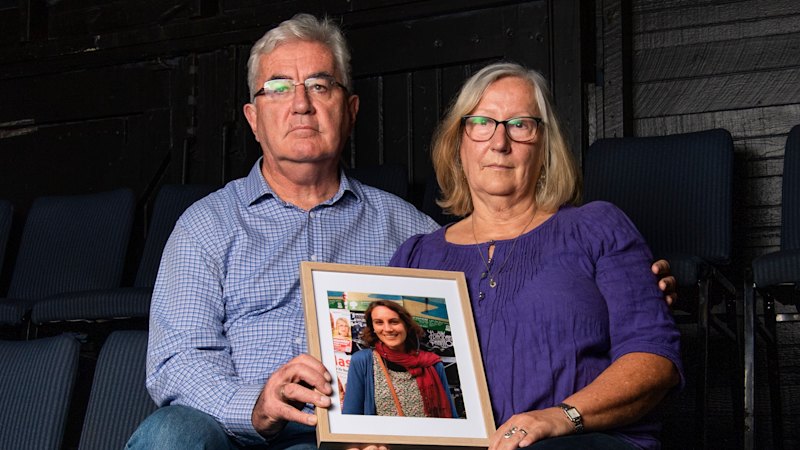
In total, eight Australians lost their lives due to the syndrome, now known as VITT (Vaccine-induced Immune Thrombotic Thrombocytopenia), including 34-year-old Sydney artist Katie Lees.
“The government strategy was: we can lift lockdowns once we get to 70 per cent vaccinated. That was her motivation,” said Katie’s father Ian.
“She said to me how incredibly proud she was for what she was doing for the community.”
In a paper today in the prestigious New England Journal of Medicine, Australian researchers pin VITT on two collaborating culprits: a protein hidden deep in the vaccine, and a type of human antibody produced by a few individuals with a certain genetic mutation, known as a “forbidden clone”.
Importantly, now the problem has been spotted vaccine developers should be able to design around it.
“There’s every chance we can create a trans-gene to modify this vaccine,” said Professor Tom Gordon, a researcher at Flinders University and the paper’s senior author. “We should be able to remove the risk of VITT.”
A forbidden clone
AstraZeneca’s vaccine was built on an adenovirus vector: a harmless virus modified to carry a small segment of the genetic code of the virus that causes COVID-19.
After injection, the virus infects human cells, which then use the added code to produce small fragments of the virus.
The immune system spots the fragments and trains up an antibody army to attack them, providing robust protection when the actual virus comes along.
In about two people per 100,000 vaccinated with AstraZeneca, blood clots will appear spontaneously in different parts of the body, typically within a month of vaccination. Some cases are mild, while others are fatal. Why?
The first clue came from Gordon and co-author Dr Jing Jing Wang’s discovery in 2022 that patients with the syndrome had an unusual antibody that bound to human protein called PF4. The binding triggered a natural signal causing platelets in the blood to clot together.
Then Canadian researchers discovered a group of patients who suffered the same clotting syndrome after a natural infection with an adenovirus; they had the same antibody, suggesting it was the adenovirus that was the culprit, not the vaccine.
In their new publication, work led by Wang reveals a protein deep within the structure of the adenovirus that is very similar in shape to human PF4. The AstraZeneca vaccine likely causes the immune system to make antibodies against this adenovirus protein.
For nearly everyone, this is not a problem – the shapes are similar but not identical.
Our bodies naturally generate slightly-different-shaped antibodies against a pathogen, testing and fine-tuning designs. In exceptionally rare cases in people with the right genetic code, one of those slightly-different-shaped antibodies is reshaped in such a way that it binds perfectly to PF4, triggering clotting.
Self-reactive antibodies like this are meant to be caught and eliminated by the body’s surveillance system, but in rare cases get through and multiply – leading to the name “forbidden clone”.
“The group recreated the antibodies in the lab and showed that the K31E somatic mutation can switch an antibody from harmless to clot-activating,” said Professor Elizabeth Gardiner, the scientific head of the National Platelet Referral and Research Centre, who has published papers on VITT but was not involved in the study. “I find this to be convincingly strong causal evidence.”
The study is important because it may allow vaccine developers to alter adenoviruses to avoid mimicking PF4. It also points to how a combination of an environmental exposure and a rare genetic mutation can cause autoimmune disease.
“We proved that antibodies against a foreign antigen, and then a mutation, leads to the misdirection of immune response – and becomes autoimmunity,” said Wang.
Calls for better treatment of VITT victims
Katie Lees lost her life trying to follow health advice. Her parents feel their daughter’s story was inconvenient when media and government were trying to encourage people to get vaccinated.
“I very strongly believe the deaths and the injuries were collateral damage no one wanted to talk about because it would damage their messaging,” said Ian.
They received just $70,000 from the federal government’s Vaccine Claims Scheme, which has since closed. “The money represents how gravely the issue is seen,” said Ian.
A federal Department of Health spokesman said they had received 4964 compensation claims, processed 4369 of them and paid $62.3 million in compensation.
“Eligibility and evidence requirements under the scheme were developed in consultation with medical experts and the [Therapeutic Goods Administration],” the spokesman said.
The Examine newsletter explains and analyses science with a rigorous focus on the evidence. Sign up to get it each week.
 Liam Mannix is The Age and The Sydney Morning Herald’s national science reporter.Connect via X or email.
From our partners
Read the full article here