




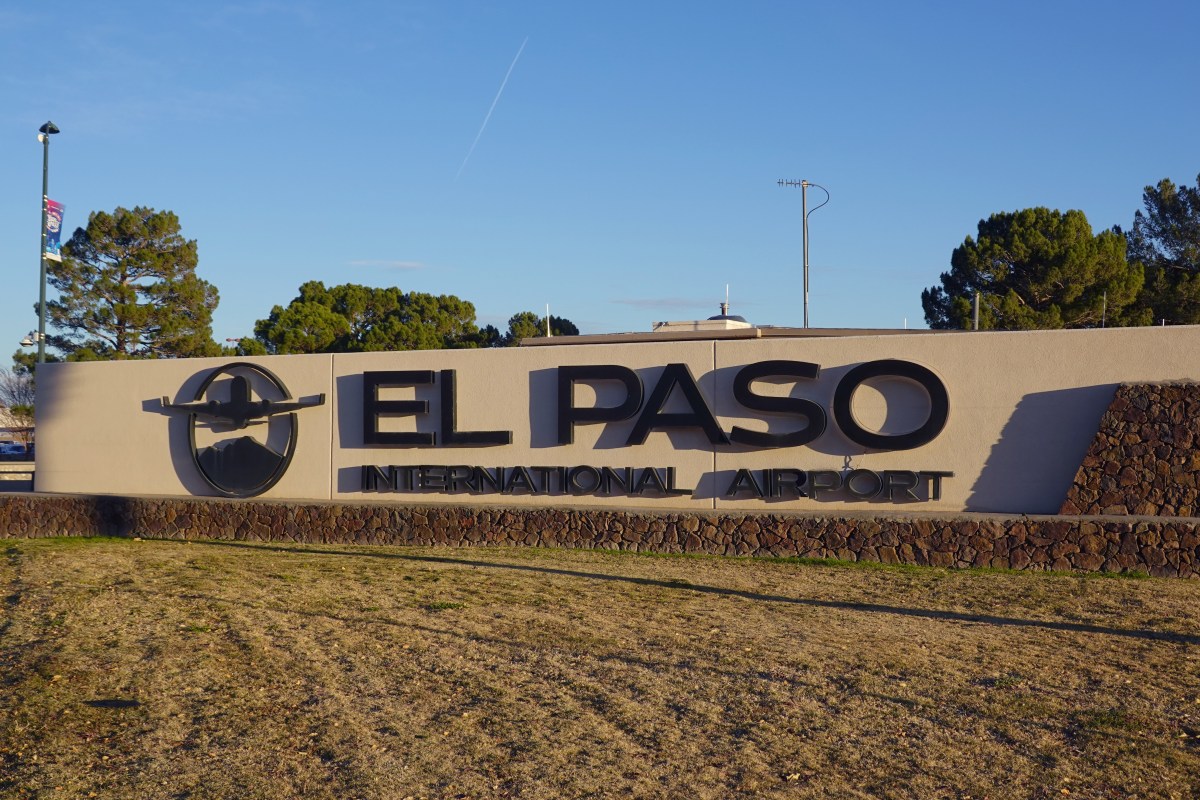
The Federal Aviation Administration (FAA) issued a sudden and unprecedented restriction to airspace over El Paso, Texas, citing “special security reasons.”
The Notice to Airmen (NOTAM) did not specify what the special security reasons are, but the move has sparked questions about what could have prompted the sudden action in a region that sits at the intersection of U.S. border security and major military infrastructure.
While authorities have not disclosed detailed information, several plausible explanations could account for the decision:
A Credible Security Threat in the Airspace
The FAA’s reference to “special security reasons” suggests officials believe there may be a potential threat involving the airspace itself. That could include intelligence indicating unauthorized aircraft activity or a risk to civilian infrastructure. Temporary Flight Restrictions (TFRs) are sometimes imposed when agencies assess a credible risk that could endanger aircraft or people on the ground. So far, this remains the only explanation publicly cited by federal authorities.
Military Operations or Exercises
El Paso is adjacent to Fort Bliss, one of the largest U.S. Army installations in the country, and within range of White Sands Missile Range and other defense testing areas. TFRs are frequently used to support military exercises, weapons tests, or live-fire drills, where civilian air traffic would pose safety risks or interfere with operations. While no exercise has been publicly confirmed, the region’s military footprint makes this a plausible factor.
Sensitive National Defense or Law Enforcement Activity
Airspace restrictions are also commonly used to support counterterrorism operations, high-security law enforcement actions, or the protection of high-value assets and officials. Given El Paso’s proximity to the border, another possibility is a coordinated federal operation targeting transnational criminal networks or cartel-linked activity. Federal agencies—including Homeland Security Investigations, the DEA, and the Department of Defense—have increasingly conducted joint operations aimed at disrupting cross-border trafficking of narcotics, weapons, and migrants. Limiting civilian air traffic could provide operational security or prevent interference during surveillance, interdiction, or tactical deployments.
A Precautionary Measure Following Intelligence Review
In some cases, restrictions are imposed after surveillance or intelligence assessments identify potential risks, even if the threat is not publicly detailed. Officials may choose to temporarily limit airborne access while investigating or resolving a concern. Such actions do not necessarily indicate an imminent attack but may reflect heightened caution.
VIP Movement
Another possibility is the movement of a high-profile government official. When the president, vice president, or other senior officials travel, the FAA frequently issues TFRs to protect aircraft carrying those individuals. While such restrictions are typically announced in advance, sudden schedule changes can result in last-minute closures. However, this would not explain the lengthy—10 day—restrictions being imposed in Texas.
What We Don’t Know Yet
- What specific security situation triggered this order—there’s no public detail from the FAA, Department of Defense, or White House as of now.
- Whether the closure is linked to an ongoing investigation, foreign intelligence, or imminent threat.
- Whether the restriction could be modified, reduced, or lifted early if circumstances change.
Read the full article here