




For decades, the “naked dress” has not only been a bold fashion statement, but also a way for celebrities and designers to push boundaries and play with the idea of revealing the body. However, in 2026, this concept might be changing.
Up until now, it’s all been about showing skin with sheer fabrics or daring cutouts, leaving little to imagination. But this year the naked dress has evolved into something far more intricate and artistic, playing with the illusion of exposure rather exposure itself.
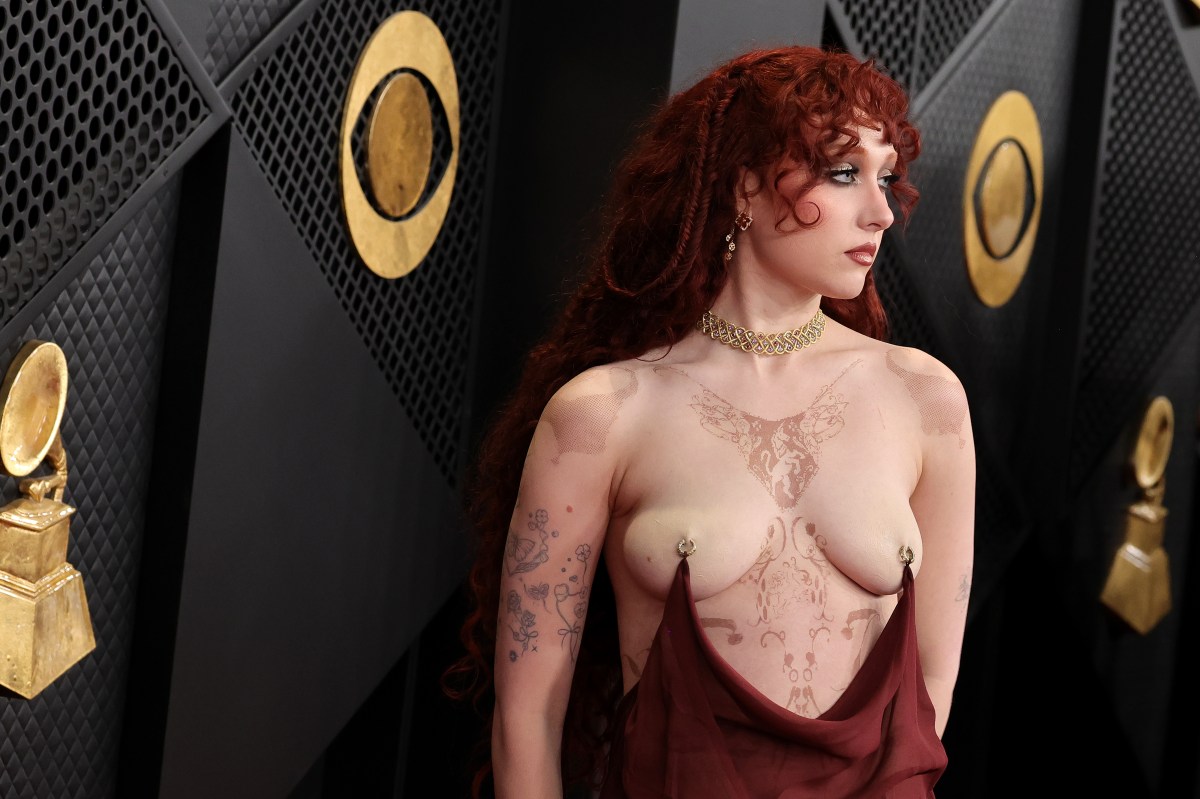
Great examples from this year’s red-carpet events are the dresses worn by Chappell Roan and Heidi Klum at the 2026 Grammys, both of which looked very revealing to the naked eye, but in reality, they were far from it.
Roan’s dress featured prosthetic pierced nipples to which her georgette dress was attached, giving the illusion of nakedness while clearly covering her body in a way that traditional naked dresses rarely do.
Klum, on the other hand, wore a cast of her body – a replica of what her naked body looks like – that made it look like she was wearing nothing, but at the same time actually covered everything.
Both outfits were daring – and the public still can’t stop talking about them – but they also marked a shift in how we think about the naked body in fashion.
April Clemmer, a stylist and fashion/Hollywood historian from Los Angeles told Newsweek that in both cases, the naked dress concealed the wearer’s actual body allowing for them to maintain privacy/modesty (in theory), while at the same time creating a very “in your face” moment.
“These examples of the naked dress show an idealized version of the body, and of the beauty of the human form”, she said.
She went on to explain that since the French Merveilleuse donned sheer muslin chemise dresses and wet them to have them become even more translucent, naked dresses have been created to tease the viewer by giving an impression of a covered form while simultaneously revealing the shape and sometimes more of the individual’s actual body.
“The recent dresses worn by Roan and Klum do the opposite”, she said. “Overall, this trend aligns with the shift into AI-generated projections of reality as opposed to reality itself.”
Looking back on previous versions of the naked dress from past years, the 2026 version is more than just a fashion trend; it’s a conversation about the body and the way we choose to present ourselves. It’s about how we expose, and where it’s real or just an illusion.
Author and fashion historian Robert Ossant told Newsweek that the Julian McDonald, Tom Ford, and Versace naked dresses of the 90s and early noughties often draped lightweight silks around the body, exposing portions of toned flesh, and at the 2026 Grammys, Chapell Roan went that route, albeit with a touch of subversive attitude.
“The design house of the late Thierry Mugler was always about feminine power through shock, awe and spectacle. So her approach to the naked dress feels in line with that earlier era and her own approach to showbiz.”
As for Heidi Klum’s lacquered nude dress designed by Marina Hoermanseder, Ossant says the dress exists in a category of its own.
“This technique was used by the late Alexander McQueen to make glass, wood and resin corsetry for his models. Hoermanseder has made the look more shocking and transgressive by lacquering it in a glossy, hyper-real skin tone. This is very on brand for Klum, who likes to cause a stir, but typically remains covered up.”
What Roan and Klum wore wasn’t about showing their bodies off as much as it was about creating an artistic representation of their naked body. These dresses shifted the focus from the body itself to the art of illusion, transforming our perception of what is exposed and what is hidden.
The reaction to these dresses was divided. Some fans loved the creative use of prosthetics and body casts, seeing it as a fresh take on nakedness; others, however, felt like these pieces didn’t really fit the original idea of naked dress.
According to Ossant, from the 90s to now, the main change is the attention economy.
“Back then, the naked dresses allowed news editors looking to put pictures of beautiful (almost naked) women in magazines and papers. Now it stops us in our tracks as we scroll through our social and news feeds. The same idea is attention. But now the difference is whose attention. It was the editors, now it’s all of us,” he said.
“I also think an element of it is to do with women reclaiming the narrative around their bodies. With AI and Photoshop allowing anyone to do anything, stepping out in a naked dress effectively takes the wind out of the sails and allows them to own the way people see their bodies.”
Read the full article here