




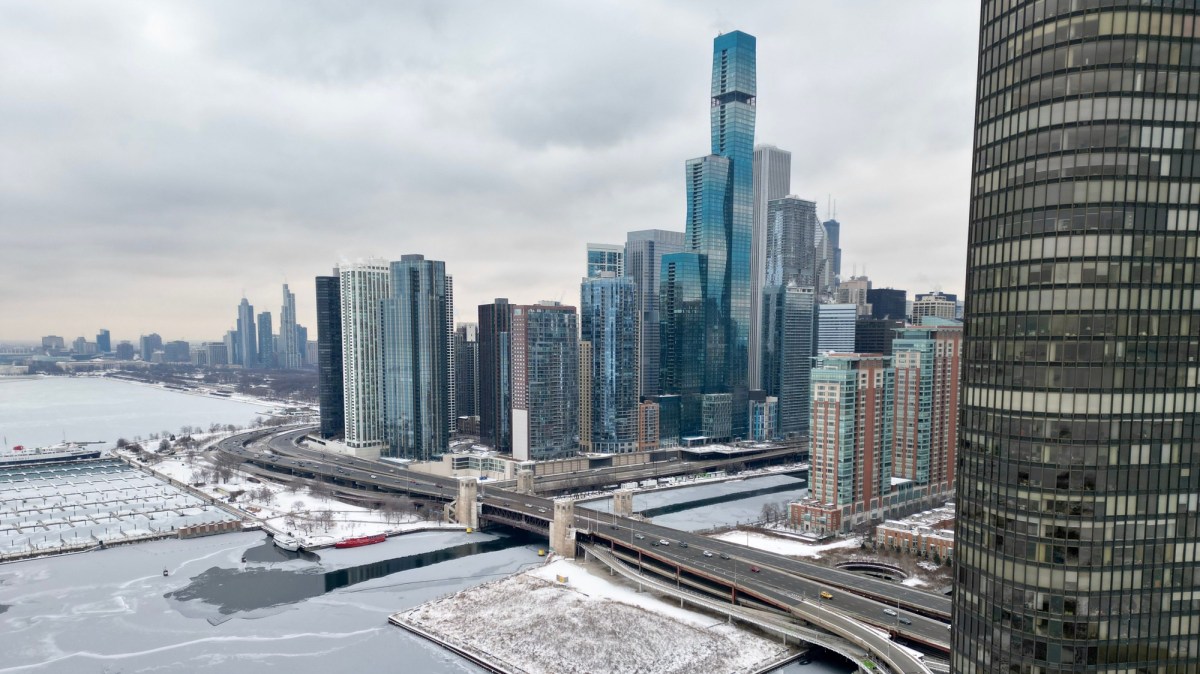
A video showing ice forming inside a hotel room during an extreme cold snap in Chicago has gone viral on social media.
The clip was shared on December 14 by TikTok user @mayarosediamond, who posted footage from their hotel room overlooking the Chicago skyline.
Text overlaid on the video reads: “Woke up in my Chicago hotel this morning with ice INSIDE the window and for that reason I am out.” The post has since amassed more than 1.4 million views on the platform.
The video opens with a view of downtown Chicago’s skyscrapers before the camera tilts downward to reveal the bottom of the window, where snow and ice appear to have accumulated on the interior side of the glass. In the caption, the creator added context for the startling scene, writing: “feels like temp was -14° when i woke up.”
The conditions shown in the video align with Chicago’s reputation for harsh winter weather. The Illinois State Climatologist website says that the city’s climate is typically continental, marked by cold winters and frequent short‑term fluctuations in temperature, wind, and humidity. Chicago’s geographic position—midway between the Continental Divide and the Atlantic Ocean and about 900 miles north of the Gulf of Mexico—plays a major role in shaping those conditions.
The Illinois State Climatologist adds that seasonal temperature extremes are driven largely by changes in solar energy. At Chicago’s mid‑latitude location, solar energy is three to four times greater in early summer than in early winter, resulting in warm summers and very cold winters.
Weather systems further contribute to those swings. The polar jet stream often passes near or over Illinois during fall, winter, and spring, creating a steady cycle of high‑ and low‑pressure systems that bring clouds, wind, and precipitation. Low‑pressure systems frequently interrupt otherwise settled weather, producing rapidly changing conditions, the Illinois State Climatologist says.
Lake Michigan also has a significant influence on Chicago’s climate. The large body of water helps moderate temperatures, leading to cooler summers and somewhat warmer winters than the surrounding inland areas. At the same time, it increases cloud cover and can enhance winter precipitation through lake‑effect snow when winds blow from the north or northeast.
Those winds allow cold air to pass over relatively warmer lake water, increasing moisture and snowfall, though Chicago experiences less lake‑effect snow than areas farther downwind, such as western Michigan, the Illinois State Climatologist explains.
Newsweek has contacted the original poster for comment via TikTok. This video has not been independently verified.
Do you have a travel-related video or story to share? Let us know via life@newsweek.com, and your story could be featured on Newsweek.
Read the full article here