



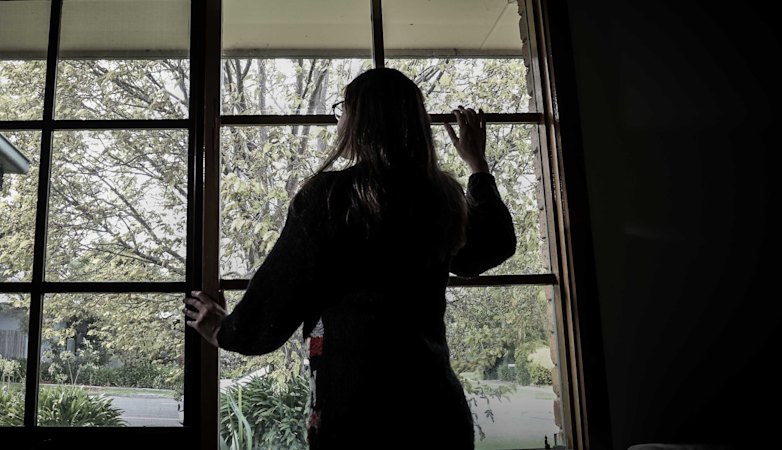
For weeks, Kate* kept her bags packed, convinced the phone call that would change her life would come at any minute.
The mother of two was in the throes of a methamphetamine and GHB addiction that had consumed most aspects of her life, but for the first time in a long time she felt hopeful.
Kate had broken out of an abusive relationship in which her ex-partner used drugs and violence to control her, and was determined to get clean for good.
“I was so desperate to get off everything,” Kate remembers.
The 45-year-old had gathered the courage to call the intake line of a drug and alcohol service. All she needed was a detox bed to become available. But it would be eight months before she would receive news one was ready for her.
“I didn’t think the day was ever going to come,” she says.
Alcohol and other drugs support workers say GHB users are stuck in a bottleneck to access life-changing detox services caused by inconsistent withdrawal guidelines and a shortage of medically supervised beds.
Although the drug has been around since the 1960s and has become increasingly popular among younger Melburnians, there are no uniform guidelines on how to manage withdrawal from GHB. It is up to each service to decide its own frameworks, including what is the maximum dose of the drug a person can be on before they are considered ineligible to access community-based detox.
“People are coming in for support, and they’ve just got nowhere to turn because there are so many barriers,” says Nathan Farley, a senior harm-reduction clinician at Uniting. “At the moment, each unit has different amounts and requirements.”
Detox refers to the short-term medical process of clearing substances from the body and safely managing withdrawal symptoms, sometimes with the use of medication. It typically lasts three to 10 days, although in the case of GHB it can take as long as two weeks. Rehab follows detox and is focused on longer-term therapy that addresses the root causes of addiction and helps prevent relapse.
Withdrawing from GHB is notoriously complex. It can cause life-threatening seizures, delirium and psychosis, and often involves the use of benzodiazepines to manage the symptoms. For that reason, few services without full-time medical staff are prepared to support patients with high-frequency, high-dose use of the drug, which has been connected to a recent surge in emergency department visits and calls for counselling advice.
“Once we complete an assessment and go to refer someone to a particular detox, they’re limited in terms of options if they’re using above a certain amount,” Farley says. “You probably require a medical withdrawal, so there are three options [available], which are pretty overwhelmed.”
This leaves people like Kate with little recourse but to wait for weeks or months to be able to access one of about 60 medically supervised withdrawal beds across Victoria. The alternative is to attempt to wean off the drug at home, which Farley says can put people’s health in serious danger and even lead to death.
Kate started using drugs in her early teens after the breakdown in her parents’ marriage sent her mother down a depressive spiral. (“She couldn’t really care for us in the way she probably wanted to.”) Her sister had started experimenting with substances, and Kate wanted to feel close to her. First it was marijuana. Later, heroin. Kate remembers overdosing for the first time at 16.
After a period of sobriety after the birth of her two sons, Kate was introduced to meth in late 2017. At the time, she was struggling with poor mental health. What started as a one-off turned into a habit, and Kate was soon awake for several days at a time. A friend offered her GHB, also known as “juice” and “liquid ecstasy”, a year into her meth use, to help her fall asleep after consuming the drug. She was immediately hooked and within a month, she was using every couple of hours.
Kate remembers the desperation she felt as the tried to reduce her use as she waited for a hospital bed.
She would drive to the outskirts of Melbourne and sleep in her car to avoid the temptation to score drugs from her dealers, who lived nearby, and kept a habit tracker to map her use of the drug. At one point, she thought about moving to another state or withdrawing her superannuation balance and flying to Bali to get clean.
“I tried to lock my doors and keep myself isolated,” Kate says. “I just couldn’t make it.”
She remembers calling the intake line several times to make sure they hadn’t accidentally missed her on the list. “My bags are packed. I’m ready to go,” she would tell them. Her mental health continued to decline, and she had to be hospitalised on several occasions.
Eventually, in September 2021, Kate was offered a bed in a hospital-based detox unit. She was later transferred to Wellington House in Box Hill, a medically managed inpatient withdrawal and stabilisation service. After her discharge, she joined the Catalyst Program, a non-residential rehabilitation program to slowly transition back into community life.
These days, Kate works with Uniting to advocate for change in the alcohol and other drugs space, she is studying mental health peer support and training to join the Self Help Addiction Resource Centre’s Family Drug and Gambling Helpline. She has reconnected with her sons and an old childhood friend.
Kate says life is good, but she wishes it hadn’t taken so long to get the help she desperately needed.
Turning Point recently received funding from the Victorian government to draft withdrawal guidelines for GHB in a first step towards addressing the bottleneck, according to two sources familiar with the move, but barriers remain.
Emma Hooper, a senior manage at Uniting, says more medical and nursing staff at a community level, particularly for services catering to young people, are needed to ease the burden on hospital-based detox units. Detox models should also keep up with emerging drug trends and cater for drugs with longer withdrawal times, like GHB.
“We’re quite not hitting the mark with GHB,” Hooper says.
*Not her real name. The Age has chosen to change her name to protect her privacy.
Start the day with a summary of the day’s most important and interesting stories, analysis and insights. Sign up for our Morning Edition newsletter.
 Marta Pascual Juanola is an investigative journalist at The Age. Before that, she was a crime and justice reporter. You can contact her securely via m.pascualjuanola@proton.me or Signal on +61 468 688 436.Connect via X or email.
From our partners
Read the full article here