



The year was 2000. Y2K didn’t blow up the world. My friend Petar and I – both in our early 20s, both in our first jobs out of university that called for shirt and ties – were having lunch mid-week at Teo Chew Palace: a Chinese restaurant at the back of the William Street shopping centre in Northbridge. Like many Northbridge Chinese restaurants at the time, Teo Chew Palace’s lunch offering was dim sum: the Chinese brunchtime ritual of drinking tea while working your way through various small plates of savoury and sweet – and sometimes both – dishes. It was Petar’s first time at dim sum and he was good-naturedly (I think) scolding me for only bringing him along now, along the lines of “Why the [redacted] didn’t you tell me about this sooner, [redacted]?”
I laughed and apologised. As someone who’s eaten dim sum his entire life, going out for dumplings, steamed buns and cups of tea just seemed normal, as it would for almost anyone with southern Chinese heritage. I didn’t twig that someone with Petar’s European background wouldn’t be exposed to dim sum unless someone showed him.
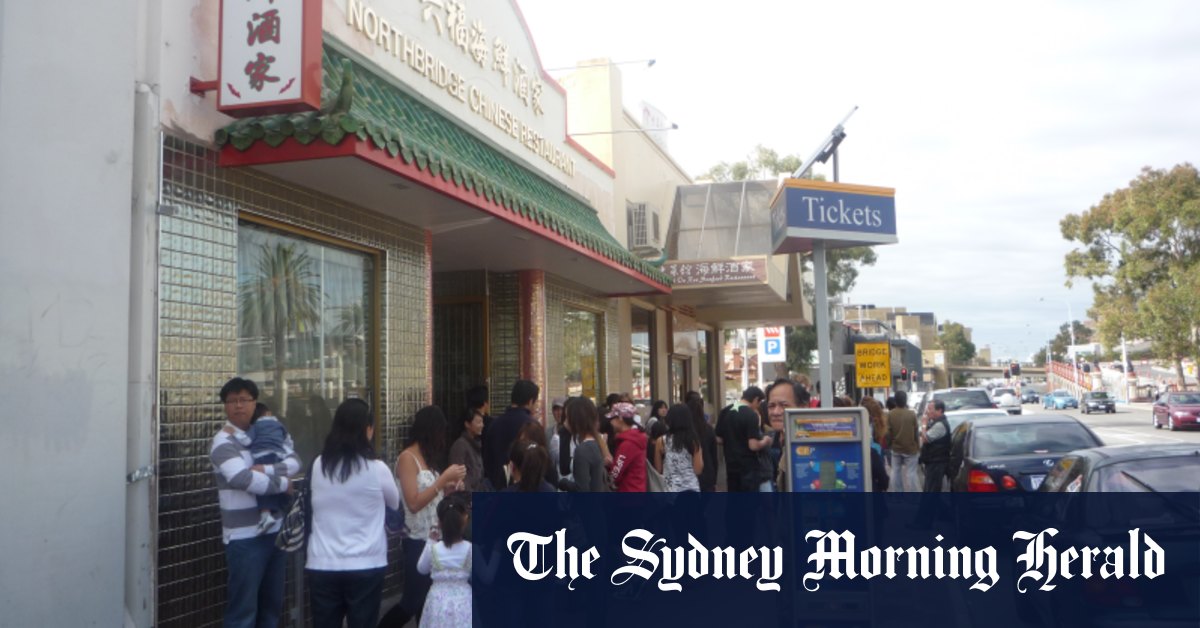
Weekend queues have long been a feature outside Six Fortune, Canton Bay and other dim sum restaurants in Northbridge and suburbia.Credit: Max Veenhuyzen
So when I wrote last week’s review on Canton Lane and how the Belmont restaurant (and other suburban dining options) posed a serious threat to Northbridge’s lock on the dim sum game, I might have made some assumptions about readers’ (collective) familiarity with dim sum and how it works.
And when people get confused, they tend to freeze. Which in this instance, might mean not going to Canton Lane (which you definitely should) or taking a step outside their comfort zone and trying dim sum for the first time.
They definitely should – so here’s a little primer on one of the planet’s great eating experiences.
Dim sum is a Chinese meal of small, shared, assorted sweet and savoury dishes. Equally important to the food component is the tea that you drink with it. According to the legends, dim sum evolved from the practice of tea houses serving guests little bites to eat to go with their tea and keep them around for another cuppa. The origins of tapas follows a similar narrative arc, with Spanish bars serving guests a piece of bread or cheese as a lid (“tapa”) for their drink.
Dim sum is also known as yum cha which is a Romanisation of yam cha, Cantonese for “drink tea”. Dim sum translates to “touch the heart” and refers to the dishes that you traditionally eat while drinking tea. While each phrase refers to a different aspect of the experience, both are used interchangeably – at least in Australia – to denote going out for dumplings and tea. In Australia, dim sum is regarded a brunchtime or lunchtime ritual but within the Chinese diaspora, it can also be traditionally taken for afternoon tea, dinner or between meals.
Most dining experiences involve waiting as your food is prepared, but the bulk of the wait at dim sum happens before you sit down, as you wait for a table. This is especially true if you’re trying to eat at prime time, Saturdays and Sundays from 11am-1pm. Reservations aren’t taken, and tables are first-come-first-serve depending on group size. Most places require your entire party to be there before they’ll seat you, especially at peak time. This is why there are crowds of people clutching raffle tickets blocking the Roe Street sidewalk at weekends.
Once you’ve got a table, if you’re lucky, a lady pushing a steamer trolley (their street name is “trolley aunty”) piled with mini bamboo steamer skyscrapers will materialise tableside and you start picking what you’d like to eat. This works smoothest if there’s just one designated person ordering food on the table. If they’re considerate, they would have asked in the queue what dishes people want, or they’ll already know preferences as well as the restaurant’s specialties or weaknesses.
Read the full article here