



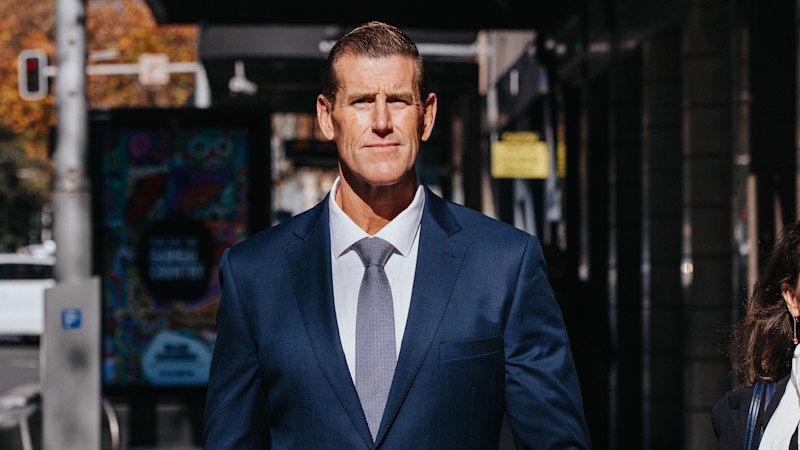
There are so many things to fact-check in this interview, it’s hard to know where to start.
Roberts-Smith has told Fordham that “the stories that I sued on were not the stories that I ended up having to defend in court … the same basic story, but we’re talking about things that would evolve to meet what needed to be proved”.
His implication is that whenever he successfully defended an allegation in the reporting, the story would just morph to fit.
The fact is that all the original allegations in the reporting were successfully defended. Because Roberts-Smith initiated legal action, journalists from this masthead got access to new information and, ultimately, alleged he had been involved in seven murders. Without him taking the legal action, a number of those allegations would not have emerged.
In the end, Justice Anthony Besanko found four of those murders had been found substantially true, including those included in the original reporting.
Roberts-Smith also said that, in the civil system “you don’t have to prove that it’s true”. It was enough “to prove that they believe it, or that it might have happened”.
This is just false. The civil threshold for proof is on the “balance of probabilities”, which essentially means it’s more likely than not that something happened.
But in cases of this seriousness, the “Briginshaw principle” applies. This means “inexact proofs, indefinite testimony, or indirect inferences” are not enough, and that, for grave findings – such as murder or criminal conduct — the court requires clear, cogent, and strict proof, actual persuasion, and proper weight given to the presumption of innocence.
One thing Roberts-Smith said is true, though: “I was so naive in terms of the civil system. I just had no idea how it plays out.”
He’s right. It’s not just enough to turn up in court, funded by a billionaire, and say “I didn’t do it”.
Read the full article here