




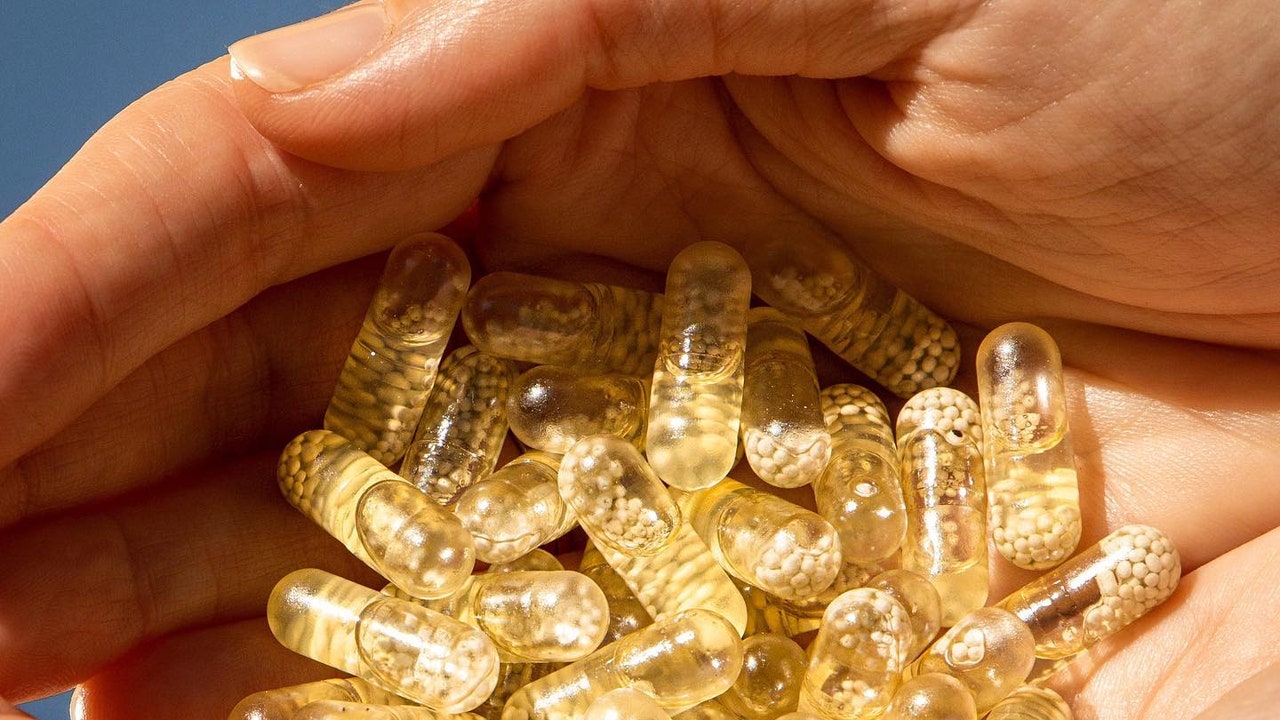
Bloating, constipation and sluggish digestion: the obvious tells of an unhappy gut. But there are subtler signs that you could use a gut reset with the best probiotics for women. From brain fog to bouts of low mood, and breakouts to insomnia and reduced immunity, when your gut is out of balance, your whole system follows suit.
Our Top Picks
In This Story
Enter probiotics. With a recent pandemic, increasing stress, and the rise of ultra-processed diets wreaking havoc on our microbiomes, probiotic supplements have never been a more popular – or essential – defense. There’s a whole lot of information out there, and in a world of lengthy bacteria names and countless colonies, it’s easy to get confused. We’ve enlisted the experts to answer the most common gut health questions, and point us to the best probiotics for women in 2024. More on that below.
Best Overall: Ritual Synbiotic+: Probiotic, Prebiotic, Postbiotic
- Why We Love It: Ritual’s Synbiotic+ is surely one of the most buzzy probiotics on the market. Its benefits come from two probiotic strains of live bacteria—Lactobacillus rhamnosus (LGG) and Bifidobacterium animalis ssp. lactis (BB-12), plus the postbiotic Tributyrin, along with the prebiotic PreforPro—housed in a delayed-release capsule. Together these can help support healthy gut bacteria, bloating relief, and improved immune health.
- Key Ingredients: Lactobacillus rhamnosus (LGG), Bifidobacterium animalis ssp. lactis (BB-12), PreforPro, Tributyrin
- CFU Count: 11 billion
- Form: Capsule
- Serving Size: 1 scoop
- Number of Servings: 30
Best for Gut Health: Wisp Basic Probiotics
- Why We Love It: When we asked Dr. Lucky Sekhon, reproductive endocrinologist, infertility specialist, obstetrician and gynecologist, of her favorite probiotics for women, she recommend these by Wisp. “It contains a variety of beneficial bacteria strains that work together to promote overall wellness, enhance digestive health, and maintain a healthy balance of vaginal flora,” she says. “This supplement is particularly great for its dual-action benefits, making it a convenient option for comprehensive health support.”
- Key Ingredients: Lactobacillus acidophilus
- CFU Count: 100 million
- Form: Tablet
- Serving Size: 1 tablet two times per day
- Number of Servings: 90 day supply
Best for Metabolism: Pendulum Metabolic Daily
- Why We Love It: According to registered dietitian nutritionist and founder of Compass Nutrition Adiana Castro, “many of my patients have low energy and struggle with bloating, especially my female patients right before and during their menstrual cycle.” Which is where Pendulum Metabolic Daily comes in. Each capsule contains five probiotic strains to improve metabolism, strengthen the gut lining, reduce bloating, and maintain a healthy weight.
- Key Ingredients: Clostridium butyricum, Clostridium beijerinckii, Bifidobacterium infantis, Anaerobutyricum hallii, Akkermansia muciniphila
- CFU Count: 300 million
- Form: Capsule
- Serving Size: 1 capsule
- Number of Servings: 30
Best for Vaginal Health: Hum Nutrition Private Party Vaginal Probiotic
- Why We Love It: If you’re in search of a probiotic that prioritizes both vaginal and urinary tract health, consider Hum Nutrition’s Private Party your go-to. In just one capsule per day, this delivers 10 billion CFUs through three strains of probiotics; specifically, lactobacillus acidophilus—a well-researched strain that promotes a healthy vaginal environment, plus lactobacillus rhamnosus and lactobacillus reuteri, which balance the body’s pH. Cranberry extract is featured too for positive urinary benefits.
- Key Ingredients: Lactobacillus Acidophilus, Lactobacillus Rhamnosus, Lactobacillus Reuteri, cranberry extract
- CFU Count: 10 billion
- Form: Capsule
- Serving Size: 1 capsule
- Number of Servings: 30
Best for GI Health: Pendulum Akkermansia Probiotic Capsules
- Why We Love It: Kearny recommends this Pendulum probiotic for the featured akkermansia muciniphila—a bacteria commonly found in the human gut. “Pendulum Akkermansia contains live bacteria that helps support the intestinal lining that supports mucin production to strengthen the intestinal wall,” says Lorraine Kearney, RD, CDN, CEO of New York City Nutrition. “[This] can repair or maintain the gut lining, while also stimulating GLP-1 hormone production to support insulin and glucose levels,” says Kearny. In the brand’s clinical studies, users reported improved GI health, energy levels, and bowel movements, plus decreased sugar cravings.
- Key Ingredients:
- CFU Count: 100 million
- Form: Capsule
- Serving Size: 1 capsule
- Number of Servings: 30
Best with Antibiotics: Culturelle Health & Wellness Daily Probiotic Supplement
- Why We Love It: In Castro’s practice, she often works with patients who have digestive issues and are put on antibiotics. “Antibiotics kill the bad guys as well as the good guys in the microbiome,” she says. “Pairing the Culturelle probiotic with the antibiotic helps reduce antibiotic-associated diarrhea.”
- Key Ingredients: Lactobacillus rhamnosus GG
- CFU Count: 15 billion
- Form: Capsule
- Serving Size: 1 scoop
- Number of Servings: 30
Best for UTIs: Metagenics UltraFlora Women’s Probiotics
- Why We Love It: “Metagenics UltraFlora Women’s is a probiotic that supports the vaginal, immune, and urinary tract health,” says Kearney. “It helps maintain a healthy vaginal pH, vaginal odor, and may decrease UTI recurrence by increasing beneficial vaginal bacteria.” This is achieved by 2 billion CFUs per serving delivered through two probiotic strains.
- Key Ingredients: Lactobacillus rhamnosus GR-1, Lactobacillus reuteri RC-14
- CFU Count: 2 billion
- Form: Capsule
- Serving Size: 1 capsule
- Number of Servings: 30
Best Powder: Athletic Greens AG1
- Why We Love It: Full of fiber, greens powders are gaining ground as an easier way to increase your plant intake, and Athletic Greens’ formula is one of the best supplements to invest in. While experts say it’s not a substitute for fresh wholefoods, fruit and veg, taken alongside a healthy diet it can feed your gut bacteria with generous helpings of prebiotics. The blend also contains probiotics (7.2 billion CFUs in a single scoop, to be precise) and a smorgasbord of vitamins, adaptogens, digestive enzymes and magnesium to keep you well and energised. A one-stop shop of nutrients and multivitamins, this synbiotic is best for streamlining your supplement cupboard.
- Key Ingredients: Lactobacillus acidophilus, Bifidobacterium bifidum, Digestive Enzyme and Super Mushroom Complex, Alkaline, Nutrient-Dense Raw Superfood Complex
- CFU Count: 7.2 billion
- Form: Powder
- Serving Size: 1 scoop
- Number of Servings: 30
Best for Stress and Mood: Artah Biome Restore
- Why We Love It: All the most-studied bugs for better gut health feature in Artah’s latest probiotic complex, including Bifidobacterium longum to ease constipation and L. rhamnosus which has been proven to help IBS symptoms. The real clincher, though, lies in the addition of Lion’s Mane: a nootropic mushroom with numerous benefits for both body and cognitive functioning. A powerful anti-inflammatory, the extract has been shown to promote brain cell growth, improve focus and regulate sleep, with a 2019 study suggesting it even has applications in dementia prevention. Included here alongside 50 billion CFUs of probiotics that target mood, this is a sound choice for those looking to fix the gut-brain axis.
- Key Ingredients: Bifidobacterium Lactis BS01, Lactobacillus Rhamnosus GG, Lactobacillus Acidophilus LA02, Lactobacillus Paracasei LPC00, Bifidobacterium Bifidum BB01
- CFU Count: 50 billion
- Form: Capsule
- Serving Size: 1 capsule per day
- Number of Servings: 30
What are probiotics?
The gut is home to trillions of bacteria, which perform several functions in the human body. They aid digestion, protect against infection and synthesise neurotransmitters, such as serotonin. “Probiotics are microbes, including bacteria and yeasts, that confer a benefit to us across a variety of systems and functions,“ Rhian explains. As they naturally occur in fermented foods (think: kimchi, kefir and sauerkraut) some people question whether probiotic supplements are really necessary. But there’s good reason to invest in a quality probiotic. According to Sophie, stomach acid – which is powerful enough to corrode metal – doesn’t discriminate between good and bad bacteria. “Most of the bacteria consumed in food or liquid format is destroyed before it reaches the gut,” she says. Good probiotics ensure live bacteria survive digestion and can populate the gut.
What is the difference between probiotics and prebiotics?
Dr Megan Rossi tells us that an easy way to understand prebiotics is to think of them as “fertiliser“ for good bacteria in your gut. Fibrous foods and phytonutrients existing in fruit, veg and herbs are a great source of prebiotics. On the other hand, probiotics are the good bacteria themselves. “Generally speaking, if you’re getting a diverse range of plants in your diet – including legumes and wholegrains – then a prebiotic supplement is not typically needed,” she adds. The trouble is that modern diets often miss this mark. “On average, over half of our energy intake in the UK comes from ultra-processed foods,” says Lily Soutter, explaining that these low-fibre convenience foods are correlated with poor health markers and higher levels of bad gut bacteria. To ensure you’re getting ample prebiotics, Pow Food head nutritionist Sam Bourne recommends eating a varied diet with “30 different plant foods each week” – all of which can be found in the fresh gourmet dishes that constitute the brand’s Gut Health bundle.
What are the benefits of supplementing with probiotics?
The key thing to know is there is no one-size-fits-all effect with probiotics. But when your gut is healthy, you’ll find relief from symptoms spanning everything from indigestion to fatigue and general stomach upset. “Some of us will feel some of the more visceral benefits, like a reduction in bloating, better bowel movements, and less discomfort, within a few days,” says Rhian. “Other systemic benefits, like improvements in mood, skin, immune function, and metabolism may take longer. Some benefits of probiotics may not be noticeable at all–like their potential role in long-term illness. We now know that the health of the microbiome is implicated in a long list of disease states, including obesity, diabetes, cancer, cardiovascular disease, asthma, allergies, depression, Alzheimer’s, autoimmunity and more,” she continues. In short, supporting gut biodiversity with good bacteria from probiotics doesn’t just quell tummy troubles–it can help prevent disease and promote improved wellness overall.
How often should women take a probiotic?
How often women should take probiotics is on individual health needs, the specific probiotic strain, and the reason for taking the supplement. “Generally, it’s recommended to take a probiotic daily to maintain a consistent level of beneficial bacteria in the gut and vaginal tract,” says Sekhon. “Taking probiotics consistently at the same time each day can help enhance their effectiveness.”
How soon should you see the benefits of a probiotic?
Probiotics are not one size fits all—meaning how soon one sees benefits varies from person to person. “It usually takes around 3 months to see changes in your microbiome,” Castro explains. “However, each person is different and you may feel benefits after 1-2 months. In my experience, the best way to accelerate the microbiome changes is to feed the probiotics daily. Add prebiotics, fiber, and polyphenols to feed the probiotics daily.”
How to choose a probiotic
According to Kearney, “speak with a Registered Dietitian or healthcare professional before implementing probiotics to identify the correct type and quality of the probiotic. Consuming an inaccurate strain could worsen symptoms or have a negative effect on health.”
She also outlines a few other things to keep in mind during your search: “Other factors to consider include the accuracy of strength by independent third-party testing, a high number of colony-forming units (CFUs), allergen information, being free from artificial additives, storage instructions, and the shelf life of the probiotic supplement to ensure its potency and effectiveness.”
What to look for in a probiotic
With so many supplements on the market, finding the best one for you can be difficult. Dr Megan stresses the importance of three criteria when picking an effective probiotic: microbes have to be alive, they should be present in large numbers and crucially, have evidence of a health benefit – otherwise, they’re a waste of money and time. Look for high numbers of colony-forming units (CFU for short), which is the amount of viable bacteria in a given supplement.
Read the full article here