




In The Sheep Detectives, Mopple has a superpower: The anthropomorphic sheep can’t forget anything. He joins a long line of fictional characters with some version of photographic memory — a strikingly useful skill, or at least a key plot device. Sherlock Holmes uses perfect recall to solve crimes (as long as, in the case of the BBC television series, it’s in his mind palace). And medical student Joy Kwon’s ability comes to the rescue in The Pitt, remembering patient room numbers, symptoms and treatments after the ER loses access to electronic medical records.
But our brains don’t really work that way.
“A lot of people [believe] that our memory acts like a video recorder, that it exactly captures reality, it holds on to it perfectly,” says Gabrielle Principe, a developmental psychologist at College of Charleston in South Carolina. To debunk that idea, she has a simple task for her students: Draw a penny from memory. None can.
Some rare people, mostly children, claim to have what’s called eidetic imagery, or an ability to conjure up mental images of objects even after they’ve been removed from sight. But those images are not perfect and are still temporary. Though exceptional memories exist, everyone forgets. And that is not a flaw.
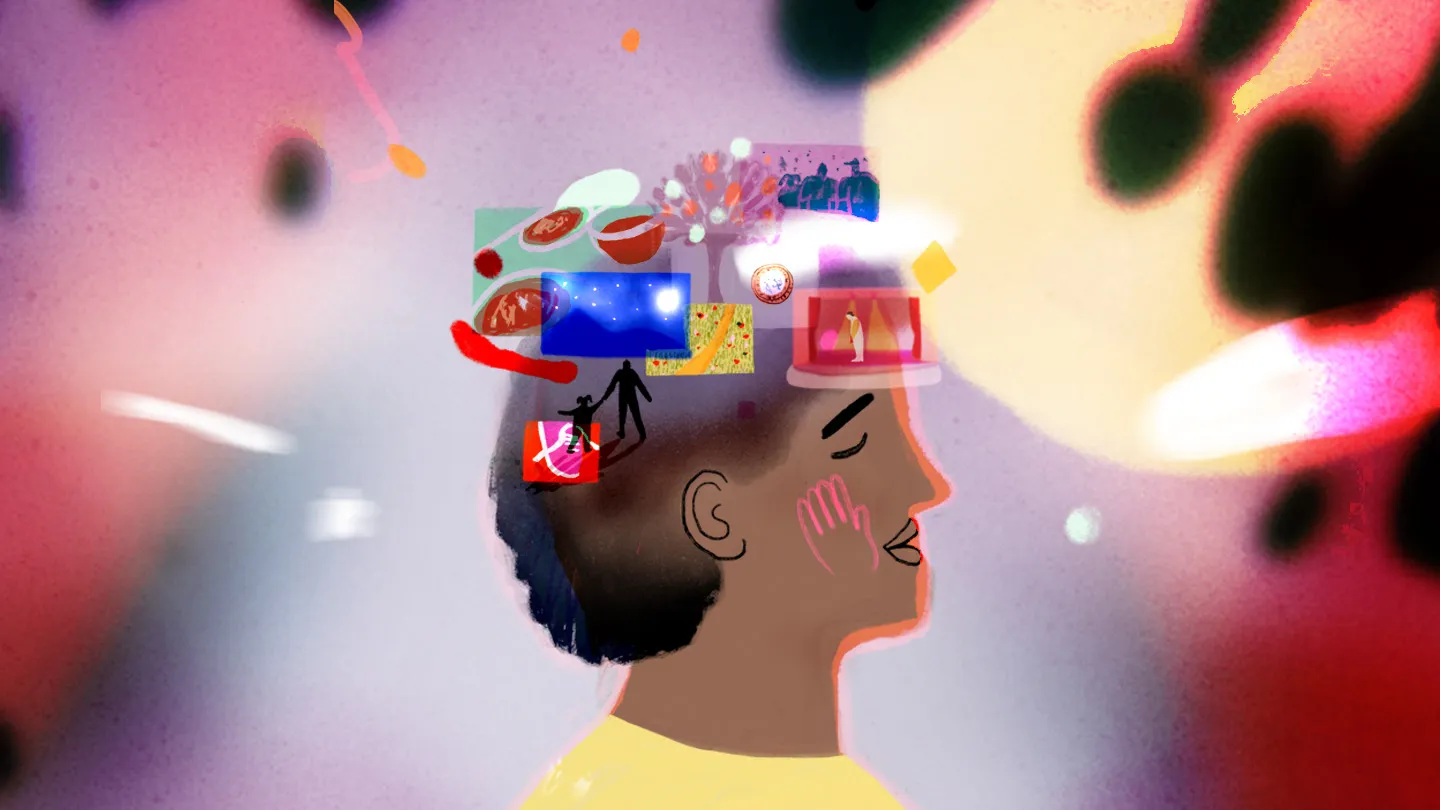
In fact, human brains can’t retain everything. “If we did, we would live in a very cluttered place,” says Simona Ghetti, a developmental psychologist at the University of California, Davis. Our brains wouldn’t know which memories to prioritize, affecting our ability to recall the events or details that matter over unimportant particulars.
The ability to retrieve memories of experiences usually starts around age 3, although most early memories are ultimately lost. “There’s always the occasional person who thinks that they remember going through the birth canal,” Ghetti says. But these claims often fall apart upon careful questioning.
The memories we do hold on to are closely tied to mood. Good ones boost mood, while regularly recalling bad memories can worsen conditions like depression or anxiety. “We forget negative things quicker than we forget positive things,” Principe says. And that “is good for us emotionally,” Principe says.
We’re also inclined to forget experiences that don’t line up with our sense of self, she adds. “If we think that we’re someone who’s kind and optimistic, if there’s times where we haven’t been, we tend to forget those.”
Even retained memories aren’t perfectly preserved photographs. They can be faulty, or flat-out false.
Retrieving memories involves activating collections of nerve cells in various parts of the brain, such as the hippocampi, each nestled near an ear; the prefrontal cortex, toward the front of the brain; and the cerebellum at the back. “Sometimes we grab the wrong thing,” Principe says. “We grab what someone told us, we grab a dream, we grab something we’ve been imagining. And sometimes, those other pieces begin to feel real.” Even people who have the rare ability to remember their own experiences in extreme detail — called highly superior autobiographical memory — can make mistakes.
“Most of the time these false memories are pretty innocuous,” Ghetti says. Perhaps someone incorrectly remembers telling their partner a funny story, when in reality, they told their mother, or it happened only in their imagination. When it’s a memory of a crime though, mistakes can mean the difference between sending someone to prison or not.
As much as we might wish to have a photographic memory in those cases, it’s the forgetting that makes room for the memories we do have. And even if the edges are blurred by time, “nostalgia is wonderful,” Principe says. “I love the fact that I can still think back on my kids, and they can still be babies when I want to conjure that up in my head.”
Read the full article here