


Grading homework and providing feedback to students is arguably the toughest part of being an educator. During my tenure as a professor, reviewing the results of carefully crafted assignments was at best a barometer of how well I was relaying the concepts and crucial elements of the course. In the era of AI, it’s become an infuriating exercise in futility.
Discussion posts littered with complex references to materials outside the course’s accepted reading. Students who were instant masters at the subject matter from day one, taking a page from the classic tactic of “forge your mom’s signature the first time so you can keep forging it forever.”
After reading a story last week about a UC Berkeley math professor who no longer bothers grading his students’ homework because they’re all using AI, I couldn’t help reflecting on my own experience as a professor of practice at the Walter Cronkite School of Journalism and Mass Communication at Arizona State University. With the proliferation of AI tools once ChatGPT launched in late 2022, and tech giants worldwide started following suit, launching increasingly sophisticated chatbots and now AI agents, grading homework became deeply depressing.
In advanced communications courses like the ones I taught, reviewing homework turned into a hypervigilant hunt for the hallmarks of AI-generated text and ideas. The beast was cunning, quick and never slept. My tools for catching it were sorely lacking.
Despite there being no way to verify it, I was fairly certain there were online students in my classes who had never done any of the work themselves the entire course. When those students were given work they could not outsource to AI, like simulations and recorded oral presentations, they reliably struggled to maintain the perfect standard they had set. But when you get A’s all semester, one C or D doesn’t really matter. The AI cheating math still shakes out.
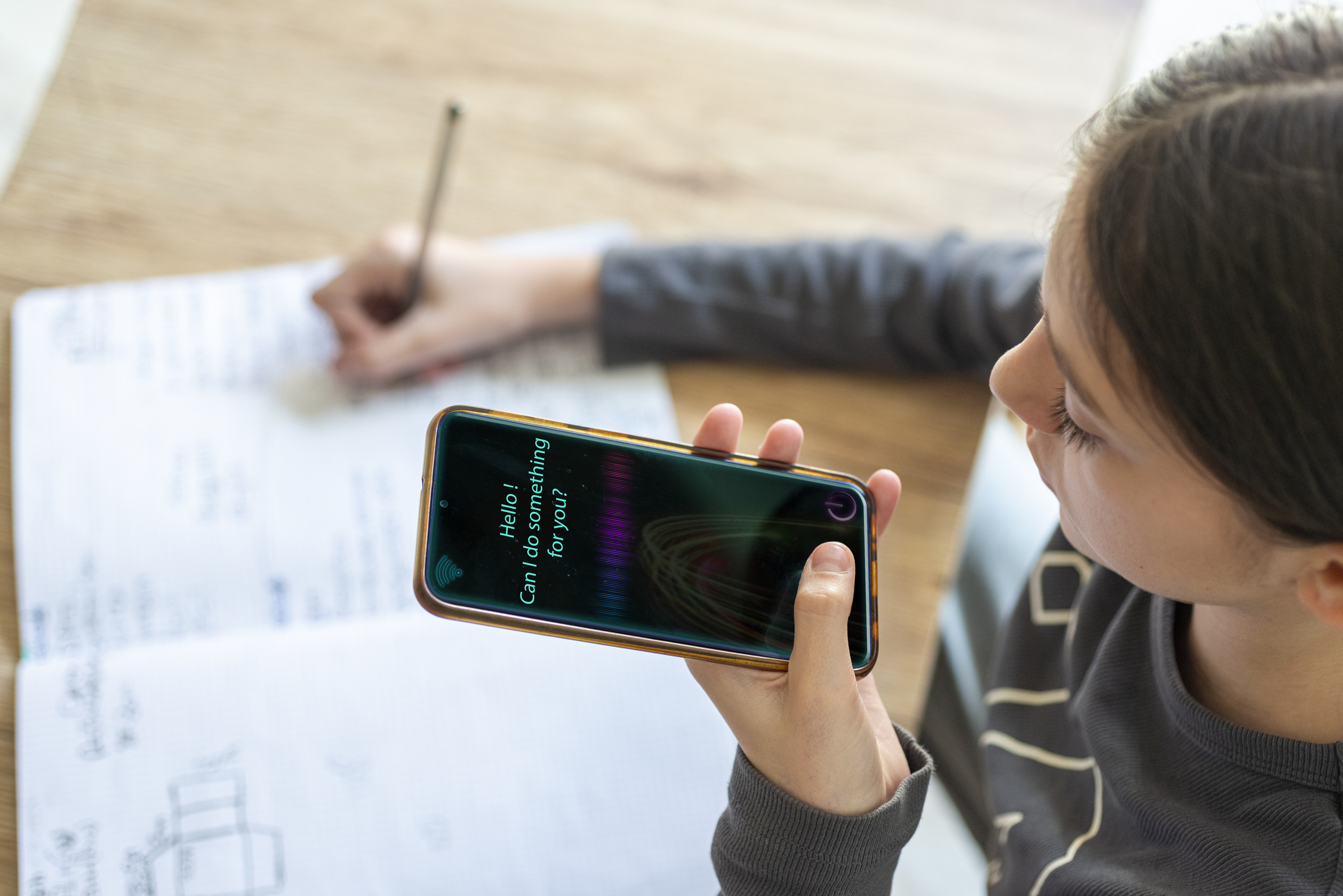
In an effort to keep myself alert to the use of AI tools in completing homework, I always ran a smattering of assignments through a few widely available AI chat tools to compare against student-submitted work.
Most of the time, this method was inconclusive, but by the time I left teaching earlier this year, I suspected that at least 90% of the students I had online were using AI to do all or part of their work.
In my very small in-person classes, I had several confrontations over the unauthorized, clandestine use of AI to complete assignments. One in particular made me rethink the purpose of my work.
A student gave a presentation early in the semester, and when asked a few basic questions in front of the class about how they came up with their ideas, the student was flummoxed, unable to explain the circumstances that led to their own creative output.
We had a talk privately later that day about AI use, and the student admitted to using ChatGPT to create part of their assignment. They agreed to never use it again in my class. On the next assignment, we ended up having the same discussion, and I was given the same promise. It didn’t stick.
When I went to my supervising dean about the use of AI in my classroom and inquired as to whether this case should be referred to the academic integrity board, they told me it was at my discretion and that, candidly, the university and college were grappling with what stance to take in the face of wide AI adoption. ASU’s stance on AI currently reads, in part: “Our focus is on using AI not only to address educational challenges, but to do so in a way that respects and uplifts all learners.”
Education is about the journey, not the outcome
Some might argue that cheating is a natural impulse. On your taxes, on the Monopoly board. Sometimes putting a thumb on the scale is the only way we feel we can win at a game that looks rigged or too hard to beat.
But education isn’t a game. Even though school environments can be competitive, learning is not something at which you “win.” It’s a personal journey meant to unlock fluency you can call on at will, like knowing how to speak a language or effortlessly opening a door.
AI may be viewed as a skeleton key by the students of today, granting instant access to great grades and passable answers that a busy, bored teacher can’t flag as 100% fake. Students who outsource the work of learning take for granted the value in being able to perform expertise with ease, and also risk ruining their credibility at their own peril.
Until our brains are plugged into our computers 24/7, it’s a crutch that educators can’t afford to quibble about any longer.
Read the full article here