



An Alberta couple living with permanent disabilities say they’re facing a significant drop in monthly income due to no fault of their own.
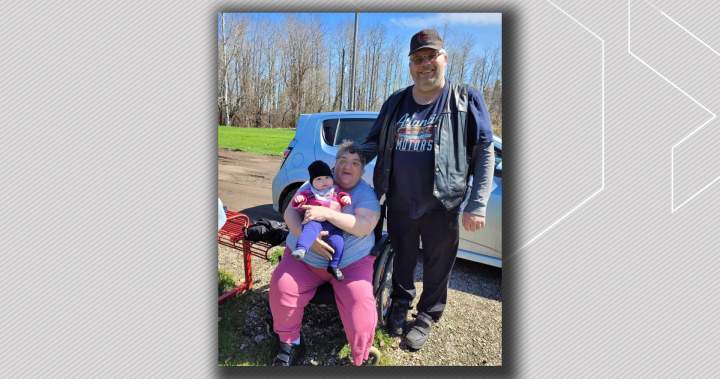
Monique Peters and her husband live in Consort, a village about 200 km away from Red Deer in east-central Alberta.
They both currently receiving Assured Income for the Severely Handicapped, or AISH, but were notified they will be transitioned to the Alberta Disability Assistance Program (ADAP), starting July 1.
The province says the new program is designed to allow recipients to earn more employment income before benefits are reduced.
Peters said that rationale doesn’t apply to her situation and the change doesn’t reflect their ability to earn an income.
“Unfortunately, neither of us can work,” Peters said. She lives with diabetes, a degenerative disc disease and has a prosthetic leg after her own limb was amputated.
Peters has severe mobility challenges and can’t get around without the help of her husband, who she said has a traumatic brain injury that makes him unable to work.
She said her health also prevents her from holding a job, despite being moved to a program that emphasizes employment flexibility.
The couple said they’re on their own and don’t have family supports.
“We didn’t choose the disabilities that we have.”
Under AISH, individuals receive up to $1,940 a month. Those transitioned to ADAP means an individual takes home $200 less a month — $1,740.
Peters said she expected a reduction when the program change was announced, but was surprised by the size of the cut — especially after learning of a new policy affecting couples.
“We were expecting a loss because we were getting transitioned to ADAP, but we were not expecting a loss of $470 because we’re married,” she said.

Get weekly money news
Get expert insights, Q&A on markets, housing, inflation, and personal finance information delivered to you every Saturday.
Starting in August, households where two adults receive either AISH or ADAP benefits will see payments further adjusted.
Each partner will receive 88 per cent of the maximum individual benefit — a change the province says reflects shared household expenses and mutual financial responsibility.
Critics say the timing of the changes is troubling, as Albertans both able-bodied and otherwise face rising living costs.
“People are really struggling right now,” said Chris Gallaway with Friends of Medicare.
“The cost of living has gone through the roof, especially for things like groceries — and now they’re being told they have a couple hundred dollars less a month to live on.”
Being on AISH means living with a strict budget already, and Peters said the changes are causing uncertainty for her household.
“It’s frustrating,” she said. “It’s scary because we’ve got pets, we’ve got a home that we can’t just walk away from.”
While the couple can try to cut back even more on things they can control like groceries, there are expenses completely out of their control that she worries about.
“One more increase in home insurance, one more increase in car insurance — because we’ve had nothing but increases with no claims — is going to cost us our lives and our home.”
The Alberta government has said ADAP payments remain among the highest disability supports in Canada and that the program is intended to give recipients more flexibility to pursue employment where possible.
While the transition to ADAP begins July 1, the province says recipients will receive a temporary $200 monthly top-up until the end of next year.
Officials said that measure is meant to ease the transition or give recipients time to appeal and make a case to remain on AISH.
© 2026 Global News, a division of Corus Entertainment Inc.
Read the full article here