

Control of the US Senate could hang in limbo for weeks as America’s election fate may come down to a slow-motion vote count across Alaska’s frozen tundra.
There are 600,000 voters scattered across a vast expanse of 586,000 square miles, and Alaska’s unusual ballot-counting rules and a legal fight over the contest could delay the result for days or even weeks.
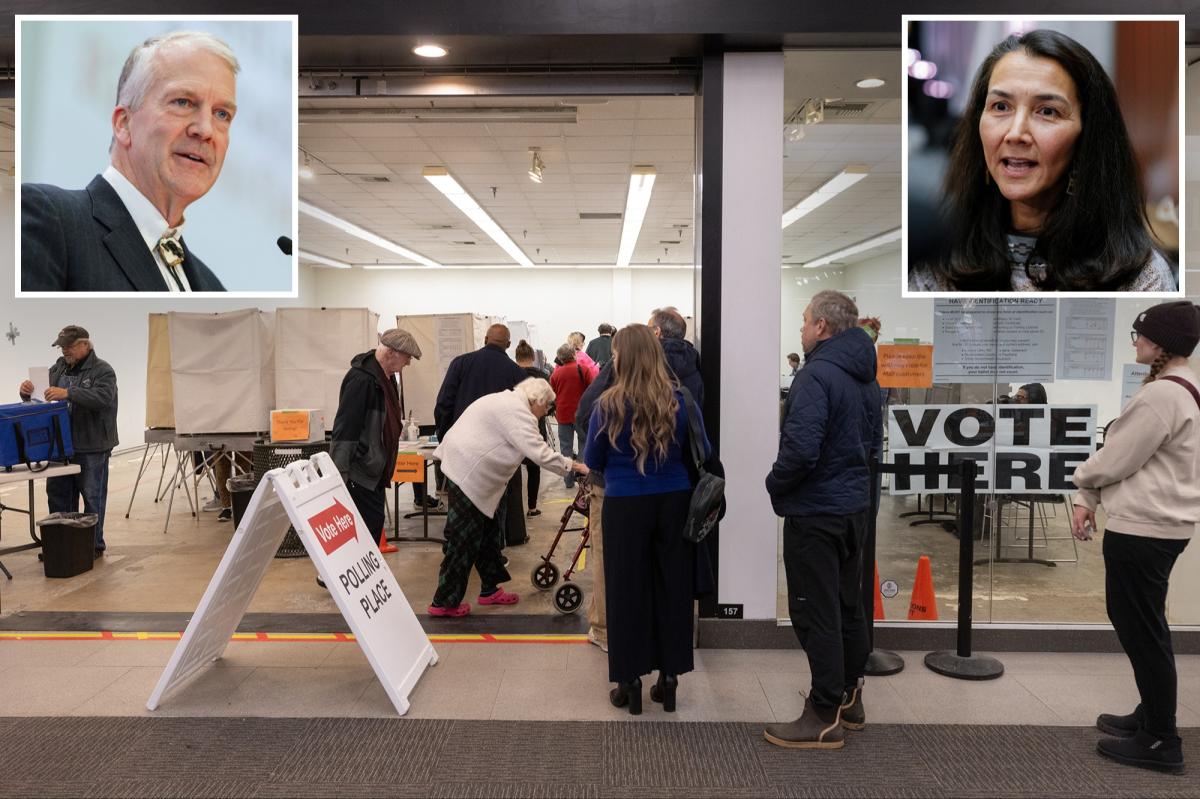
The state’s Senate race between Republican incumbent Dan Sullivan and Democrat Mary Peltola could prove pivotal in determining which party controls the chamber.
“We will [not] know who is going to win Alaska [until] two weeks after Election Day,” predicted pollster Sean Trende, a polling analyst at RealClearPolitics and a fellow at the American Enterprise Institute, which organized an Election Watch briefing Oct. 20.
“It will be a toss-up until the last ballots come in from the Alaskan bush by two-prop engine, and then put it through like five rounds of ranked-choice voting.”
The reasons have to do with Alaska’s unique characteristics and an election season with tossup races even in traditionally Republican states.
At least one Alaska family, the Bondys, traveled by dogsled on an eight-hour, 225-mile trek in order to cast their ballots, as featured in the 2016 documentary OneVote.
Alaska’s rural votes come in by plane in a state that has 16 times as many aircraft as any other. Ballots postmarked by Election Day must be received within 10 days to count — 15 days for overseas ballots.
When former Alaska state Rep. Jonathan Kreiss-Tomkins, the current candidate for governor in a tossup race, won his first election in a nail-biter back in 2012, he had to wait for overseas ballots from as far as Bahrain and Cambodia to finally ice his win.
There are “a lot of rural communities. There’s a lot of military voters and military families here,” said Glenn Wright, a political scientist at the University of Alaska Southeast “That’s how things come and go. A lot of supplies are coming in in the summertime by boat, by barge, by ferry boat. They’re flying ballots in and out.”
Alaska’s ranked choice voting is also likely to slow the count, as election officials reexamine ballots to reallocate them when voters’ initial first-choice candidates don’t make the cut.
But the logistical challenges are only part of the story this year.
The Justice Department filed suit this month to invalidate the result if Sullivan loses, citing the appearance of a second candidate — retired elementary school teacher Daniel J. Sullivan Jr. — on the ballot as an attempt to siphon votes.
President Trump has demanded that Peltola drop out of the race after it was reported her campaign engineered the scheme.
Read the full article here