



Animal rescue advocates are honouring a volunteer who died while helping dogs and are calling on all levels of government to address what they describe as dog overpopulation in Manitoba.
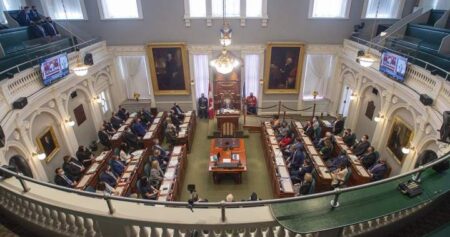
Several groups are expected to gather at the Manitoba legislature Wednesday, including Project Artemis Advocates Winnipeg, the Winnipeg Humane Society and K9 Advocacy Manitoba.
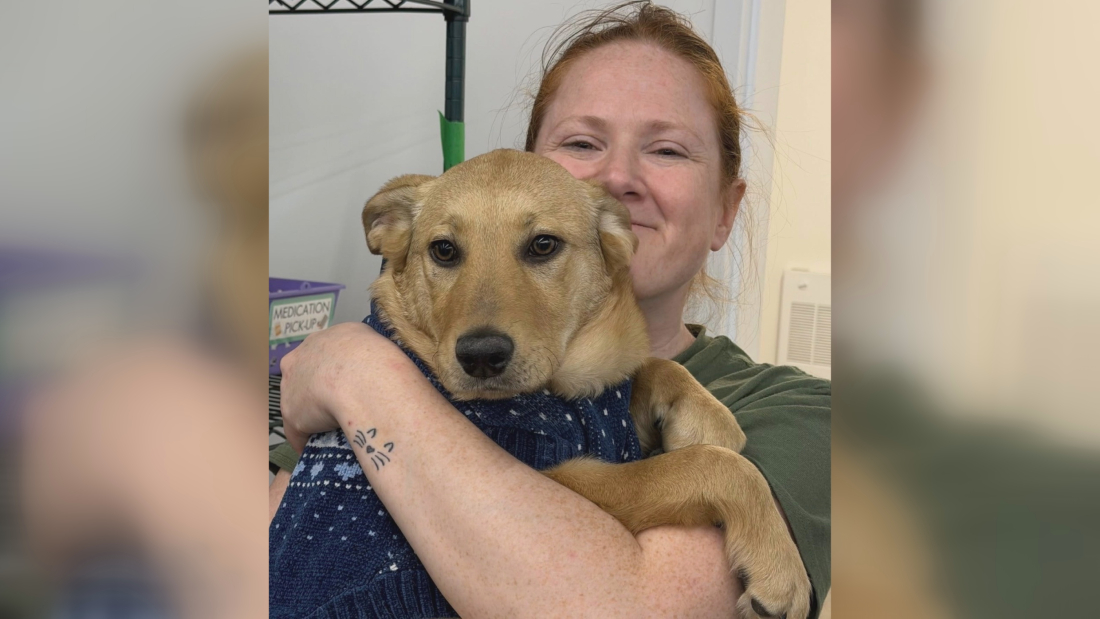
Their gathering follows the death of 37-year-old Amanda Nobiss at Sandy Bay Ojibwe First Nation, her body was found July 17. Nobiss, a Winnipeg woman, was in the area on behalf of K9 Advocacy Manitoba. She was picking up puppies when she was attacked by dogs, according to police.
Kristy Zamonsky, the director of the animal protection and rescue group Project Artemis Animal Advocates, spoke with Global News Wednesday morning.
“The rally that’s happening is in honour of Amanda. She was (a) canine advocate volunteer for a number of years,” Zamonsky said.
“I didn’t know (Nobiss) as well as many other people today, but I did know her. And I think in rescue, you don’t even really need to know them because you’re all working for the same collaborative end.”
The rally will call on local, provincial and federal governments to step in and provide funds to manage stray dog overpopulation, she said.
This overpopulation issue is not new to Manitoba. Two years ago, 45 animal welfare groups signed a letter to the Manitoba government declaring a state of emergency after six northern and remote communities announced they would cull dogs who were involved in attacks in a two-month span in 2024.
“It can’t be on the rescues’ shoulders anymore. It can’t be on volunteers to change a systematic issue. There (are) dog maulings happening on the reserves, and then the response is the dog cullings, and we don’t want those anymore,” Zamonsky continued.

Get breaking National news
Get breaking Canada news delivered to your inbox as it happens so you won’t miss a trending story.
She said rescue groups need funding from all levels of government to continue their efforts, including spay and neuter clinics.
“It’s the rescues that are on the reserves. It’s the rescues that are providing the spay and neuter clinics and they’re doing it out of their own pockets, and they can’t do it anymore,” Zamonsky said.
Speaking before the rally, Winnipeg Humane Society CEO Christina Von Schindler described Nobiss’ death as a “tragedy.”
“We have to look for hope. This can’t happen again. The on-the-ground rescue organizations and the communities have been pleading for more resources. There has been warnings the tragedy would occur,” she said.
“If anything, (it) brings home the serious and harsh reality of conditions in isolated communities.”
Von Schindler said all levels of government, rescue groups and Indigenous communities should collaborate to determine exactly what that solution will look like.
“It is time for a unified front towards a sustainable solution and services to these communities, who are underserved, and to the animals, and the people that love them,” she continued.
“The significant challenge we face in Manitoba is a lot of our isolated communities fall under federal jurisdiction, whereas availability of services is actually provincial to deliver. So, until all voices are at the table getting coordinated, really important issues and entire communities keep getting lost.”
The Manitoba government responded to a Global News interview request with a statement addressing the rally’s calls for change.
“The province recognizes that free-roaming and feral dogs can create risks when they compete for limited resources, spread diseases that can affect people and other animals, or display aggressive behaviour,” it said, adding that Manitoba’s chief veterinary officer supports community work to manage stray animal populations.
“The province acknowledges that animal control is the responsibility of municipalities and individual communities. Local governments determine whether to establish and enforce animal control bylaws based on their community’s needs.”
Its statement acknowledged that “animal control is particularly challenging in northern and remote communities.” The spokesperson said the government “is working to support community-led approaches under the Northern and Remote Veterinary Care Initiative.”
Last year, Manitoba committed hundreds of thousands of dollars to supporting animal rescue groups, according to a government news release from May 16, 2025. It said it would spend $400,000 over four years on community-led work to better animals’ health and position rural, remote communities to manage dog overpopulation.
Global News reached out to the chief of Sandy Bay Ojibway First Nation and the federal government’s Indigenous Services Canada. No comments were received by the time of publication.
A post-mortem examination of Nobiss’ remains indicated she died of “injuries consistent with a dog attack,” according to the Manitoba First Nations Police Service (MFNPS).
“(Nobiss) had planned to pick up several puppies from a local resident. It is believed that Amanda came to the residence alone when the occupant was not home, and came into contact with the occupant’s dogs, who were protective and aggressive,” according to a MFNPS news release.
“Arrangements were made with the band to destroy two male dogs.”
Police said K9 Advocacy rescued a female dog, along with several puppies.
© 2026 Global News, a division of Corus Entertainment Inc.
Read the full article here