



Washington — A federal appeals court on Tuesday ordered an end to criminal contempt proceedings launched by a lower court judge who said the government defied his order to turn around deportation flights carrying Venezuelan migrants to El Salvador last year.
A divided panel of three judges on the U.S. Court of Appeals for the District of Columbia Circuit agreed to grant the Trump administration extraordinary relief to halt the contempt inquiry of Trump administration officials that was ordered by U.S. District Judge James Boasberg.
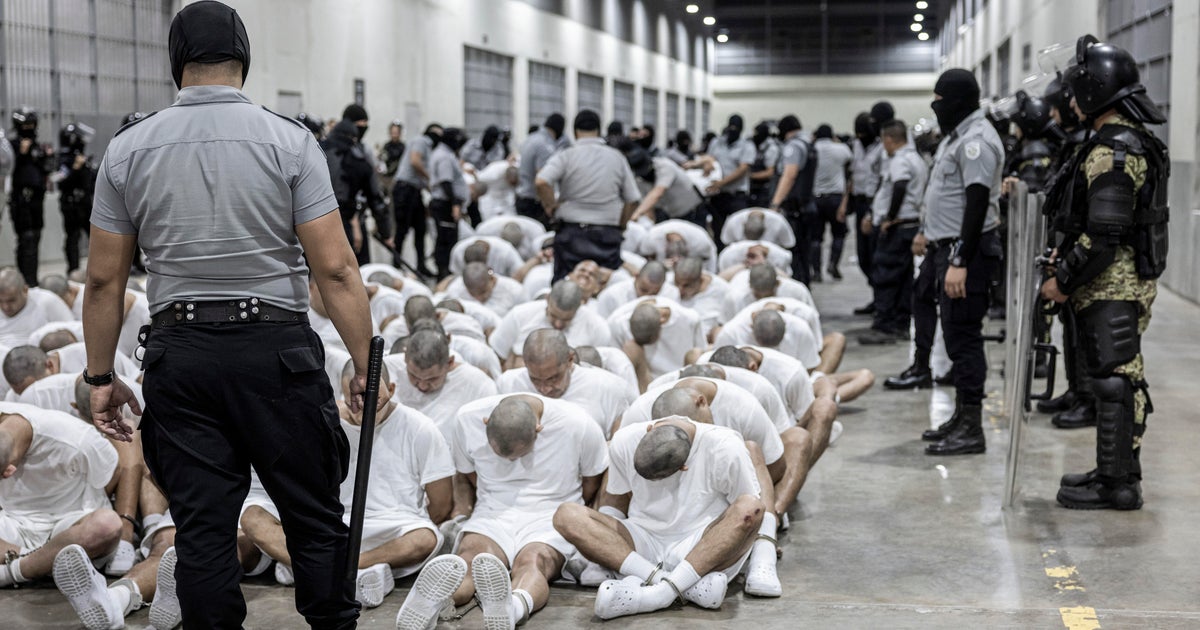
The ruling from the D.C. Circuit is the latest development in a winding legal battle that arose from President Trump’s invocation of the Alien Enemies Act last March to summarily deport more than 200 Venezuelans to the notorious Salvadoran prison known as CECOT. The administration accused the men of belonging to the Venezuelan gang Tren de Aragua, but a CBS News investigation found that most of the men lacked any apparent criminal record.
Boasberg had issued an oral order during fast-moving legal proceedings more than a year ago that demanded federal immigration officials turn around two planes of Venezuelan migrants that were bound for El Salvador. The judge later said the Trump administration defied the order.
He then found probable cause that the government committed criminal contempt and began efforts to determine who was responsible for ordering the two jets to continue onto El Salvador. The government later said it was then-Homeland Security Secretary Kristi Noem.
But in an opinion authored by Judge Neomi Rao, the D.C. Circuit panel said Tuesday that the proceedings “are a clear abuse of discretion.” Relief to the Trump administration “is appropriate to prevent the district court from assuming an antagonistic jurisdiction that encroaches on the autonomy of the Executive Branch,” she said.
“The district court has launched an intrusive criminal contempt investigation into whether the government acted willfully when it transferred suspected Tren de Aragua members to Salvadoran custody. But the end of this investigation is a legal dead end,” Rao wrote.
The two-judge majority found that the case raised separation of powers concerns, since the judiciary was attempting to investigate executive branch deliberations into matters of national security and foreign policy, areas that are committed to the political branches, not the courts.
“These proceedings improperly threaten an open-ended, freewheeling inquiry into Executive Branch decisionmaking on matters of national security that implicate ongoing military and diplomatic initiatives,” Rao wrote, calling the contempt inquiry a “judicial intrusion into the autonomy of a co-equal department.”
She was joined in the majority by Judge Justin Walker. Both were appointed to the D.C. Circuit by Mr. Trump in his first term. Judge J. Michelle Childs dissented.
Childs wrote “we cannot judge the early actions of a trial court in such a proceeding heavy-handedly, for contempt of court is not addressed for the district court’s vanity; it is done to preserve and enforce our law.”
“Here, unfortunately, we have overstepped in adjudicating this balance of interests,” wrote Childs, who was appointed by President Joe Biden.
In response to the decision, Acting Attorney General Todd Blanche wrote on social media that it “should finally end Judge Boasberg’s year-long campaign against the hardworking Department attorneys doing their jobs fighting illegal immigration.”
Lee Gelernt, a lawyer with the ACLU who represented the Venezuelan migrants, called the D.C. Circuit’s decision a “blow to the rule of law.”
“Our system is built on the executive branch, including the president, respecting court orders. In this case there is no longer any question that the Trump administration willfully violated the court’s order,” he said.
The Alien Enemies Act deportations
Mr. Trump issued his proclamation invoking the Alien Enemies Act in March 2025, kicking off a protracted legal battle over his use of the 228-year-old law that landed before the Supreme Court in its earlier stages. Several lower courts have since blocked the Trump administration from deporting Venezuelan migrants under the president’s declaration.
In February, Boasberg ordered the U.S. to facilitate the return of certain Venezuelan migrants who were removed to El Salvador during the Alien Enemies Act deportations and are challenging the government’s actions. The Justice Department has appealed that order.
The Trump administration had asked the D.C. Circuit to intervene and stop Boasberg’s contempt proceedings once before.
In August 2025, a different panel of three judges split 2-1 and granted the Trump administration’s request to set aside Boasberg’s order finding probable cause that federal officials committed criminal contempt.
The full complement of judges on the D.C. Circuit declined to reconsider the panel’s decision, but found that Boasberg could continue his probe into whether the Trump administration had violated his order.
In November, Boasberg said he was resuming his investigation. He ordered the ACLU, which is representing the Venezuelan men, to attempt to secure a Justice Department whistleblower at the center of the dispute, Erez Reuveni, for live testimony, alongside Drew Ensign, a top Justice Department attorney.
Ensign was the government attorney whom Boasberg directed to instruct the Trump administration to turn the planes carrying the men to El Salvador around.
Boasberg also ordered Noem, Blanche and former Justice Department official-turned-federal judge Emil Bove to disclose what conversations the Trump administration had about disregarding his order. All declined to provide details.
“I will be going forward with it,” Boasberg said in a hearing last year. “I certainly intend to find out what happened that day.”
Read the full article here