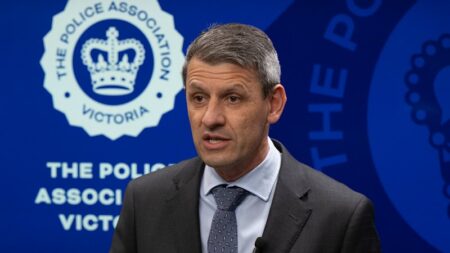


“With no further legal options available on this matter, the closure of this litigation is an important milestone in that mission.”
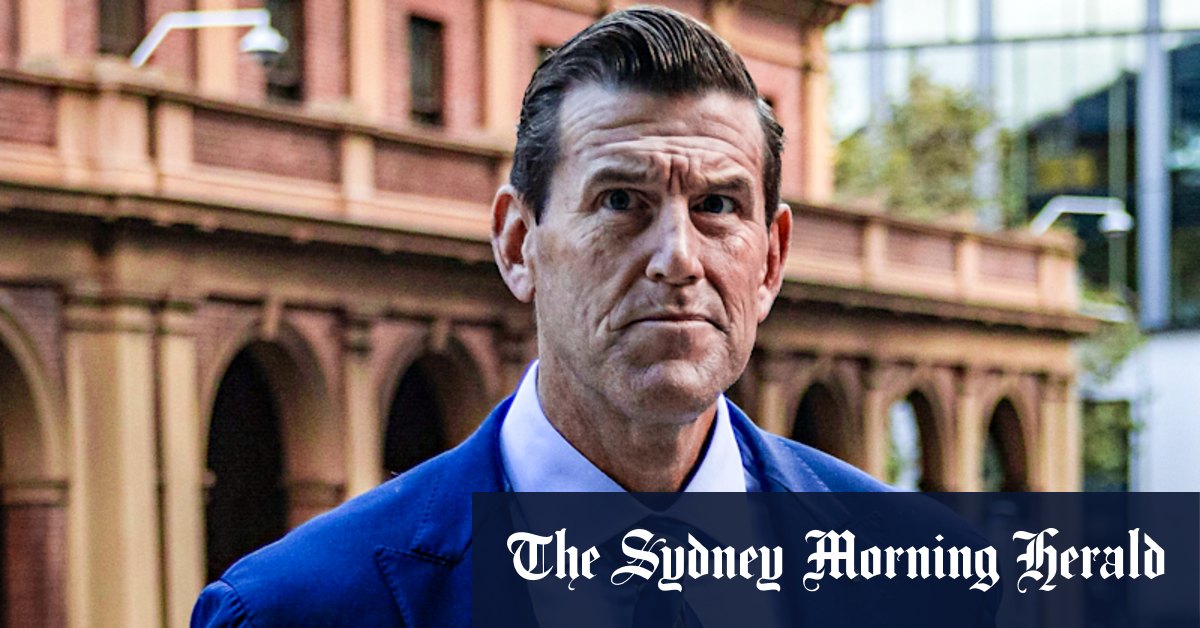
In a decision in 2023, then-Federal Court justice Anthony Besanko upheld the newspapers’ truth defence and found to the civil standard of proof that Roberts-Smith was complicit in the murder of four unarmed prisoners, including a man with a prosthetic leg, while deployed in Afghanistan between 2009 and 2012.
Roberts-Smith lodged an appeal. The Full Court – Justices Nye Perram, Anna Katzmann and Geoffrey Kennett – said in a decision in May that the evidence was sufficiently cogent to support Besanko’s findings that Roberts-Smith murdered four Afghan men, contrary to the rules of engagement that bound the SAS.
The High Court refused special leave to appeal against that decision and ordered the former soldier to pay the newspapers’ legal costs.
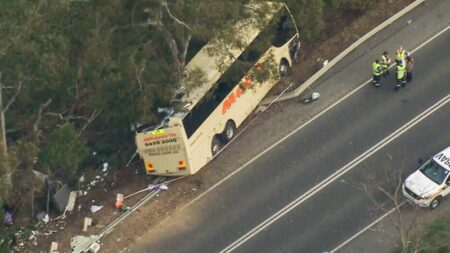
At the centre of the case was an allegation that Roberts-Smith machine-gunned the man with the prosthetic leg outside a compound dubbed Whiskey 108 during a mission on Easter Sunday, 2009.
The Full Court said it found “no error” in Besanko’s approach, pointing to three eyewitness accounts given in court.
“The problem for [Roberts-Smith] is that, unlike most homicides, there were three eyewitnesses to this murder,” the Full Court said.
“When all is said and done, it is a rare murder that is witnessed by three independent witnesses.”
The war veteran’s defamation case was aimed at The Age and the Herald, owned by Nine, and The Canberra Times, now under separate ownership. The trial started in 2021 and concluded in July 2022 after 110 days, 41 witnesses and a combined $30 million in legal costs. The appeal cost the parties a further $4 million.
Roberts-Smith’s former employer, Seven West Media chairman Kerry Stokes, bankrolled the trial using private funds but did not pay for the appeal. Stokes is on the hook for Nine’s costs in the trial.
Roberts-Smith agreed in 2023 to pay $910,000 into court as security for Nine’s legal costs as a condition of bringing the appeal.
The litigation was beset with twists and turns, including a failed application by Roberts-Smith to reopen his appeal before the Full Court’s decision was delivered to allow a “secret recording” of McKenzie to be admitted into evidence.
In a decision on legal costs, delivered on Thursday, the Full Court rejected an argument by Roberts-Smith that he should not be ordered to pay the newspapers’ costs of responding to that application.
His lawyers had argued there should be no costs order because the application raised a novel point and had a public interest character, but the Full Court did not accept that characterisation.
“[We] do not agree that the re-opening application had a public interest character and we do not think it raised a question of general importance or difficulty,” the Full Court said.
Read the full article here