



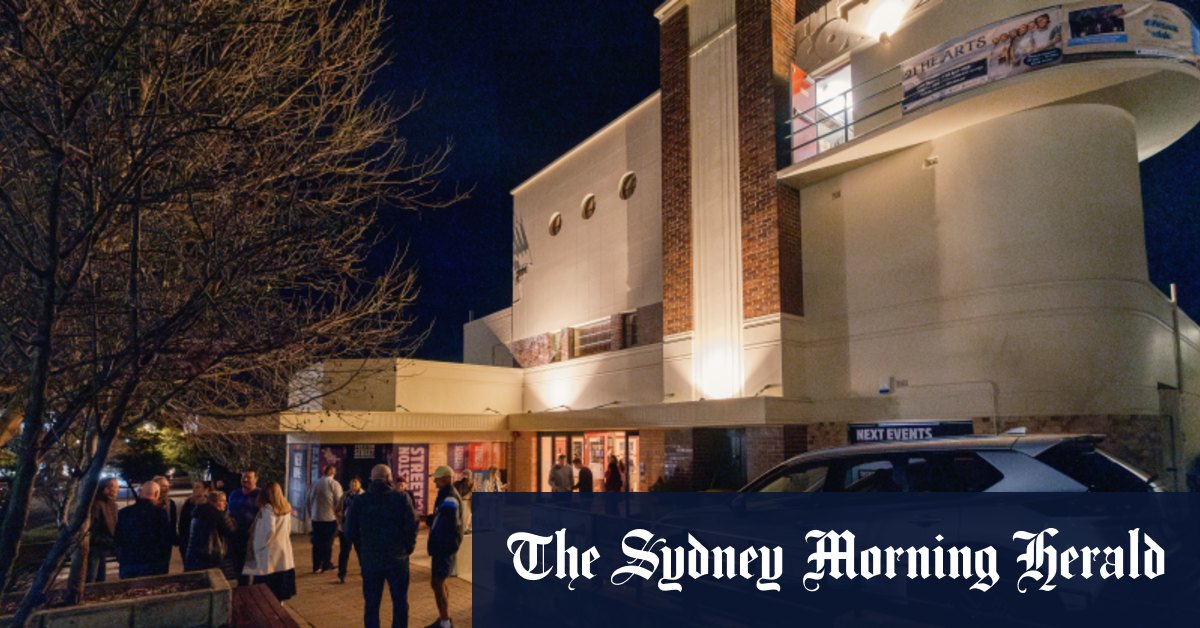
The theatre will be the heart of a major development that will see Preston Street get some of the inner-city development action that has transformed the Raffles Hotel side of Canning Bridge and the area around Mends Street in South Perth, dragging the somnolent south of Perth into modernity.
APC’s Brett Jackson, a longtime Como resident who comes from one of the farming families who famously settled in the area, says Como wasn’t always dull.
New shows are bringing crowds back to the foyer. Credit: Anthony Tran
“Preston Street was the tram depot, which is why the street is so wide,” he said.
“It brought people from all over Perth. They were mostly working-class people. They would go to the Ballroom. Later Peter Harries had his Knight Klub there. Como Beach even became a notorious spot for nude bathing. And there was the Como Theatre which opened in 1938. There was a huge amount of activity and working-class people didn’t feel out of place.”
He said the Kwinana Freeway killed off Como as a leisure and entertainment hub.
“The final nail in the coffin was television, which meant that single-screen cinemas like the Como Theatre were no longer viable,” he said.
“It operated as a cinema over the decades but has never really been successful.”
Como Theatre (the name preferred by the Heritage Council) will be transformed into a full-blown arts and performance space capable of hosting film, theatre, music and comedy suiting the 500-seat auditorium.
“What a dynamic arts centre will give Preston Street and Como and South Perth is immeasurable,” Jackson said.
“A medical centre will bring in people during the day, an arts hub will bring people in at night. It will bring diversity and make the area more attractive.”
‘A young audience is buying vinyl, old cameras – and watching film’
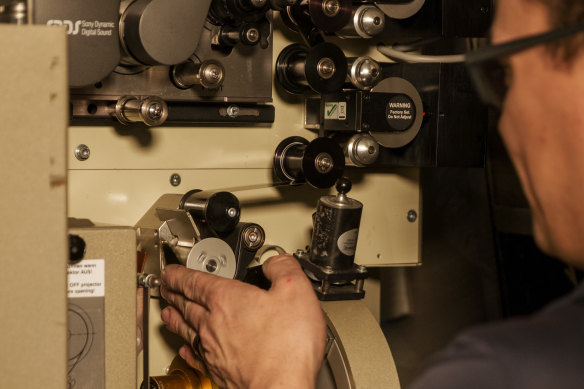
The projector room.Credit: Anthony Tran
Satria Leech has been projecting movies since the age of seven. Standing on a milk crate in the bio-box of Perth’s Piccadilly Theatre, which his father Malcolm ran, little Satria would thread the film, change the spools and correct the focus.
“Film — celluloid — is something that is close to my heart,” he said.
“Don’t get me wrong: digital cinema is wonderful. It’s clean, it’s crisp, it’s sharp. But there is something about celluloid — the grain, the texture, the flicker — that makes it a more genuinely filmic experience. It is why younger people are rushing back to cinemas projecting celluloid.”
Leech teamed with another Perth celluloid obsessive, entertainment industry veteran Robbie Denman, to form The Revival House at Como Theatre, projecting 35-millimetre prints (occasionally 16-millimetre) from a collection of films they’ve each gradually acquired over the years or rented for the occasion.
The Revival House has been screening a madcap mix of movies, from family favourites such as The Bee Movie, A Bug’s Life and Stuart Little through to grown-up classics such as The Shining and Citizen Kane.
What has shocked Leech and Denman is that the core audience is not locals but a new generation into analogue art. They’re buying vinyl, old cameras and now they’re rewatching movies they grew up on in their original form.
“A young audience from across the metro area is coming to experience film,” says Denman, a veteran of the music industry who has plans on bringing in bands as the building comes up to spec and operating under the Preston Street Arts Collective banner.
“For me it is about getting prints that are rotting in people’s garages and giving them a second life. We want to rescue these prints and keep film alive.”
‘We had some of our biggest crowds ever for A Fortunate Life at the Cygnet’
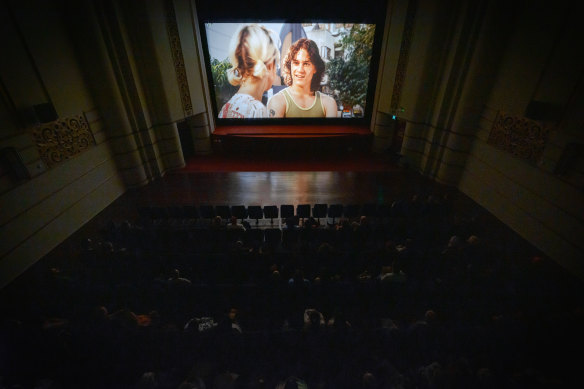
An audience watches the Aussie classic Two Hands on film. Credit: Anthony Tran
Theatre 180’s connection to Como began before COVID when they staged the first of their now-celebrated cine-plays, Albert Facey’s A Fortunate Life, in which they use the techniques of theatre and film to bring to vivid life a West Australian story, at Cygnet.
“There is such a deep connection to the building,” Theatre 180 artistic director Stuart Halusz said.
“The other reason why A Fortunate Life struck such a deep chord with local audiences in the area is that so many of the residences have connections to the country. Como has long been known as the suburb in which farming families bought properties. So being a company committed to touring and telling Western Australian stories the Preston Street Arts Collective at The Como Theatre is the perfect place for us to be.”
Loading
Halusz said locals were over the moon about the prospect of the location becoming a full-blown arts centre.
“A day doesn’t pass when someone strolling down Preston Street steps into our office to find out what’s going on,” he said.
“Or [they] tell us how wonderful it is that we are helping to keep The Como Theatre Alive.”
Read the full article here