



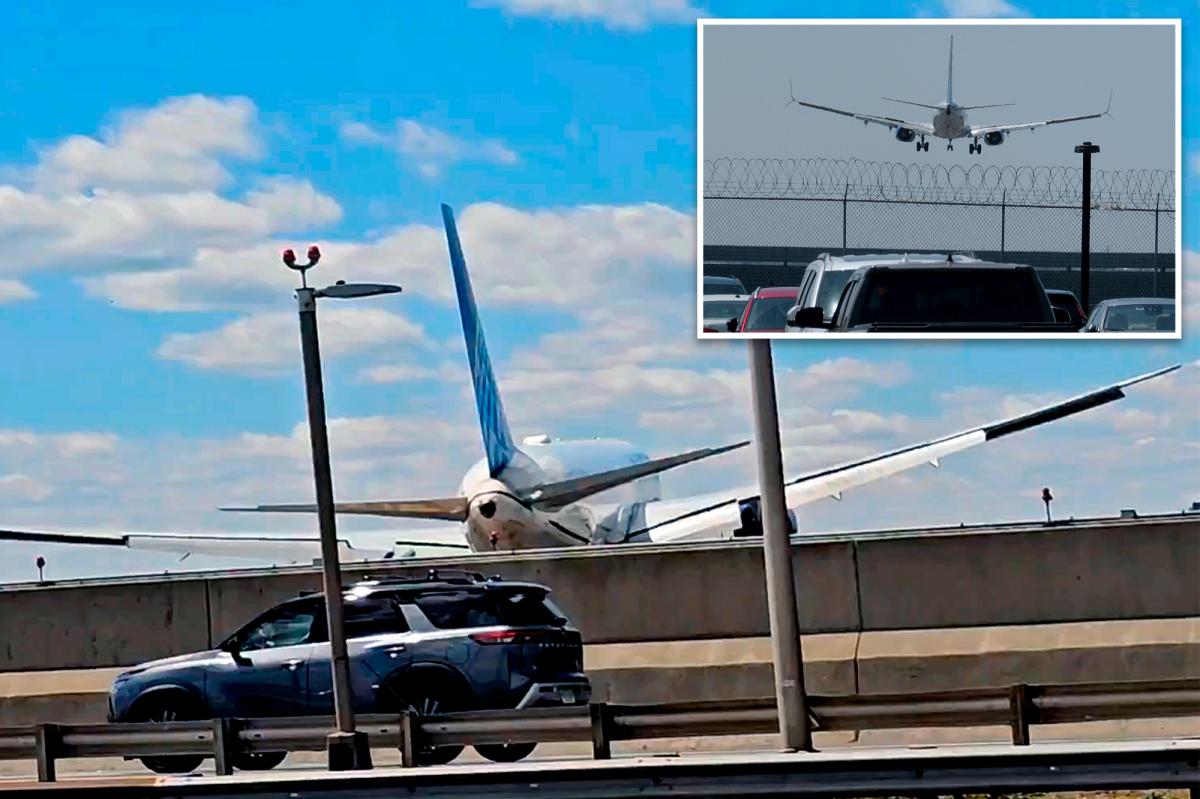
The copilot of a United Airlines passenger jet that struck a light pole as it landed at a New Jersey airport last month recognized the plane was coming in low, but told investigators he didn’t realize it in time to call for an aborted landing, according to a new report Thursday.
Crewmembers on the May 3 flight from Venice, Italy, also recalled hearing a loud “thump” and feeling a “mild jolt” just before touchdown at Newark Liberty International Airport, the National Transportation Safety Board stated in its initial report.
The first officer recalled saying “you are still slow and a little low” as the plane descended, according to the report. He then recalled looking back outside and thinking the plane was low, but just about to touch down.
The report provides the first description of the events from the crew inside the plane, but it doesn’t identify a specific reason why the plane came in so low, or make recommendations about how to prevent similar incidents. That’s not expected until the NTSB releases its final report, likely sometime next year.
But the report clarifies for the first time that it was debris from the light pole, and not the plane itself, that hit a truck traveling on the New Jersey Turnpike. Law enforcement officials initially said the plane had hit the top of a bakery truck, causing minor injuries to the driver.
The report says the truck’s windshield was damaged and its trailer punctured, but that there was no evidence of tire marks on either the tractor cab or trailer.
The Boeing 767 was able to land safely, though it sustained “substantial” damage to its fuselage and one of its landing tires had evidence of slash marks, according to the NTSB report. None of the more than 200 people aboard the plane were hurt.
Regular drivers on that stretch of Interstate 95 near the Newark airport are likely used to seeing planes coming in low as they cross the highway in preparation for landing.
Dashboard camera video from inside the truck showed the moment of impact. The driver is seen singing happily to himself, then glancing out his window with a slight look of concern as the sound of the jet’s whining engines begins on the recording. A moment later, part of the plane zooms into view out the driver’s side window.
Spokespersons for United didn’t immediately respond to an email from The Associated Press seeking comment.
But the NTSB report suggests the pilot intentionally took a shallow approach to the runway that was below the established flight path, said D. Blake Stringer, director of the Center for Aviation Studies at The Ohio State University.
“It’s not surprising that the airplane clipped infrastructure near the runway,” he said. “If a pilot can’t fly the intended flight path, the general recommendation is to steepen the angle of descent, not shallow it out.”
Steve Arroyo, a retired United Airlines captain and safety expert, said the pilots don’t appear to have properly prepared for their designated runway’s unique landing requirements, even though they could have made or requested more time.
“They were already below where they should have been before they even crossed over the New Jersey Turnpike,” he said.
The plane’s runway assignment changed three times before landing, the report states. The tarmac it ultimately landed on is the shortest runway at the airport and is generally only used when there are strong winds like there were that afternoon.
Aviation safety expert Jeff Guzzetti said those strong winds also appeared to be challenging for the pilot.
At one point shortly before landing, the pilot told investigators that he “got fast” as he turned the airplane into the headwind, the report states. The pilot pulled the power levers back to compensate as wind gusts produced “moderate turbulence.”
An air traffic controller told the pilots at the time winds were gusting up to 31 mph (50 kph).
Read the full article here