



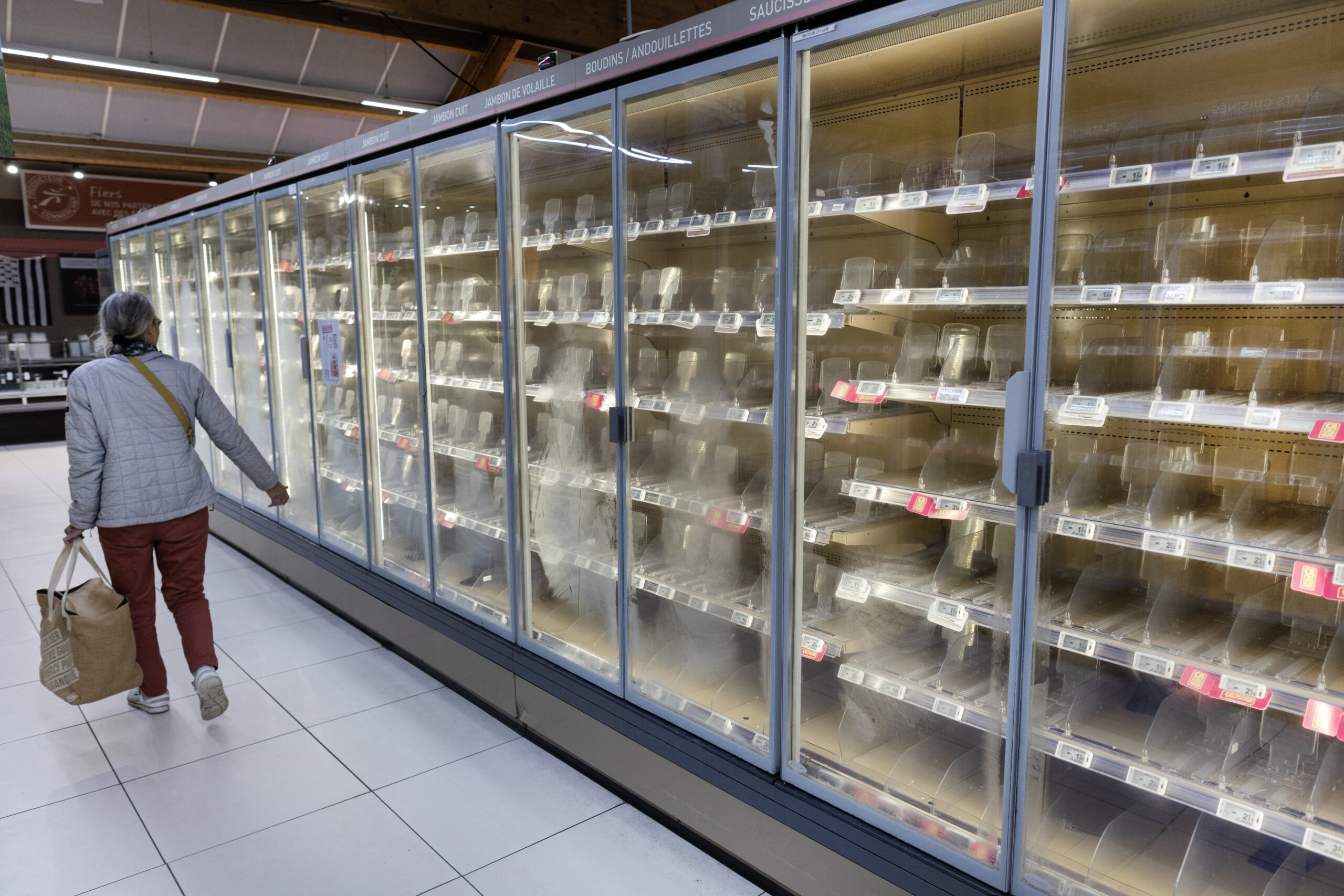
Hundreds of supermarkets in France were the subject of a coordinated hack early Monday morning that turned up the heat on fridges and freezers, causing food to spoil and, in some cases, fires to break out.
According to reports from AFP, three major grocery chains in the country — E. Leclerc, Intermarche and Cooperative U — reported that hackers forced connected fridges and freezers at hundreds of stores to go into defrost mode for several hours, raising their temperatures to 50 degrees Celsius. Paris authorities told the news agency that other grocery chains were also hit.
While it’s unclear who is responsible for the attacks or the exact exploit chain used, the hackers targeted software on two Danfoss system controllers. The company told the industry publication Cooling Post that the affected systems, AK-SM800 and AK-SC355, were running outdated firmware. “We are working with affected customers to implement appropriate mitigation measures, including firmware updates where available, stronger network protections and removing direct internet exposure where applicable,” Danfoss told Cooling Post.
On a web page for its AK-SM800 controllers, Danfoss says the company “takes security seriously” and that “new measures are being implemented” to improve security.
A representative for Danfoss did not immediately return a request for comment.
The incidents are alarming for several reasons. In addition to proving yet again that network-connected devices, especially older ones, can be targets of attack, the French supermarket attack highlights vulnerabilities in global food supplies that can be quickly and dangerously exploited.
Dominique Schelcher, CEO of Cooperative U, said in a post on X that an investigation into the attack is underway. “Targeting equipment essential to the preservation of fresh products and to the food supply of the French people is of extreme gravity and is unprecedented,” he posted (translated from French).
The ‘internet of things’ is being attacked
The attack on a French supermarket underscores the growing risk of attacks on operational technology and cold-chain infrastructure. Though the fridges and freezer units weren’t consumer smart fridges with app controls and touch screens, the controllers were connected to the internet to remotely manage defrost cycles, temperatures and alarms across many stores.
Companies may have many reasons for using these kinds of OT devices. They can log temperatures to ensure they’re meeting food safety standards, deploy firmware updates to prevent security incidents like this one and get alerts if a fridge or freezer is malfunctioning. Some devices like this also monitor inventory or even update prices for digital shelf displays.
But in the same way that appliances from companies such as Samsung can be affected by a hack or even software glitches — like a recent incident in Korea that bricked some smart fridges — these industrial devices rely on imperfect software and internet connections, which expose them to the outside world.
If that’s not scary enough, these are the same types of vulnerabilities that can make utilities such as power grids, water suppliers and even nuclear power plants vulnerable to attack.
Read the full article here