




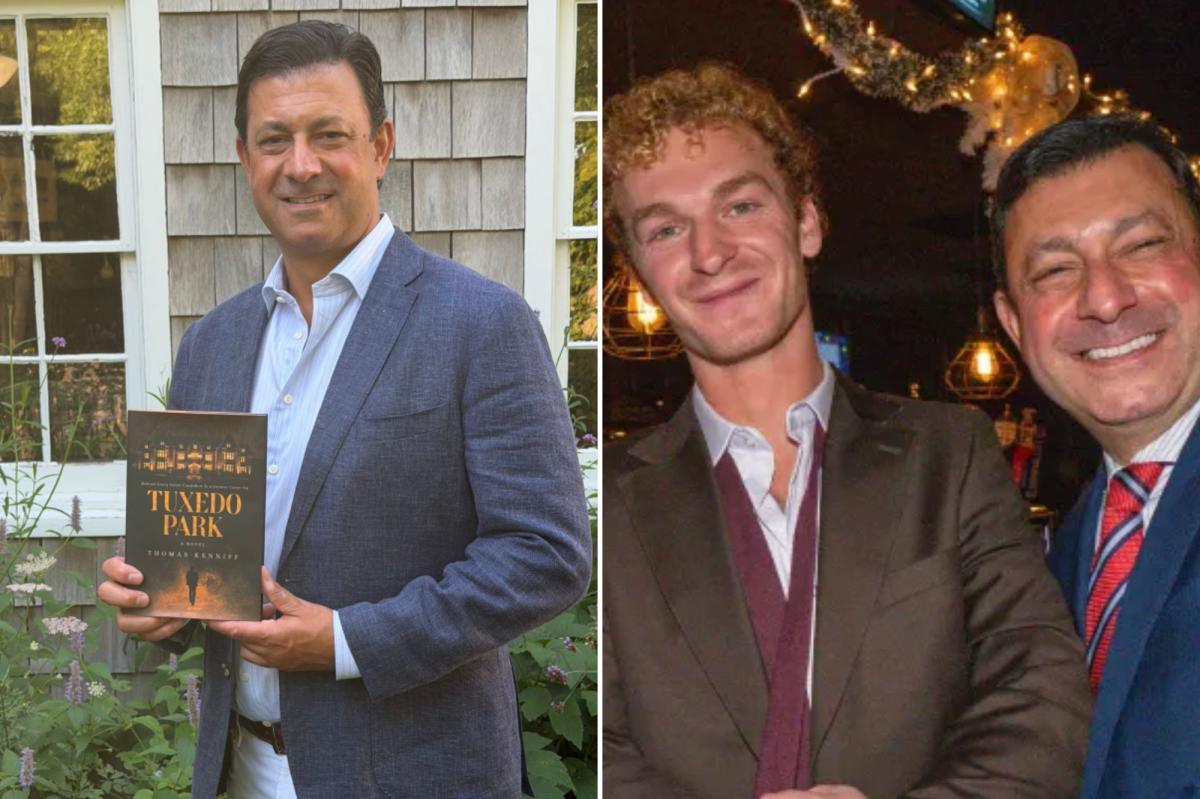
Attorney Thomas Kenniff, 51 — who along with his law partner Steven Raiser succcessfully defended subway Samaritan Daniel Penny in a sensational trial that captivated the nation in late 2024 — is adding another chapter to his career: author.
His debut novel “Tuxedo Park” (Post Hill Press) was released this past Tuesday. The legal thriller, which centers on a race to bring a president-elect to justice, is already garnering him notable praise.
Former Illinois Gov. Rod Blagojevich tweeted that Kenniff is the “next Scott Turow” — the lawyer-turned-author who penned the 1999 bestseller “Presumed Innocent.”
And if anyone knows a good yarn about unscrupulous politicians and unbridled ambition, it’s the wildly colorful Blagojevich who served eight years in prison on corruption charges before receiving a pardon from President Trump in February 2025.
But Kenniff found influence from another attorney and famed author. “I read a lot of John Grisham when I was a teen, and I loved a ‘Time to Kill,’” he told The Post.
“Tuxedo Park” follows prosecutor John Palmer as he investigates the abduction of his old flame — glamorous former model Susan Sterling — from outside her family home in the old money enclave Tuxedo Park. When she turns up dead in a forest, the trail of evidence leads to Kent Dawson, a charming Kennedy-esque Senator with a new title: president-elect.
In a race against time, Palmer and his mentor, fellow lawyer Don Haggerty, must maneuver through a minefield of stonewalling bureaucrats, black ops and a ruthless political machine hellbent on ensuring their man makes it to the White House.
While much of the story plays out in the courthouses and government buildings of downtown Manhattan, it all begins in Tuxedo Park, a historic gated village in Orange County, NY, filled with stately homes once occupied by gallivanting Gilded Age luminaries.
“There’s an intrigue and suspense about something terrible happening in a place that is supposed to be impervious to bad things happening. It’s literally behind the gilded gates,” said Kenniff.
Like his fictional hero Palmer, Kenniff was a frequent visitor to Tuxedo Park. His grandmother lived there and his uncle built homes in the area. Regular weekend visits during his childhood not only laid the groundwork for his book but also fed his active imagination.
“I was the quintessential day dreamer. It was the product of being raised essentially as an only child because my siblings were so much older. This was way before iPads and screens. And in my teens, I remember reading Grisham and Nelson DeMille and thinking that I could do this one day,” he said.
The story began to take shape just over 20 years ago, when Kenniff entered a writing contest in the New York Law Review.
“I developed a chapter. I didn’t have a middle. I didn’t have an end. I had a slightly good beginning,” he said.
His premise and storytelling were good enough to earn him a finalist slot.
“Everyone in the contest was a lawyer so they presumably knew how to write. It was a bit of validation,” he said. It also inspired the confidence “to not just walk away from it.”
It would have been easy to do just that. At the time, Kenniff, who is now a retired major in the Army National Guard in the Judge Advocate General’s Corps, was working for then Westchester District Attorney Jeanine Pirro.
In the time since, he was deployed to Iraq, started and grew a family with his wife, Emily, and spent two decades in private practice, where he’s taken on cases in the national spotlight.
“I aquired lots of raw material,” he quipped.
The first-time author also took guidance from the late best-selling writer Bart Davis, who advised him to add a more complicated and intimate backstory for the tragic Susan. Hers and Palmer’s relationship ended abruptly with the termination of an unplanned pregnancy. Those events haunt Palmer as he relentlessly pursues her killer.
“I kept [the manuscript] on a shelf. But I would always come back to it,” he said calling it “liberating to write fiction” about a world he knew so well.
“I am so used to legal writing where you have to qualify every sentence with a citation,” he added.
But he worked hard to ensure the story was procedurally sound and compelling to a broader audience.
After all, he had to pass muster with all of his lawyer buddies.
But one of the most best reviews he received was from a Manhattan court officer and longtime friend.
“He told me that I wrote a love letter to New York City.”
Read the full article here