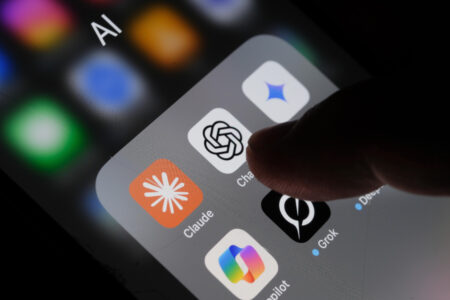




Real talk: I’m not that up to speed on today’s tech vocabulary. That realization clocked me over the head this week when the Scotland-based Collins dictionary came out with its list of new and notable words for 2026. The words include p(doom), which refers to the probability of AI-caused doom; mogging, meaning to outshine or upstage someone; friendslop, a type of low-budget video game played among friends; and ghost jobs, jobs advertised with no real position or intent to hire someone.
Vibe-coding, which was Collins’ Word of the Year for 2025, refers to a conversational way to teach an AI model without typing in all that pesky code. Enshittification, which the American Dialect Society chose as its 2023 Word of the Year, means the gradual, profit-driven decline in the quality of, well, I guess, everything.
Maybe you know and use these terms regularly; maybe you don’t. But, in an effort to stop myself from becoming that Steve Buscemi faking-it-in-high-school meme, I wanted to lay out some tech terms that have a permanent home in the popular lexicon and the words, phrases and abbreviations that haven’t quite stood the test of time. (Note to self: Stop saying “emoticon.”)
Five tech terms that survived
Selfie: You know what a selfie is; my mother, on the other hand, may not. The word for taking a photo of yourself with any camera-enabled device was first coined in 2002 on an Australian internet chat forum, of all places, but didn’t become mainstream until 2013.
Content creator: “Influencer” also works here, to refer to a person who shares information on a tech platform and builds an audience of online followers. A related word, “parasocial,” refers to the one-sided relationship listeners or viewers may have with the creator or influencer, who, in contrast, doesn’t know they exist.
Podcast: The Oxford Dictionary named podcast the Word of the Year back in 2005. Since then, the term, which is a mashup of iPod and broadcast and refers to a digital program made available on-demand for streaming or download, has remained relevant. The iPod, however? Not so much. It was discontinued in 2022.
WFH (work from home): The trend of working from your own home via computer saw a substantial uptick during and after the 2020 COVID-19 pandemic. According to a 2022 survey by the US Bureau of Labor Statistics, 23% of Americans work remotely.
Unfriend: The New Oxford American Dictionary‘s 2009 Word of the Year became popularized thanks to Facebook, but the term that means ending a friendship has actually been around for quite some time. NPR called it “the Sleeping Beauty of words,” as the term dates back to the 17th century, when it basically meant the same thing.
The ones that got away
Metaverse: Remember when Mark Zuckerberg poured like $80 billion into a virtual reality project that was being touted as the internet platform of the future? The metaverse and its flagship app, Horizon Worlds, were announced in 2021. Five years later, it all fell apart. Now, Zuck is investing a ton in AI, which he’s touting as the internet technology of the future. Second verse, same as the first?
NFT: Just a couple of years ago, you couldn’t go online without reading about NFTs. Nonfungible tokens are digital identifiers to certify ownership of, well, a digital thing of value. Heck, remember when President Donald Trump released an NFT? After the boom in popularity, and the subsequent crash in value of most of them, the term NFT has all but left the public consciousness.
World Wide Web: It’s the internet, folks. Or, the information superhighway if you’re nasty.
Defrag: Back in my day, when we needed better performance from our Windows-based computers, we’d defragment the hard drive. There were plenty of tools you could use to do so. Apparently, this is no longer a thing people do, which is fun, since I still like to use the term in everyday situations. While we’re at it, I’ll be right back. I need to go defrag the car.
Emoticon: Technically, emoticons are made from standard keyboard characters read sideways, such as 🙂 to generate a smiley face. Emoji are graphical images that you can select in various communication programs. (Sometimes, if you try to type an old-school emoticon, the program you’re working in will just grab it and turn it into an emoji.) These days, we just say emoji, even if the word sounds more like a dessert.
Read the full article here