


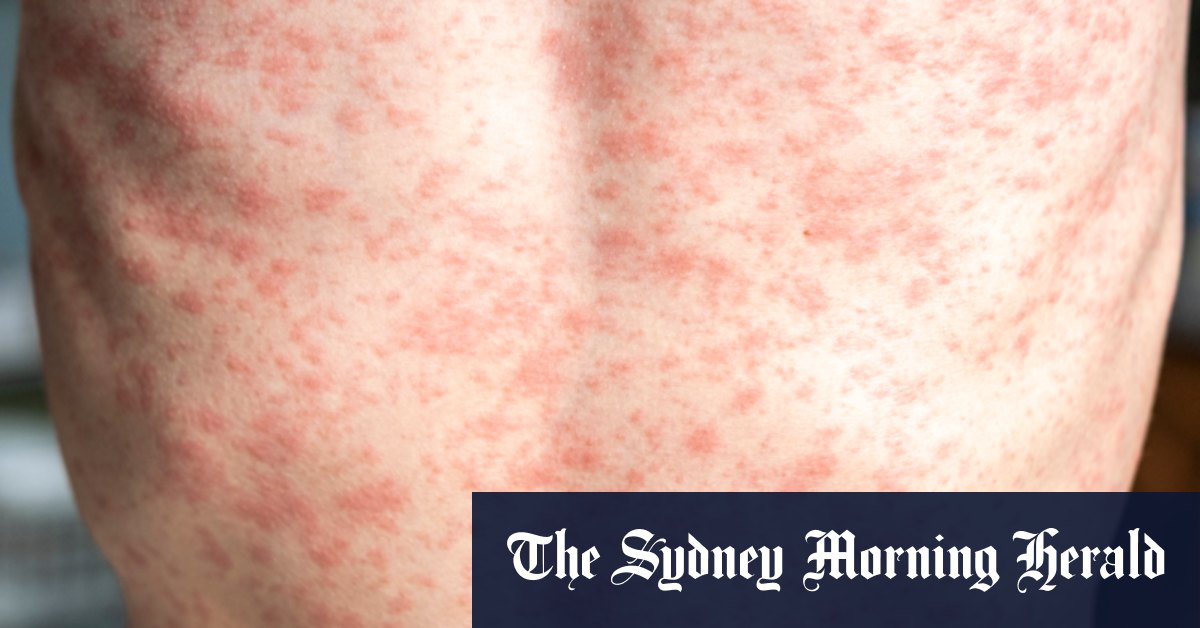
Symptoms may include coughing, fever, red or sore eyes, a runny nose and a red rash that typically begins on the face and spreads downward across the body.
It can cause pneumonia, ear infections and diarrhoea, and about one in every 1000 cases causes swelling and inflammation of the brain, which can result in permanent brain damage or even death.
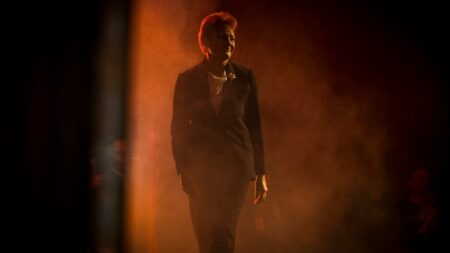
Victorian Chief Health Officer Professor Tarun WeeramanthriCredit: Peter de Kruijff
Eight Victorians have been hospitalised with measles this year, with most people struck down by the virus aged between 25 and 30.
Weeramanthri said he was cautiously waiting to see if cases would rise after the school holidays.
“The incubation period can be up to 18 days,” he said. “We’re not out of the woods for another week or so.”
The latest outbreak coincides with a decline in the proportion of Australians vaccinated against measles.
About 93 per cent of Victorian two-year-olds are vaccinated against measles-mumps-rubella (MMR), which is below the national target of 95 per cent.
The most recent measles cases involved individuals who had not received two recorded doses of the MMR vaccine.
Loading
Weeramanthri said people had a much higher risk of contracting measles, and becoming sicker, if they were unvaccinated. But he said some vaccinated Victorians had also become sick, but experienced a milder illness.
Measles is a disease that Dr Anita Munoz, Victorian chair of the Royal Australian College of General Practitioners, never expected to worry about during her career.
“I was told as a medical student that this was an infectious disease of the past,” she said.
But like many doctors across Melbourne, Munoz is now on high alert for the disease’s tell-tale symptoms.
“It is a catastrophe of a disease,” she said.
“It is one of the reasons why entire populations in South America were wiped out during colonisation.”
Munoz said vaccine hesitancy following the pandemic, as well as dangerous messaging from public figures such as anti-vaccine US health secretary Robert F Kennedy, was fuelling a decline in vaccination coverage.
Measles cases are on the rise around the world, with the disease recently killing two unvaccinated children in the US and making at least 800 people unwell. The World Health Organisation estimates that 107,500 people died from measles in 2023 – mostly unvaccinated children under the age of five.
Professor Benjamin Cowie, an infectious diseases physician who works at the Doherty Institute and the Royal Melbourne Hospital, said measles was a “notoriously infectious” disease, with one case able to generate 13 other infections within a susceptible population.
He’s concerned cases will rise after the school holidays as Victorians return home from countries with current outbreaks, including Vietnam and Thailand.
“Many Australians visit these countries,” he said. “They might be completely unaware that they are susceptible.”
Cowie said he’s on high alert for the disease and exercising a high level of caution with patients.
“If someone comes in with a sore throat, fever and rash, I think, ‘could it be measles’ and then put a mask on them and isolate them.”
Murdoch Children’s Research Institute professor Margie Danchin said babies who are too young to be vaccinated were at heightened risk. Australians born between 1966 and 1994 are also at greater risk of measles as they may not have had two doses of the measles vaccine, which is currently provided to Australian infants at 12 and 18 months.
While Danchin said there was a perception that most unvaccinated children had anti-vaxxer parents, one of the biggest barriers to vaccination was access and cost.
Her research has found that 20 per cent of parents with partially vaccinated children were unable to afford costs associated with vaccinating their child, such as gap payments for a GP appointment or time off work.
She said some families were unable to attend council-run vaccination sessions, if available, because they worked during the week.
About a decade ago, Danchin treated a child with measles who wound up in hospital with pneumonia, a complication that arises in 1 in 20 measles cases.
“It is the most infectious disease we know,” she said. “It is a heat-seeking missile that will find people who are unvaccinated and spread.”
Read the full article here