


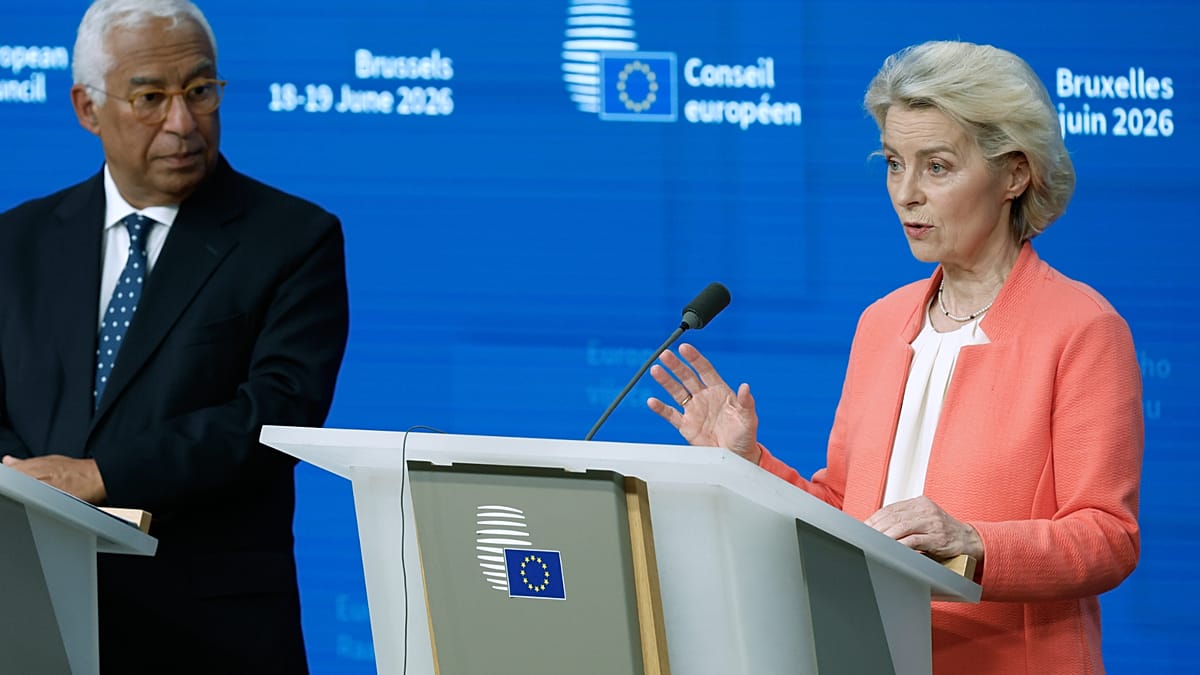
The European Commission is preparing proposals to reform the EU enlargement process in an effort to reassert its role in a debate that has increasingly been shaped by member states, three EU officials told Euronews.
EU enlargement has climbed to the top of the agenda, as Montenegro is approaching the finishing line to join the bloc. In recent weeks, member states have advanced a flurry of position papers floating ideas on how to reform the accession process.
Five of the six EU founding members have proposed strengthening existing safeguards to prevent democratic backsliding and breaches of the rule of law — lessons drawn from Viktor Orbán’s Hungary.
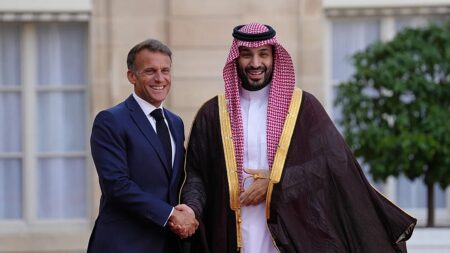
Germany and France have floated ideas for the gradual integration of candidate countries, allowing newcomers to see the early benefits of EU accession before reaching full membership.
Previously, German Chancellor Friedrich Merz proposed creating an “associate membership” status to extend security guarantees to Ukraine.
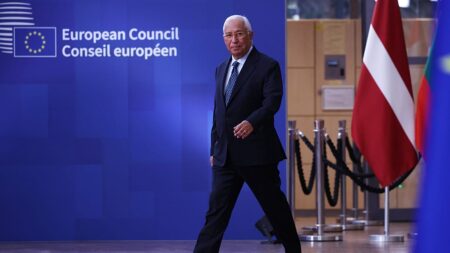
Now EU countries are bracing for a strategic debate on reforming the accession process at the next EU leaders’ summit in October, following a tour of the 27 capitals by European Council President António Costa.
Ahead of the summit, the Commission is planning proposals that would help it regain the initiative — or at least avoid losing complete control of the discussion.
“We saw contributions on the topic from several member states. The Commission is also working on this matter. We are looking forward to the upcoming strategic discussion on enlargement and reforms at the EUCO meeting in October this year,” a Commission spokesperson told Euronews.
Broader reform plans
The scope of the proposals is still being discussed at the highest political level within the EU executive.
Since early last year, the Commission has been due to present its pre-enlargement policy reviews — a proposal on how a Union of 30 or more members would function in terms of budget, decision-making and internal workings.
However, the reviews were quietly shelved after Ukraine’s accession bid complicated the picture significantly, and the exercise remains particularly sensitive among European capitals, as it affects the distribution of power and money within the bloc.
“When it comes to the pre-enlargement policy reviews, we can add that we are working diligently to finalise the communication as soon as possible, with the ultimate goal of ensuring its highest quality,” the Commission representative said.
As the debate over reforming the EU enlargement process gains momentum, it remains unclear how much appetite there is for such a broad discussion, which would inevitably require treaty changes.
The timing is particularly sensitive ahead of a critical French presidential election next year, which could see a close contest with the hard-right National Rally candidate.
RN’s Jordan Bardella, a front-runner to win next year’s presidential election, has categorically opposed Ukraine’s accession to the EU in several recent television interviews.
But while a deeper reform of the accession process may come sooner or later — notably to keep countries such as Ukraine motivated to pursue internal reforms while seeing some early benefits of EU membership — the discussion on stronger safeguards for new members is already under way.
Enhancing safeguards
At least, the Commission’s proposals are set to advance the discussion on safeguards designed to prevent democratic backsliding by new member states once the accession process concludes.
“We are reflecting on how safeguards within future accession treaties could be devised. The objective is simple: ensure commitments made during negotiations, particularly those linked to the ‘fundamentals’, are upheld also after accession,” the Commission spokesperson added.
The intent is to avoid the burden of the discussion falling on Montenegro, the frontrunner to become the bloc’s 28th member. As drafting of Montenegro’s accession treaty began a few weeks ago, the country risks becoming the testing ground for what future entries will look like.
“If you do this with Montenegro, it might look like they are getting punished because they performed well,” an EU official with direct knowledge on the matter told Euronews. “The burden cannot be all on Montenegro; it needs to be a fair process.”
How other member states will receive the Commission’s move remains an open question. Some capitals may welcome the Commission taking the initiative; others may see it as a power grab to regain control of the discussion.
“There are many ideas floating, but they are just ideas. Some are even unclear. There is no consensus,” said a second EU official with direct knowledge of the discussions.
Building on experience
Safeguards are not new to the EU enlargement process. And while political momentum for reform built up after Orbán was ousted from power in April, the Commission had already signalled its intent to introduce stronger guardrails.
“Future accession treaties will need to contain stronger safeguards against backsliding on commitments taken in the accession negotiations, as well as requirements for the new member states to continue to safeguard and make irreversible their track-record on rule of law,” the Commission wrote in its 2025 annual review of the enlargement process.
In devising stronger safeguards, Brussels will naturally look at past experiences, starting with the accession treaty of Croatia, the bloc’s newest member, which joined in 2013.
When Zagreb joined, a new monitoring mechanism required the Commission to “closely monitor all commitments undertaken by Croatia in the accession negotiations, including those which must be achieved before or by the date of accession.”
The mechanism focused on justice and fundamental rights, in particular the independence and efficiency of the judiciary, the handling of war crimes cases, the protection of minorities and refugee-related issues.
Earlier accession treaties already included safeguards covering serious economic issues, breaches of the functioning of the internal market, and shortcomings in implementing justice and home affairs legislation, applicable for three years after accession.
New ideas
The five founding members have called for going much further, proposing swift penalties for potential legal breaches, including the suspension of EU funding and even voting rights in the institutional decision-making process.
Such proposals are meeting significant resistance, as some capitals argue they risk breaching the core EU principle of equality among member states, and that this form of conditionality could be seen as reopening the accession treaty.
By contrast, other measures closely related to the safeguards but less controversial among European governments include the potential extension of transitional periods — limited derogations from the full application of EU law.
One of the most significant transitional arrangements likely to be extended, for example, concerns the ability of other EU countries to temporarily restrict labour-market access for workers from new member states.
At the same time, any temporary caveat included in the accession treaty would inevitably not be based on merit. Clear criteria on what democratic backsliding would mean and a mechanism to assess it objectively would also be required to avoid the process becoming politicised.
Another idea on the table is making participation in the European Public Prosecutor’s Office (EPPO) mandatory for new member states. Currently, 24 out of 27 member states are part of the EPPO, but Ireland and Hungary have already expressed interest in joining.
“Enhancing safeguards could alleviate the concerns of countries that have been traditionally sceptical about enlargement,” Florian Bieber, coordinator of the Balkans in Europe Policy Advisory Group, told Euronews.
“The result might be to increase the likelihood of ratification.”
Read the full article here