



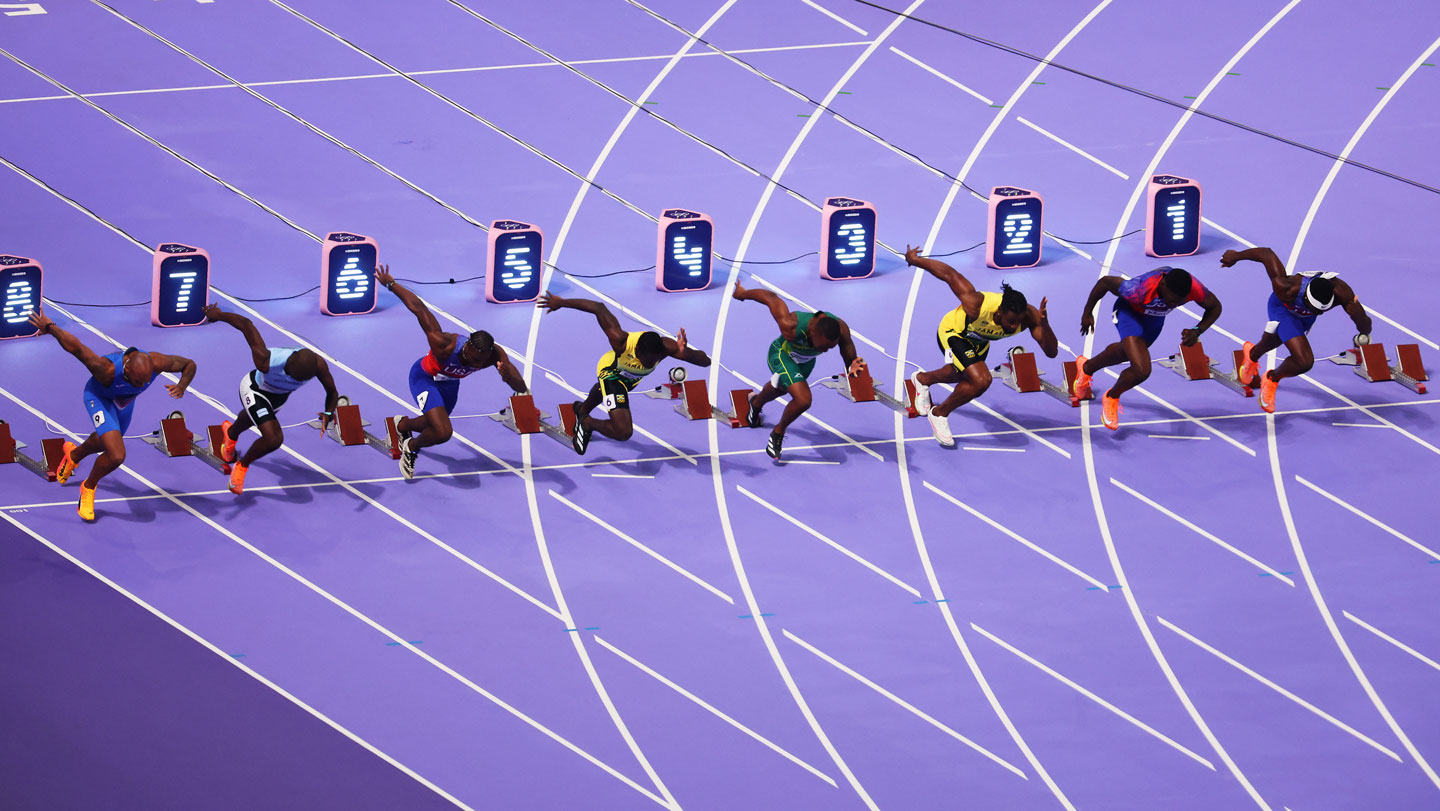
A sprinter’s first task is to react to the starting pistol. Now, a button-clicking experiment suggests that how quickly people respond to a cue may depend in part on whether they’re breathing in or out.
Volunteers’ reaction times were faster when they exhaled or held their breath compared with when they inhaled, researchers report September 28 in iScience.
Ken Paller and Erika Yamazaki, then both cognitive neuroscientists at Northwestern University, made their discovery while studying breathing patterns to find treatments for sleep apnea. Yamazaki graduated from her PhD earlier this year.
Paller and Yamazaki determined how sleepy 35 volunteers were with a simple reaction-time test. The volunteers were tasked with clicking a button when an on-screen red square turned yellow.
Yamazaki realized that, because the volunteers’ breathing was recorded through short tubes in the nose throughout the task, the researchers could also check whether inhaling or exhaling influenced reaction times.
Reaction times were, on average, 41 milliseconds faster during exhalation than during inhalation. This finding held regardless of how sleepy or alert the volunteers were.
That might not sound like a huge difference, but Noah Lyles won the 2024 Olympic men’s 100-meter final by five thousandths of a second. Those 41 milliseconds would have made the difference between Lyles winning and finishing fourth.
But the relationship between breath and brain appears to be complex. A 2016 study found that reaction times were faster during inhalation than exhalation in tests of recall and facial recognition. But these tasks differed from the hair-trigger change Paller and Yamazaki studied. Those tasks required more cognitive processing, Paller says, because they required the participants to judge whether, for example, a face look fearful or surprised, rather than waiting for a simple cue. “That may or may not have the same relationship with respiration.”
The mechanism behind these findings isn’t clear, although Paller points to studies, like the one from 2016, that suggest our breath is synced to the ebb and flow of our brain waves.
In a race decided by thousandths of a second, every factor matters, even a single breath.
Read the full article here