



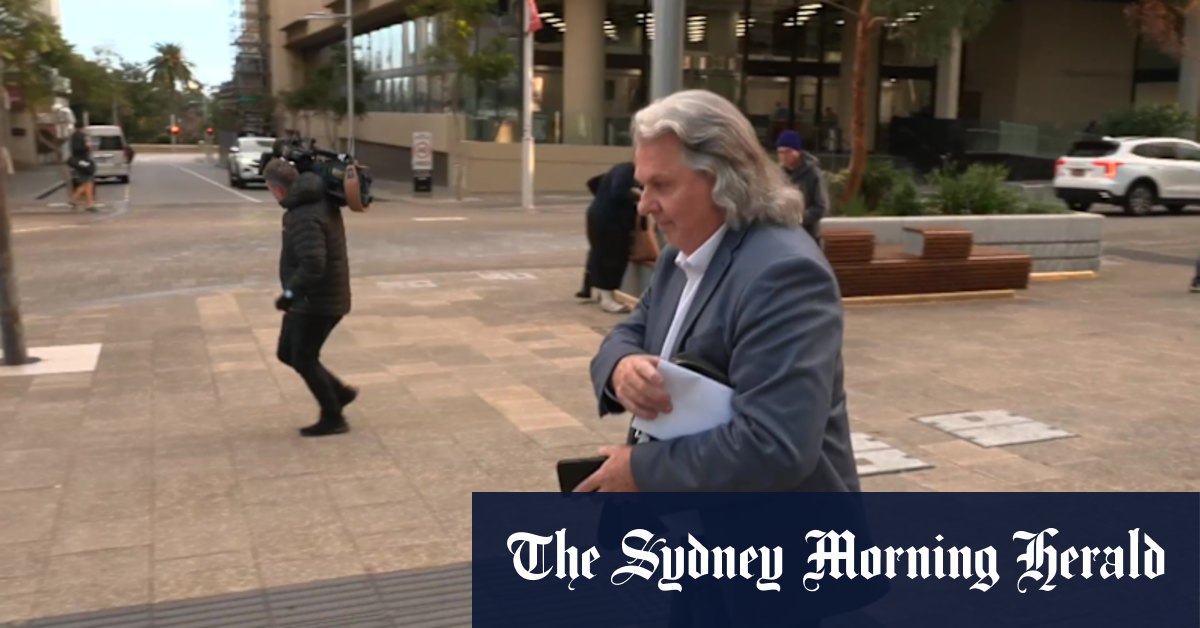
Charles Napoli borrowed money in order to invest.
Napoli said he rolled over his investments and added more money a number of times to both his private placement investments and a fund Marco kept, with one of his investments totalling $5.6 million.
Napoli said he was repeatedly paid his owed return on time.
“I could see the funds were coming as [Marco] advised they would,” he said.
“It gave me some confidence and comfort in him.”
Napoli told the court while he received returns over the years, he never received the full capital of investment back once ASIC froze Marco’s accounts in 2018.
Loading
He said he received a number of emails from Marco assuring him he would be able to get his money back, and Marco revealed where some of the cash had gone in a note to investors.
“Our security is held in cash, property and a small amount of readily realisable shares and collectibles all documented in my affidavit on assets and liabilities,” Marco wrote.
Napoli said he was not aware of this.
“If I knew he was doing this I wouldn’t have given him anything,” he said.
The court heard at one point, Marco used an account where his investors’ money was mingled to loan his daughter $28,000 to start a Claremont antiques shop.
Napoli said he had also once taken him to a warehouse where Marco had kept luxury cars in Osborne Park.
“The office warehouse was very luxurious, security controlled, climate controlled, with really nice painted floors, and the cars were in immaculate condition,” he said.
“I just couldn’t believe what I was seeing, It gave the impression this man was a very successful businessman.”
Napoli said he had no idea Marco had used his money to pay off other investors and his “insurance guarantees” were allegedly untrue, and had no idea some of his money had been invested in the cars.
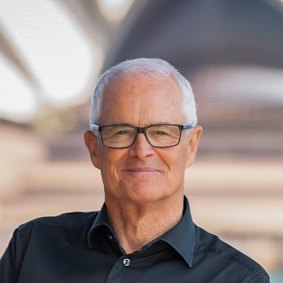
Robert Machin invested in the scheme in 2017.
“I would never have gone into it [if I’d known] because that’s just a Ponzi scheme,” he told the court.
When asked by prosecutor Steven Whybrow how much capital he had recovered since ASIC shut Marco down, Napoli said he hadn’t recovered anything.
“I’m in the same position,” Napoli said.
Sydney-based management accountant Robert Machin also took the stand during Marco’s trial after he and his wife also chose to invest with Marco in 2017.
Machin said his elderly parents had needed help at the time and it had taken a toll on his income, so he invested $400,000 with Marco.
Machin said when he first signed on, Marco said ASIC had approved of his operation in 2014 and a financial firm had viewed his documentation.
“Marco was charming, charismatic, convincing, lucid, and eloquent, he presented his story in a beautiful way,” he said.
“[He said] the placements were for those who are wealthy and those in the know.”
Machin said it was an ideal arrangement for his situation.
“I made a joke with Marco – I asked him ‘where have you been all my life, this is just what I need to get through this situation’,” he said.
Machin said he also earned interest off his investment about five times before Marco was shut down.
He said he was shocked to find his money had been used to pay off returns for other investors.
“To be candid, it would have reeked of a Ponzi scheme to me,” he said.
Both the prosecution and defence teams have previously rejected the characterisation.
“I was ashamed I’ve been conned in this way… in the role that [Marco] played, he was just spectacular, he was very convincing,” Machin said.
Marco’s defence lawyer Luka Margaretic challenged Machin on whether he had, in fact, been “conned” as he had been paid out his interest consistently and on time.
The money only stopped when ASIC stepped in, Margaretic said.
Clients said they occasionally met with Marissen when they visited the office, or through phone or email on behalf of Marco’s business.
Read the full article here