



What will luxury travel look like when more no longer necessarily means more? In 2027, travellers could place a greater emphasis on what money can’t buy, like quiet surroundings and experiences that are truly worth the journey.
From swapping airport rushes for a private lounge away from the terminal to slower rail holidays, wellness escapes and allocating when to spend, luxury is becoming less about excess and more about being intentional.
“Luxury today is completely different than what it was,” Marie-France Perrel, Head of Business Development, Hotels at Michelin Guide, said during the Euronews Travel & Tourism Summit 2026 in Brussels.
“It’s no longer the sort of standards of opulence that we had in mind,” she added, as travellers’ focus has shifted to properties that “offer a sense of place”.
If luxury travel is on your agenda for 2027, here’s some of the trends that might just shape your experience.
Where to go?
Next year, Europe is set to dominate the luxury travel map. Virtuoso’s 2027 Luxe Report, which surveyed more than 3,100 travel advisors across more than 50 countries, cited that seven of the top 10 most popular global destinations will be on the continent.
Following Japan in first place, Italy, France, Greece and Spain make up the top five, while Croatia, South Africa, Portugal, the UK and the US are in the top 10.
Meanwhile, luxury travel company Abercrombie & Kent (A&K) recommends holidaymakers add Chile’s Easter Island to their 2027 bucket list to discover its “open air museum”. Sights include the 1,000 moai statues, and for set-jetters, many of the filming locations for Martin McDonagh’s “Wild Horse Nine” are on the island, too.
A&K also picks out “iconic” destinations such as China, which is “firmly back on the radar”, and Egypt, thanks to a “renewed interest” that shows little sign of slowing.
Booking a holiday? Speak to a ‘trip designer’
AI might be able to generate an itinerary in seconds, but the travel agent is making a comeback and has become “chic again”, according to Elle magazine.
Rebranded as a “travel advisor” or “trip designer”, they are found “across Instagram, posting a never-ending stream of curated travel content, often with a caption insinuating that all of this could be yours”.
The magazine also highlighted that today’s luxury travel advisors cover fixing, negotiating and at times, perform “miracles”.
Rather than relying on algorithms, the wealthy value the human touch of knowing when to go, which room to request, and which restaurants live up to the hype – something that automation simply can’t replicate.
Is privacy the ultimate luxury?
In an era of hyper-connectivity, private travel experiences are a sought-after element among affluent holidaymakers.
Virtuoso’s Luxe Report also highlighted that in a time when social media is turning destinations into overcrowded spots overnight, privacy is all about “avoiding the queues and camera clicks, while being able to move through the world with minimal friction”.
Writing on A Luxury Travel Blog, Sherif Khalil describes privacy as “the new luxury” and that wealthy travellers now want it “more than prestige”.
Khalil added: “Nowadays privacy might just mean having a museum to yourself before the doors officially open. Sailing out quietly instead of queueing on a dock. Taking your time over breakfast instead of clock-watching for whatever’s next on the schedule. Honestly, it might be the rarest thing money can buy.”
Another natural fit here would be checking into a holiday villa rather than a hotel for added privacy. Unlike at a hotel, guests won’t have to share amenities or communal areas, nor would they have to worry about an 11am cut off to have breakfast, or any other meal, for that matter.
An airport lounge… but not inside the airport
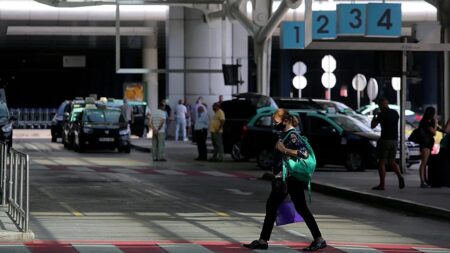
Privacy also matters for airline passengers who would rather skip the airport rush.
Announced recently, DiamondAir has launched a private, remote check-in area minutes away from London Heathrow. It offers travellers “an intimate space” replete with á la carte dining and a wellness area – all at the backdrop of runway views.
“The Lounge” is designed around both sides of the flight. For departures, guests arrive to relax and are able to check-in with their luggage being pre-collected and transported through the airline’s baggage system. While those arriving at Heathrow can also go to the lounge to relax then transfer for the concierge service at the airport.
Elevated in-flight dining
No longer confined to just the restaurant floor, airlines have made food an integral part of the journey, with carriers “elevating” their menus at 30,000 feet.
Singapore Airlines is set to unveil its latest in-flight dining experience across its Suites, First and Business Class cabin classes this November.
The new menu, developed by the carrier’s in-house and guest chefs, features more than 100 new and revamped appetisers, main courses and dessert dishes. The meals will be served on new serviceware, incorporating the brand’s signature batik motif.
Slow luxury
Needless to say, 2026 has been an anxiety-inducing year – least of all for the travel industry. So, with that in mind, nervous system-regulating getaways may just be the ticket in 2027.
Rather than chasing the fast lane and convenience, travellers will seek slow luxury travel experiences that connect deeply with a destination’s culture and people, without sacrificing exceptional hospitality.
This approach prioritises quality, depth and privacy over packed itineraries and visible displays of opulence.
In search of balance, travellers can opt for luxury rail instead of boarding a plane.
The Northern Belle, a luxury restored train that has preserved the glamour of the 1930s, will offer a new programme of day trips paired with caviar blinis and afternoon tea in 2027, all at the backdrop of the UK’s sweeping views.
Meanwhile, Italy can be explored onboard La Dolce Vita Orient Express, including a two-night trip along the “truffle route” from Rome to Alba and back.
River cruises
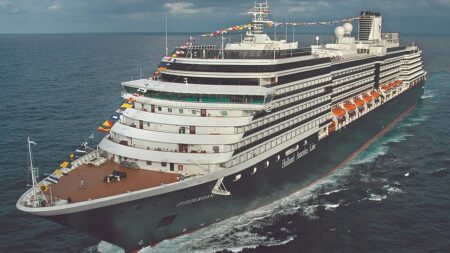
Unlike ocean cruise ships, river cruise vessels can navigate directly through inland cities and towns, combining scenic journeys with stops along major cities or hidden gem towns – all with the luxury fittings of a boutique hotel floating on water. And they often accommodate just a fraction of their ocean-going counterparts.
A new river ship that’s set to enter the global fleet is the Viking Sekhmet. Launching in November, it is specifically built to cruise the Nile and hosts as few as 82 guests. Highlights in 2027 include the signature Pharaohs & Pyramids journey and a new Total Eclipse on the Nile itinerary spanning 12 days.
In Europe, a 27-day Scenic Cruises’ river and land journey set for 2027 will include a 13-day tour of Switzerland, with dining woven into the experience. The itinerary includes risotto making, 29 breakfasts, 15 lunches and 19 dinners, alongside a scenic stay in Interlaken.
Why hotels are ‘rethinking wellness’
Hotels are “rethinking wellbeing”, according to the Lemongrass Annual Travel Trend Report 2027.
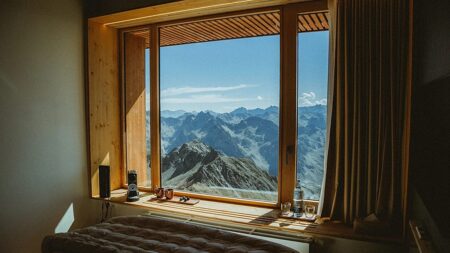
And the successful luxury properties “won’t be the ones adding more treatment options, diagnostics, or feel-good interventions”, Lemongrass said. “Instead, they’ll remove sources of stress, focus on restorative lighting and acoustics, reduce sensory overload, and integrate nature and biophilic elements throughout the guest experience. They will still be beautiful, but they won’t simply impress guests; they will also help them regulate and restore their whole selves.”
Highlighted by the report, Estonia’s Eha Retreat places an emphasis on wellness, with each stay beginning with a consultation to create a personalised wellbeing programme and in-room elements including guided sleep meditations.
Less is more (sometimes)
All this doesn’t have to mean splurging at every stage of the journey. In what Lemongrass called the “great trade-off” within luxury travel, more tourists are becoming intentional and deliberate about their spending.
This could look like pairing pricier purchases with inexpensive alternatives. For example, by choosing an economy or premium economy ticket instead of business or first, there’s more that can be put towards an indulgent stay.
The extra funds could also go towards tailor-made experiences. Signature Travel Network‘s trend watch report found that there is now a growing demand for holidays that are “genuinely personal and difficult to replicate”. Here, itineraries could include private cultural encounters and travelling to witness once-in-a-lifetime natural phenomena.
Read the full article here