



The State Buildings are a hive of activity thanks to the bold vision of developer Adrian Fini, the Perth Concert Hall, the Convention Centre and the WACA are all earmarked for upgrades.
Perth railway station, Wellington Street, February 1993.Credit: State Library of WA.
Perth’s inner-city population has ballooned to 7000 and 30,000 within the local government boundary, underpinning the state’s decision to build the first inner-city primary school.
A new Aboriginal Cultural Centre and Museum will also soon adorn the picturesque riverfront.
The city now leads the country in the nighttime economy pro rata, retail spend hit a record high this year, luxury brands are jockeying for positions on Murray Street’s premium strip and RAC Arena frequently draws global acts.
But Gehl had long championed the need for quality density to create a more liveable city, and it is the one recommendation from his report the state has tried, and largely failed, to execute.
Perth’s 2.5 million residents are now spread across an urban footprint spanning more than 6600 kilometres, rendering it one of the lowest density cities in the world outside the United States.
The sprawl enabled by successive governments, buyer expectations, staunch opposition to density, high building costs and a housing crisis has driven people further from the city centre, fostered the rise of the metropolitan shopping centre and seen Perth crowned one of the world’s most car-dependent cities.
The average commute in Perth’s swollen metropolitan area is now 35 minutes, a figure Infrastructure Australia anticipates will double in the next six years.
Despite the state government spending billions of dollars dragging Metronet infrastructure to the ends of Perth’s urban fringe, 82 per cent of commuters still rely on vehicles.
On Wednesday, Gehl partner Henriette Vamberg said the firm’s new year-long study would be confined to the city centre, evaluating public spaces and gathering data on those frequenting the CBD.
But she acknowledged the challenges presented by Perth’s sprawling urban area as far as drawing people out of it and into the city was concerned.
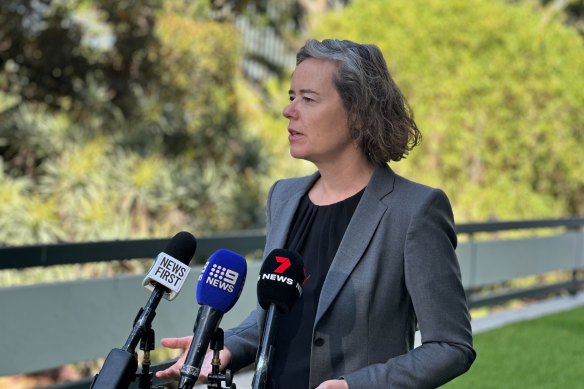
Gehl partner Henriette Vamberg after the Towards 2036 breakfast on Wednesday.Credit: Jesinta Burton.
“If we look at the challenges we have around health and climate, my personal profession view is there needs to be a rethink of the growth strategy to figure out how we use the city structure we have already got, which areas of the city to get more residents in and preserve some of the natural ecology around us,” she said.
“We love cities, getting people together, we love building communities and I think building communities around urban centres is a good way of promoting more sustainable behaviours.”
Vamberg said Australia was not the only nation with an affection for owning a plot of land, but believed bringing more residents to the CBD would require a big shift in mindset.
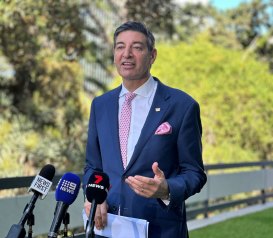
City of Perth lord mayor Basil Zempilas after the Towards 2036 breakfast on Wednesday.Credit: Jesinta Burton.
“I think its about residential developments where you can actually see yourself living, creating a sense of communities, knowing your neighbours and sharing facilities,” she said.
“When you do that, you enter something bigger than just your single-storey family house where you spend ages in the car, try to shop, to get the kids to sport and go to work.”
Perth Lord Mayor and Liberal candidate Basil Zempilas agreed attracting more people to live, work and visit the city was the way to counter the city’s challenges, including anti-social behaviour.
But he conceded development in the heart of the city was no easy feat, something that will be essential for the city to reach its goal of accommodating 55,000 residents by 2036 and 90,000 by 2050.
“Perth is not an easy city to develop in the heart of, and it’s one of the reasons why particular incentives for developers around student accommodation has been a very carefully considered pathway to getting more people in,” he said.
“City life will never be for everyone … but I have no doubt we can reach our target of 55,000 because people will discover that not having to drive long distances, not having to be disconnected from the heart of the city does have its advantages.
“You don’t need a car, you can walk a lot more, and you can cycle to the places you want to go: that’s what city living offers.”
The city has launched a host of initiatives to incentivise private sector residential development, including financial support across the apartment, co-living, build-to-rent and student accommodation sectors.
Read the full article here