



Rod Glover, whose late wife, Peta Murphy, chaired the committee that delivered the report into online gambling that drove so much of the later debate, issued a statement last week after the government had passed its legislation. He began by strongly emphasising hope. Glover did not want the flaws in what had been done to prevent recognition of “progress”, a “big improvement on the status quo”. That progress was a reminder that agreement could still be reached in politics – which may in turn, he suggested, be a way of rebuilding trust in democracy.
But Glover, who has been restrained in his public commentary, was also transparent about its shortcomings: it was “far from everything that is needed” and fell “well short of the Murphy Report recommendations”. This was a sign of the power of those lobbying against change, which demonstrated a “failure of social leadership among some of our major sporting and media institutions”.
Glover also said it “has taken too long to get here. That delay has had real human consequences”.
Those last three words are quietly devastating, if you take a minute to consider their meaning: the lives that have been derailed in the time governments did not act. They reminded me of something written by philosopher Luara Ferracioli about inequality and the pace at which governments address it. For a government, waiting a year or two can seem inconsequential. In a life, those years can be decisive. As Ferracioli writes, if you don’t have kids now, you might never. If your schooling is poor, you might not get that next job. Harm done now can be harm done forever. The problem with going slowly is that it “fails to take seriously the fact that every citizen is only a child once, a young person once, a young adult once”.
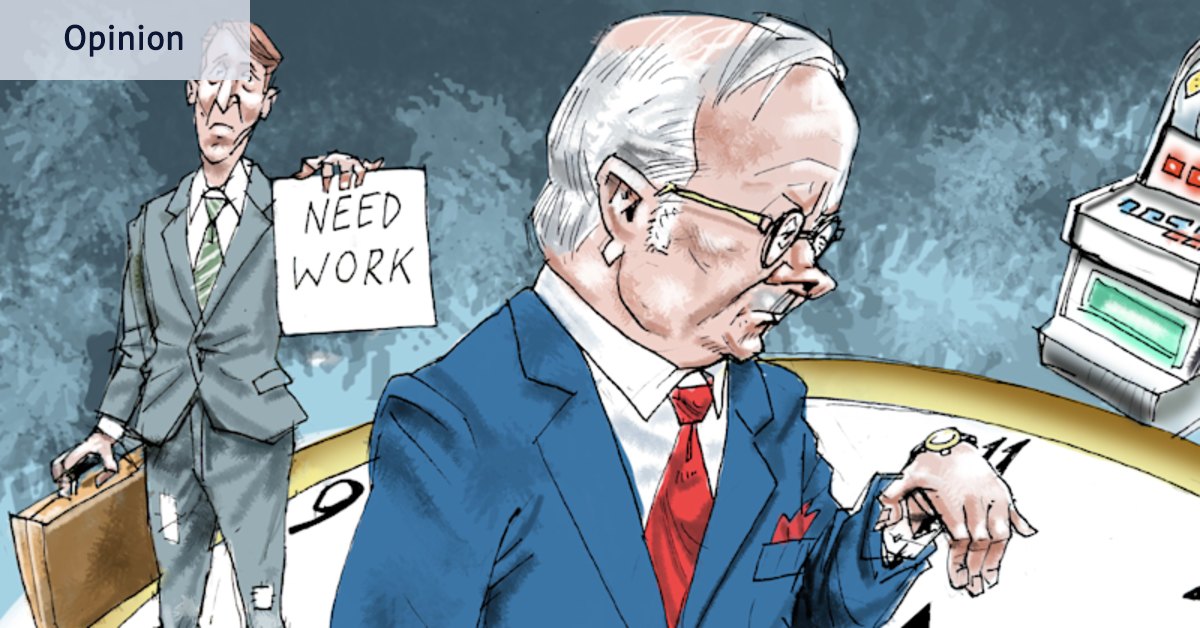
Also last week, we learnt unemployment had risen. The increase was small, but the rate has been rising for some time. In terms of the economy, the picture is mixed: many jobs have also been created, and the rate remains reasonably low.
Small consolation for the people represented by those numbers, for whom that event might be defining. A growing number of those on the JobSeeker unemployment payment have been on it for five or more years. Even if your time without a job is more temporary, in Australia it can be devastating. That is because the payment you will receive is so paltry. Some countries tie such payments to previous income. Australia doesn’t – in fact, as a replacement for income lost, our payments are right near the bottom of the table of rich nations. You are effectively removed, instantly, from the life you lived before – a dramatic event that can be paralysing and shaming.
Our poor international standing here is one point made in a paper soon to be released by the Australian Council of Social Service (ACOSS). It makes the point that in Australia our payment isn’t tied to wages at all – not even average wages across the country. Instead, it’s tied to inflation. In the past few years, with inflation roaring, that might seem OK. But as ANU economist Ben Phillips has pointed out, this means that across several decades, as the country has grown richer, those out of work have missed out.
This is the result of a clear policy decision. Before 1997, there was an informal link between wages and unemployment payments. That year, the Howard government tied pensions to wages – but not unemployment payments. This has seen a huge divergence between the two. As ACOSS CEO Cassandra Goldie tells me, a 66-year-old and a 67-year-old not in work face the same costs but receive drastically different levels of support.
The depressing truth is that none of this is new. Organisations like ACOSS have been making these points for years. But what if governments could be persuaded that increasing JobSeeker to match the pension would align with their other aims?
Despite the rhetoric that dominates our politics, for instance, ACOSS points to plenty of evidence suggesting higher payments might actually help people into work. You need health, time, and of course, money to look for work – higher payments actually help with that, something that should appeal to both sides of politics. So, too, should the cut in red tape Goldie predicts would be achieved by bringing payments into line with each other.
What about fertility? Well, fears around job insecurity play into people’s decisions about children, and those fears are exacerbated by the risk of becoming poor overnight. Higher payments, more babies, as academics Irma Mooi-Reci and Trong-Anh Trinh have argued.
Then there is all the time our nation’s political class spends wringing its hands about productivity. Last year, think tank e61 argued low unemployment benefits can stop people moving to jobs for which they are better suited – because the financial hit of being unemployed, as you try to make the jump, is way too high. That in turn hurts our productivity, as people work in jobs at which they’re not that great. In line with what you could deduce from our poor productivity, then, last month we learnt that Australians are moving between jobs less than ever before.
The most powerful argument, though, remains the human one. Rod Glover ended his statement by acknowledging “the courageous people who appeared before the Murphy Committee to share painful stories of gambling harm, in the hope that doing so might make things better for others. You are the people Peta would be thinking about today.”
When it comes to government policy, there are always people with their stories. All of them, like all of us, are living through time: being affected by what the government does, experiencing the consequences that cascade through a life. On housing and incomes, Albanese Labor has begun to challenge inequality. In four years, though, it has increased the JobSeeker payment permanently in real terms just once.
Goldie points me to the actions taken by Whitlam, Hawke and Keating on unemployment payments. She wants, she says, “to remind Labor of who they used to be”. For politicians, too, time passes, defines them – and is gone.
Sean Kelly is an author and a regular columnist. He’s a former adviser to Julia Gillard and Kevin Rudd.
Get a weekly wrap of views that will challenge, champion and inform your own. Sign up for our Opinion newsletter.
 Sean Kelly is author of The Game: A Portrait of Scott Morrison, a regular columnist and a former adviser to Julia Gillard and Kevin Rudd.Connect via X.
From our partners
Read the full article here