

More than half of families with children at private schools, or who are considering enrolling them, say they are under significant cost pressure, according to new research by the sector’s peak body, which finds most are saving for at least three years to afford the fees.
The data, released by Independent Schools Australia on Monday, is from a national sample of 629 families of children at independent schools, and 879 families who are weighing up this option, surveyed between March and April this year.
It found 53 per cent of families were under significant financial pressure, and 57 per cent saved for three or more years for the fees, while 10 per cent saved for more than a decade.
Three-quarters of participants said they are adjusting household budgets to afford it, including almost half by reducing holiday spending and cutting non-essentials. A smaller portion of 28 per cent were also cutting essentials, and 18 per cent of respondents were reducing their housing costs.
“These are real trade-offs that affect how families live, save and plan. The evidence shows how strongly families value their chosen school. It also shows that the financial commitment to education is not unlimited,” the ISA report finds.
It comes as new figures also show Victorian grandparents are financially helping one in 10 families with their child’s schooling, including at government schools, for costs including camps and uniforms. Grandparents in public schooling contribute $1234 annually, compared to $1676 in the Catholic sector and $5593 in the private sector, the Resolve Strategic research commissioned by education bonds company Futurity Investment Group found.
Separate research from Independent Schools Australia also found earlier this year that one in five families at private schools received help from other family members for fees.
In Victoria, an analysis by this masthead found that schools that had put up their fees had increased them by 5 per cent in the private sector, and many Catholic schools increased their fees by even higher percentages.
Xavier College principal Lee MacMaster said that anecdotally, the school is aware that grandparents in the school community assist with fees.
“However, we do not keep data on this,” he said. “We are very grateful for the support of grandparents in supporting the ongoing education of their grandsons at the college.”
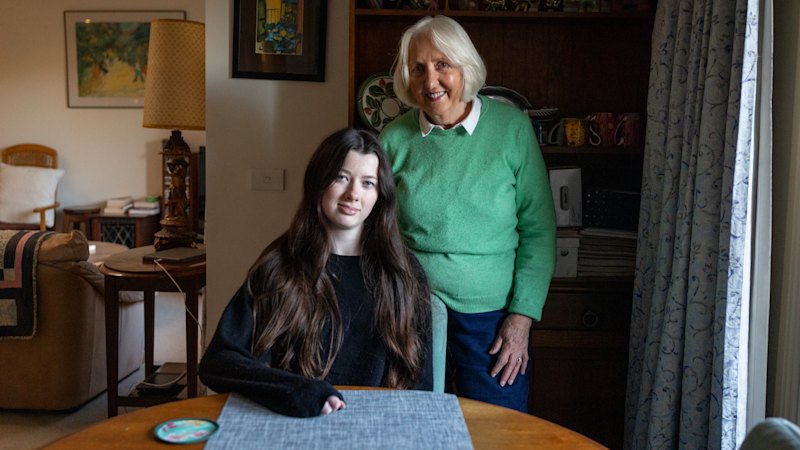
Sandra Masel, 83, pays the fees for her grandson to attend a private school in Melbourne’s inner east. Masel attended a private school; so did her children, who now face higher living costs and different employment situations than she did at their age.
“I figured my grandchild should have the same opportunity, and I can afford it, and they can’t. So it’s a no-brainer, really. I wanted to give them the choice,” Masel said. “Whoever has more money, I think should contribute. There’s no point in making your children wait, and they get the money when they don’t need it any more. They always say you should give with a warm hand, not a cold hand.”
Masel does not pay for any school camps or extra activities, and said it was completely up to her son’s family where they choose to send their child to school.
She said there was no doubt that families faced higher costs of living relative to wages than when she and her late husband paid for their children’s fees themselves. “There’s no question about that. After tax dollars, how can a working couple pay $50,000 a year for each child if they have three kids? It doesn’t stack up.”
However, Grandparents Australia director Anne McLeish said there was a worrying trend of older people feeling pressure to pay, especially for activities such as camps at government schools. She was concerned that grandparents could put themselves under too much pressure to contribute to private school fees.
“I think that they need to think very carefully about the sacrifices they make to their quality of life to prop up funding education,” McLeish said.
“Grandparents are seduced by the idea that the children need the best quality education, and it’s expensive. It’s not necessarily expensive at all. The best quality education can be determined by looking at the school options and matching the school culture to the family culture.”
Families paid $410.3 million to Victorian government schools, the most in Australia, as part of voluntary fees, charges and contributions in 2024, according to the most recent data available from the Australian Curriculum and Assessment Reporting Authority.
Eighty-two-year-old Jan Dods has a daughter and a son, and seven grandchildren. Her son sent his children to private schools on part-scholarships, while her daughter’s children attend government schools.
Dods’ daughter is a single mother, and Dods has contributed to the grandchildren’s education on this side of the family, including occasionally paying for uniforms and higher costs such as educational trips to China, a young leader trip to Costa Rica and Nicaragua and an art trip to New York City.
She will fund her youngest granddaughter Calypso to go on a school ski camp to Mount Hotham this term.
“I determined that I would try to fill the gaps so that these children would have as much opportunity in the way of stimulating educational experiences as possible,” Dods said.
She believed it could last longer than physical gifts. “Education is something that you’ve got in your head and everything else can go,” Dods said.
“I have no intention of having a lot of money when I die. I want to give it to them now. They might not need it, or I might not need it. I might not have enough, but I’m being pretty frugal.”
The Morning Edition newsletter is our guide to the day’s most important and interesting stories, analysis and insights. Sign up here.
 Jackson Graham is an education reporter at The Age. He was previously an explainer reporter.Connect via email.
From our partners
Read the full article here