



Known for its mariachi music and for being a gateway to Mexico’s tequila country, Guadalajara promises an authentic experience for football fans travelling to the 2026 FIFA World Cup.
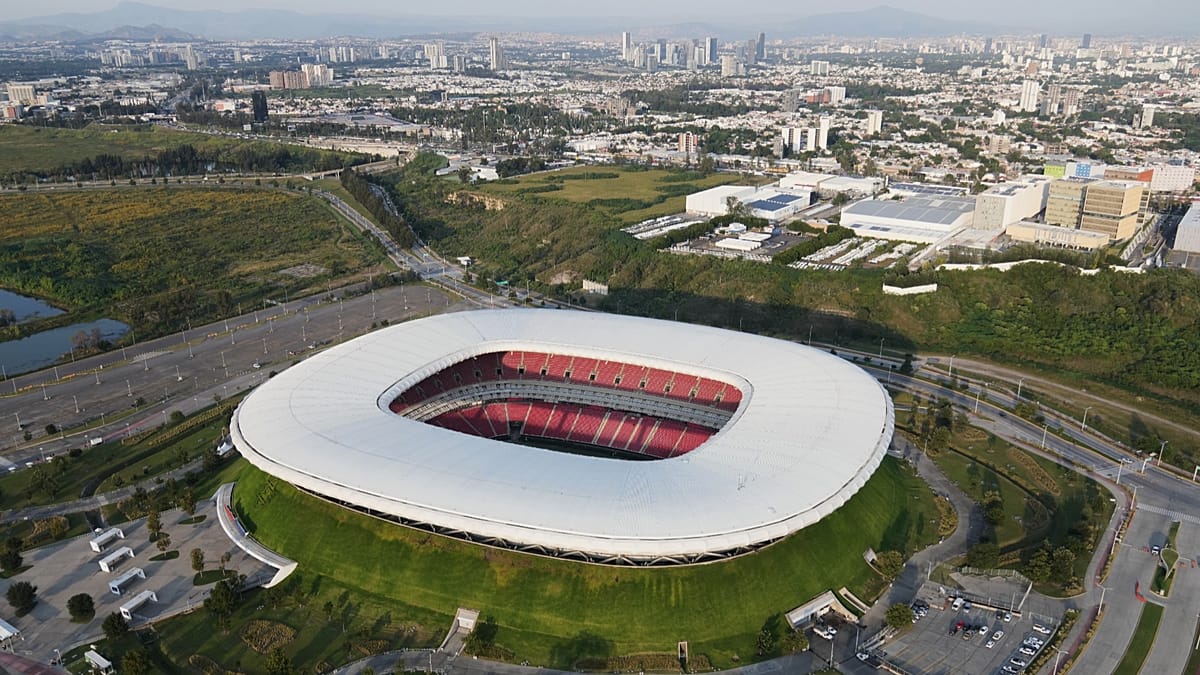
Located in the state of Jalisco, Mexico’s second-largest city will host four World Cup group-stage matches at Estadio Akron, which will be known as Guadalajara Stadium during the tournament, including the co-host nation’s second group game.
This is the third time a World Cup has been held in Guadalajara, after previously staging matches in 1970 and 1986.
For this summer’s edition, it is one of the country’s three host cities, alongside Mexico City and Monterrey.
World Cup fixtures in Guadalajara
Guadalajara Stadium, in neighbouring Zapopan, will host four World Cup group-stage matches. The venue’s headline fixture sees Mexico face Korea Republic in Group A.
- 11 June – Group A: Korea Republic vs Czechia
- 18 June – Group A: Mexico vs Korea Republic
- 23 June – Group K: Colombia vs Congo DR
- 26 June – Group H: Uruguay vs Spain
Guadalajara’s sporting culture
Football dominates the sporting landscape in Guadalajara. The city is home to Club Deportivo Guadalajara, better known as Chivas, one of Mexico’s most successful and widely supported football clubs. Their home, Estadio Akron, has become one of the country’s most modern sporting venues.
However, Guadalajara’s sporting credentials extend beyond football. The city hosted the 2011 Pan American Games, staged the tennis WTA Finals in 2021 and has produced some of Mexico’s most recognisable sporting stars, including Formula 1 driver Sergio Pérez, boxer Saúl Álvarez and footballer Javier Hernández.
Landmarks and places to see
Guadalajara’s historic centre is packed with colonial-era landmarks, including the city’s twin-spired cathedral, the Government Palace, and the UNESCO-listed Hospicio Cabañas.
Visitors can stroll through plazas filled with mariachi performers before exploring the colourful streets of Tlaquepaque, known for its artisan workshops, galleries and traditional architecture.
No visit is complete without a trip to the nearby town of Tequila, where the famous spirit originated. Located around an hour from the city, the agave-covered landscapes surrounding Tequila are recognised as a UNESCO World Heritage site and offer tours of historic distilleries.
Food scene
Guadalajara’s culinary reputation extends far beyond tacos and tequila. The city is famous for birria, a slow-cooked meat stew often enjoyed with tortillas, and tortas ahogadas, crusty sandwiches served in a spicy tomato-based sauce.
Traditional markets such as Mercado San Juan de Dios provide a taste of local life, while modern restaurants are helping position Guadalajara as one of Mexico’s emerging gastronomic destinations.
The surrounding state of Jalisco is also Mexico’s tequila heartland, making tastings and distillery tours among the most popular visitor experiences during a stay in the region.
Fan zones
The FIFA Fan Festival is expected to become one of the city’s main gathering points during the tournament, bringing together supporters for live match screenings, concerts, cultural performances and food experiences.
Fans can also expect football-themed events throughout the centre and key public spaces as Guadalajara embraces its role as a host city for the third time.
Transportation options
Guadalajara’s public transport network includes light rail lines, bus services and the Mi Macro Periférico rapid transit system, which connects large parts of the metropolitan area. Visitors arriving via Guadalajara International Airport can reach the city centre by taxi, rideshare services or public transport connections.
While traffic congestion can be significant during peak periods, officials have promoted sustainable mobility initiatives and public transport use throughout the World Cup. Many of the city’s central attractions are walkable once visitors reach the centre.
Stadium tips
Guadalajara Stadium sits in Zapopan on the western edge of the metropolitan area and has a capacity of around 48,000. Opened in 2010, its distinctive design was inspired by a volcano rising from the landscape, making it one of the most recognisable stadiums in Mexico.
Fans should allow extra travel time on matchdays, particularly for Mexico’s fixture against Korea Republic, which is expected to attract significant demand. Public transport and organised shuttle services are likely to be the easiest ways to reach the stadium.
Nearby restaurants and bars in Zapopan offer plenty of pre-match options before heading to the venue.
Read the full article here