


The Democratic National Committee (DNC) is facing a shake-up after a panel found that two of its vice chair elections held earlier this year were not conducted properly.
The issue arose when the DNC’s Credentials Committee determined that procedural errors meant the executive was not “equally divided as practicable” along gender lines.
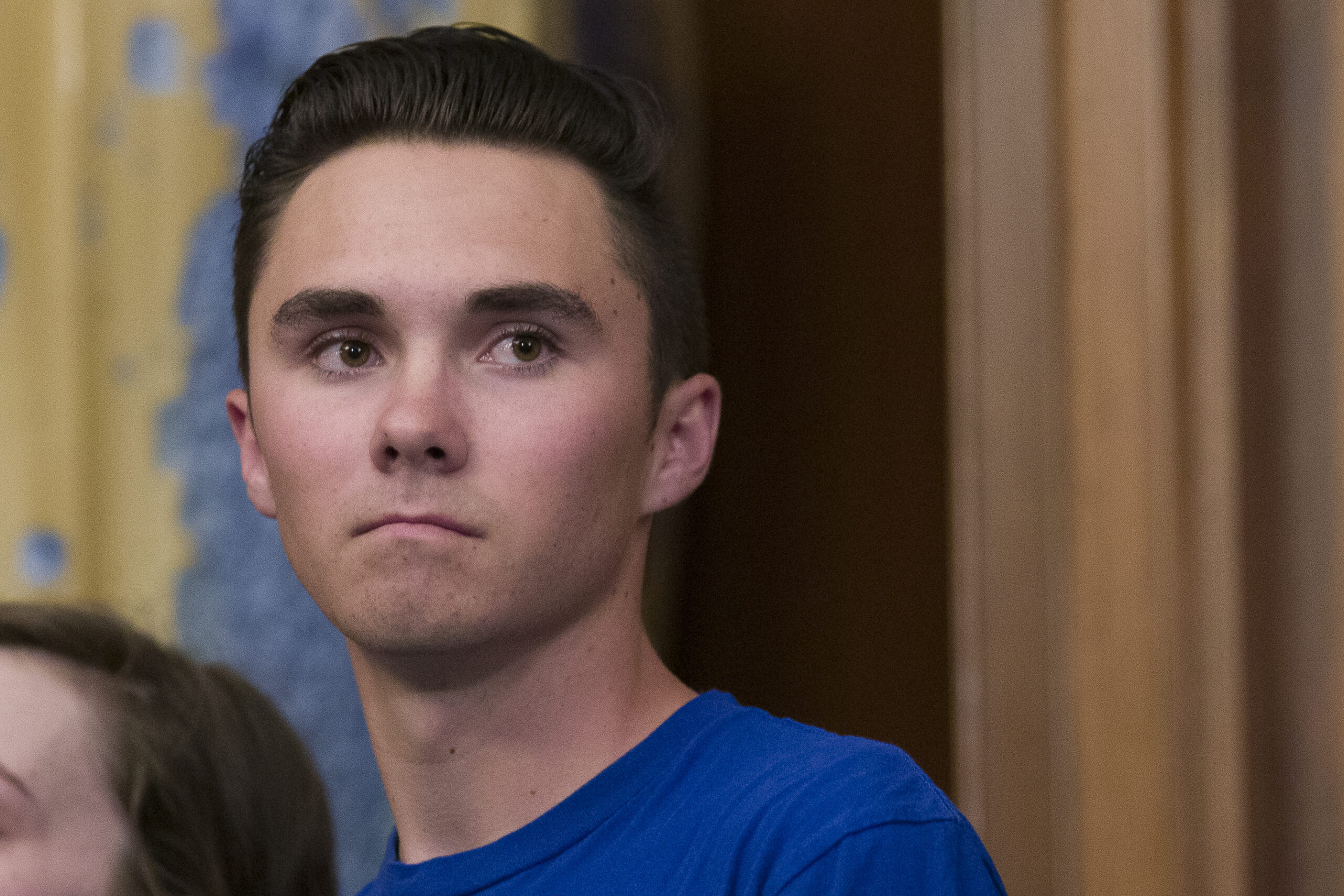
One of the affected officials is David Hogg, a survivor of the 2018 shooting in Parkland, Florida, and prominent gun control activist; the other is Pennsylvania state representative Malcolm Kenyatta.
The finding looks set to prompt a new election to fill the positions, with potential consequences for the DNC’s internal dynamics.
Why It Matters
The Democratic Party is facing internal turmoil after a tough election loss, with growing divisions over its direction and priorities. Some blame the party’s emphasis on diversity, equity, and inclusion (DEI) for alienating voters in November. Now, DEI principles are at the center of a leadership shakeup, potentially undoing a recent vote for two vice chairs. Meanwhile, reformer David Hogg, who previously pushed for primary challenges in safe blue districts, may be sidelined—highlighting the tension between progressive and centrist factions.
As the party prepares for the 2026 midterm elections, the role of vice chair will be crucial in mobilizing support and advocating for key issues.
What To Know
Kalyn Free, an attorney from Oklahoma who failed to secure a vice chair position during the February election, filed a complaint on February 28 alleging that the DNC improperly combined two separate questions into a single vote, a structure she said disadvantaged female candidates under the party’s gender-parity rules.
DNC rules mandate that the national party’s executive committee “shall be as equally divided as practicable” along gender lines. During the February vote, the DNC opted to hold a single vote to fill two remaining vice chair spots instead of conducting separate votes.
Free argued that the combined vote structure unfairly benefited male candidates as members were required to vote for at least one man to maintain gender parity.
When Would a New DNC Vice Chair Vote Take Place?
The DNC credentials committee agreed with Free, recommending that the February election results for vice chair positions be invalidated and a new vote held “as soon as practicable.” This decision now awaits a full DNC membership vote for final approval.
If the re-vote is confirmed, it would be conducted by the full DNC membership, comprising 448 voting members, and would take place at a future DNC meeting, the timing and location of which have yet to be officially announced.
David Walters, a former governor of Oklahoma, said during the meeting that the new elections would be limited to those five candidates. He indicated that the DNC voting was likely to occur at its next regular meeting in August.
Who Are the DNC Vice Chair Candidates?
The DNC’s credentials committee has suggested the final five candidates make it on to a new ballot.
During Monday’s meeting Susan Eads Role, who represented Free, said: “On the subsequent third ballot—on which there were five remaining candidates, two men and three women—the voters were instructed by the presiding officer to vote for two candidates, one of whom had to be male on a single ballot. The votes on these questions were then tallied together.”
According to Role, of the five final candidates won the following number of votes:
- Malcolm Kenyatta received 298 votes
- David Hogg received 214 and a half votes
- Jeanna Repass received 112 votes
- Kalyn Free received 96 votes
- Shasti Conrad received 91 and a half votes
Shasti Conrad
Chair of the Washington State Democratic Party
Conrad’s platform focused on inclusive leadership and strengthening state parties. She advocates for grassroots investment, better coordination with national leaders, and building coalitions to expand Democratic influence.
Kalyn Free
Oklahoma Democratic Party Central Committee member
In February’s election, Free said she was running to amplify Indigenous voices within the DNC and ensure party operations are transparent and accountable. She also advocated for expanding representation in rural and tribal areas often overlooked in national strategy.
David Hogg
Co-founder and board member of March for Our Lives
Hogg said he was running to energize young voters, promote bold progressive policies, and make the DNC more responsive to grassroots movements.
“The party has been around for over 170 years, and it has evolved a lot, obviously, since its beginning. And I think what the moment calls for is making sure that we have the strongest people possible to fight in our party,” he told Newsweek in a recent interview.
Hogg has also been at the center of controversy within the party over his plans to spend up to $20 million through his political action group, Leaders We Deserve, to fund primary challenges against incumbent Democrats, The New York Times reported. DNC Chair Ken Martin said Hogg’s activities raised concerns about party unity and suggested altering party bylaws to require a neutrality pledge for vice chairs.
Hogg told Newsweek that he plans to keep fighting for the Democratic Party, even if he’s ousted from his position.
“Obviously I would prefer that I not be removed; however, in the case that I am, I’m still going to fight to build the strongest Democratic Party possible,” he said.
Malcolm Kenyatta
State representative in Pennsylvania and former chair of the Presidential Advisory Commission on Advancing Educational Equity, Excellence, and Economic Opportunity for Black Americans
Kenyatta advocated for engaging working-class voters, modernizing party messaging, and ensuring marginalized groups—including Black and LGBTQ+ communities—are fully represented in both policy and leadership.
Jeanna Repass
Chair of the Kansas Democratic Party and the 2022 Democratic nominee for Kansas secretary of state
Repass pushed for stronger rural outreach, voting rights protection, and inclusive candidate recruitment. She said she believes the path to national wins includes deep investment in state parties.
What People Are Saying
Democratic National Committee Chair Ken Martin said in a statement sent to Newsweek via email on Monday: “During my campaign for Chair, I pledged to run the DNC with integrity, openness, and fairness. I am disappointed to learn that before I became Chair, there was a procedural error in the February Vice Chair elections.”
Martin continued: “The Credentials Committee has issued their recommendation, and I trust that the DNC Members will carefully review the Committee’s resolution and resolve this matter fairly. I thank all of our officers for their service, including Vice Chairs Kenyatta and Hogg, and look forward to continuing to work with them in their officer posts as this matter is resolved.”
Vice Chair candidate David Hodd said after the announcement: “I ran to be DNC Vice Chair to help make the Democratic Party better, not to defend an indefensible status quo that has caused voters in almost every demographic group to move away from us.”
Vice Chair candidate Malcolm Kenyatta said on X: “100 Days ago I was elected as a Vice Chair of the DNC with 298 votes well above the 201.5 threshold to win. David Hogg received only 214.5 Today the DNC credentials committee heard a (complex challenge) to this election and voted for a new one to be held.”
He added: “I disagree with the ruling, but ultimately the committee voted and I respect their votes — even when I really disagree. Second, the press has been breathless in covering the main character they’ve chosen — David Hogg.”
He continued: “So yes, I’m pissed that this challenge was successful, especially when I won in such a resounding way. But here we are…”
What Happens Next
If the re-vote is confirmed, the DNC’s credentials committee said it would take place “as soon as practicle.” That could be at the DNC’s next scheduled meeting in August or before then through email ballots.
Read the full article here