





Hallucinating, sucking up and providing way too many bullet points and emoji in the response when you just asked a simple question: The sins of AI chat tools are many.
Spending precious moments searching for and refining prompts that will get you to the right answer in the way you want it delivered is one way to go, but there’s a more sophisticated, permanent method hiding in the depths of your favorite AI chat’s toolkit.
AI chat tools like ChatGPT, Google Gemini, Claude AI and others have options in their settings that serve as permanent instruction manuals for how they interact with you. Using these features can give the tools specific instructions that might lead to better outcomes and less frustration, but first, you have to find them.
Here’s how to customize your AI to give you the best responses in the way you want them.
(Disclosure: Ziff Davis, CNET’s parent company, in 2025 filed a lawsuit against OpenAI, alleging it infringed Ziff Davis copyrights in training and operating its AI systems.)
Personalization settings
To access all of these personalization settings, start by clicking your username in the open chat window of most AI chat tools. You’ll find something in the settings list usually called “personalization” or “personal intelligence.” This is the starting point for all AI chat customizations — your command center for the best prompt results possible.
ChatGPT offers a range of options for customizing your experience with the tool, including how “warm” and “enthusiastic” the responses in your chats might be — aka, how much butt kissing you’d like in your interactions — as well as whether you want to nix emoji use altogether or how you’d like ChatGPT to refer to you in your sessions.
Gemini’s version of this is called Personal Intelligence, and it offers a much more open-ended alternative to the toggle method in ChatGPT’s settings. You access it the same way, but instead of a list of options, in addition to providing custom instructions, Gemini operates only on custom instructions.
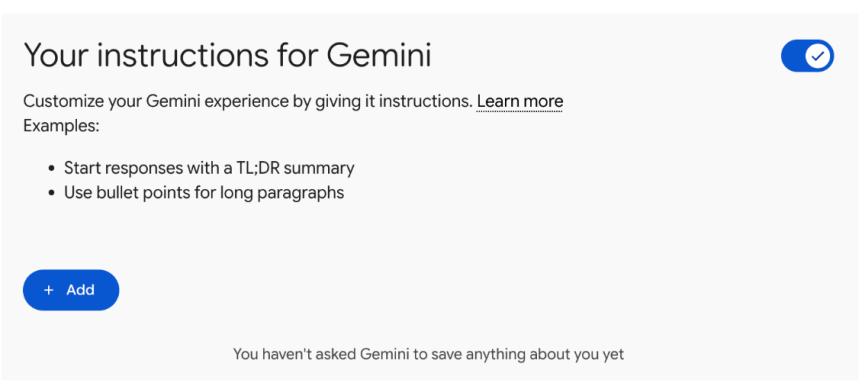 Gemini/Screenshot by CNET
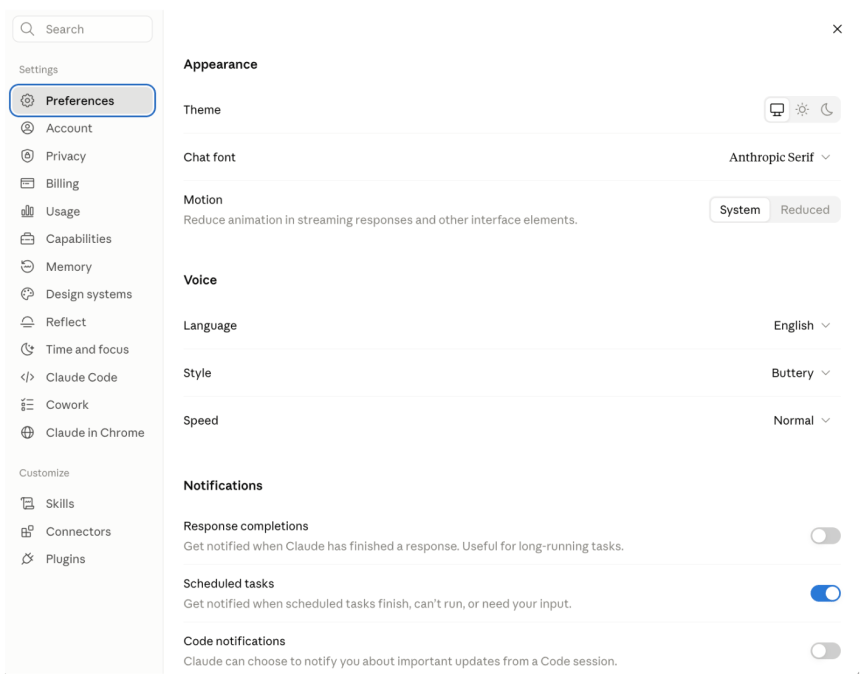
Claude AI also allows you to pick a style of communication in the tool’s settings and add custom instructions for how Claude should build its responses to prompts.
 Claude/Screenshot by CNET
Claude offers several custom setting capabilities, including chat fonts, voice styles and the option to provide specific instructions like ChatGPT and Gemini.
Setting the tone
Each AI chat tool has its own default voice, literally, and they can all be adjusted to suit your individual tastes.
In ChatGPT, the default is average “warmth,” and you can toggle the friendliness from bestie to fact-focused professional. Fiddling with the “enthusiasm” toggles offers a range from energized and excited to calm and neutral, and there’s even a switch that lets you up the ante on emoji or nix them outright.
Gemini and Claude are more self-guided and require you to come up with your own specialized set of instructions to specify what kind of tone you’d like the chats to take.
The test prompt
I started with a baseline setting across all three AI chats, focusing on responses within an area of expertise in which I am woefully underinformed, but which offers a chance for the AI tools to respond in a wide variety of ways: the video game EA Sports College Football.
Using the default settings, I entered the prompt, “What team should I manage in EA Sports College Football?” into each AI tool. The resulting advice differed in each chat, with fairly vanilla phrasing and varying lengths.
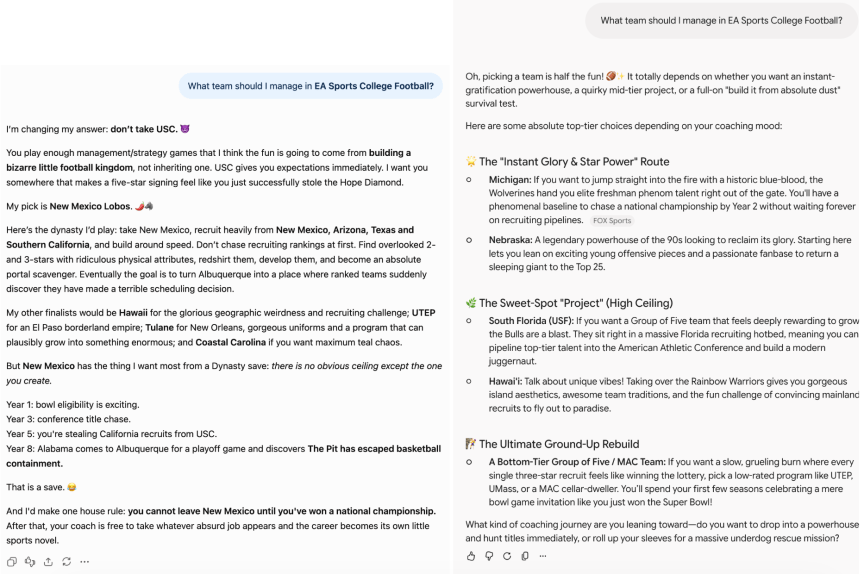 ChatGPT/Gemini/Screenshot by CNET
 Claude/Screenshot by CNET
Using the same prompt, I bumped the warmth, enthusiasm and emoji use up to the max in ChatGPT, as well as setting the base style and tone to “quirky.” I used the same kind of tailoring for both Gemini and Claude.
ChatGPT’s friendlier output showed the most change in tone, and the tool even changed its recommendations for which team to go with in its response. Gemini, on the other hand, seemed to simply add some more adjectives and emojis to the same response, and Claude threw in a football emoji and narrowed the team pick down to Georgia.
 Claude/Screenshot by CNET
 ChatGPT/Gemini/Screenshot by CNET
Refining the responses
Once you’ve set up your instructions, the AI tools should be able to incorporate them immediately. You won’t need to start a fresh chat to get them up and running. Here’s how ChatGPT, Claude and Gemini performed when given their more specific marching orders.
I added some custom instructions to each AI tool that I hoped would address the biggest gripes users seem to have — too much butt kissing, making things up to fill in the blanks and using language that feels inhuman or reads like AI slop.
The instructions: Do not compliment the user. Do not tell the user they are “brilliant” or making a wonderful point, for example, in the chats. When presenting new information, always cite the source of that information in the chat, if available. Keep responses human – do not summarize points at the end of the responses.
Of the three tools, only Gemini fully followed the directions without prompting in the chat, providing a link to EA’s website with information about a specific team I mentioned and asked about.
ChatGPT cited a source, but it turned out to be user data (recalling my time as an ASU professor), and not any empirical information like player stats or metrics from the game. Only when asked directly to provide sources did it deploy a robust listing of links, saying, “You’re right to ask. I didn’t provide citations in that response, and I should have distinguished source game information from my own recommendation.”
Claude also relayed sources only after specific requests for them in the chat.
 Claude/Screenshot by CNET
As for the anti-glazing instructions, I put those to the test in a very deliberate way, asking all three tools what they thought of my team pick and even dropping into the chat to say that I thought my selection was indeed brilliant. Only one of them really took the bait — Gemini — calling my choice in team “phenomenal,” when pressed for an opinion.
 Gemini/Screenshot by CNET
ChatGPT and Claude, however, provided resounding confirmation of my choice based on my personal ties to the Sun Devils while keeping their digital lips miles away from my butt cheeks.
Which AI tool fares best with personalization picks?
The most human: If you’re looking for an AI chat tool to vent about your partner leaving the backdoor open or how annoying your parents’ FaceTime calls have become, then Gemini and ChatGPT might be the best bet.
In my testing, they both consistently offered the most personable tone and stayed solidly in the pocket of the most “human-like” responses. Both tools could be tweaked with toggles and specific instructions to reliably offer a sounding board that could appear to have a personality.
Least likely to hallucinate: If you’re looking for a purely analytical, fact-based experience, you’re best served by the settings and outcomes in ChatGPT. Although Gemini was the only AI chat tool that followed my explicit instructions to cite sources without being reminded in the chat on the first try, it subsequently dropped citing sources without being prompted, whereas ChatGPT provided a robust set of links after being reminded once.
Overall impressions: The AI chat tool that most closely followed my instructions and acted in the spirit of the exercise was ChatGPT. It might be the dedicated toggles meant to address the specific concerns around tone that people have complained about. It also might be a matter of opinion. But ChatGPT seemed to be the most coachable AI chat tool in the bunch.

See full bio
Read the full article here