



Australia is the last continent on earth to experience cases of H5 bird flu, but with that unique status comes the key advantage of several years to formulate a plan for when the disease hits – particularly when it comes to protecting and preparing our most at-risk wildlife.
In Western Australia, several programs have been quietly progressing to protect endangered species including the western ground parrot and the Australian lesser noddy.
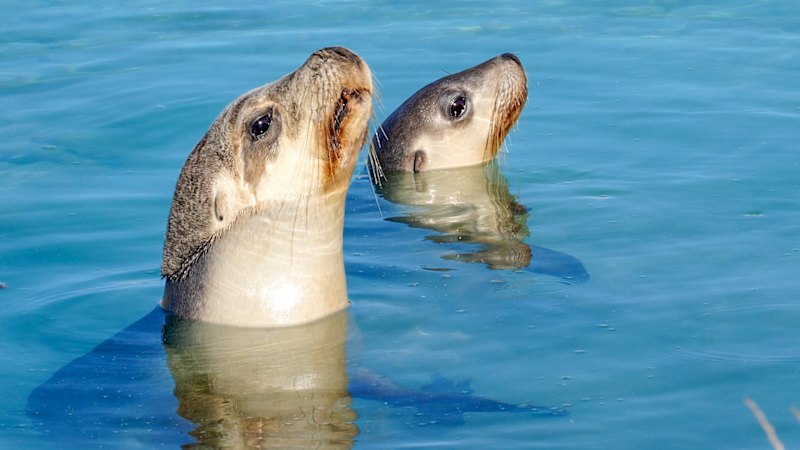
On the Abrolhos Islands off the coast of Geraldton, a program to boost Australian sea lion pup health through building shelters and trialling hookworm treatment hopes to keep the population resilient ahead of bird flu taking hold in the area.
Dr Holly Raudino, a senior research scientist with the marine science program of the WA Department of Biodiversity Conservation and Attractions, has been working with the sea lion population along the state’s coast, focusing on species around the Abrolhos Islands near Geraldton.
Raudino said there was serious concern for the population due to the severe impact the virus has had on other sea lion colonies around the world.
“South American sea lions have been really affected, as have elephant seals in South America, but also more recently on Heard Island, which is one of the South Antarctic islands,” she said.
“We’re seeing tens of thousands of pups dying in one breeding season.
“To put that into perspective, the Australian sea lions we think there’s 12,000 or less across the species range, and they’re restricted just to South Australia and Western Australia.
“So there’s definitely the potential that we could lose the whole species.”
Raudino and the team have been busy on the islands trying to build shore up the population ahead of any potential incursion of the virus, building shelters and checking the sea lion pups for hookworm, a parasite that has led to high mortality rates among South Australian colonies.
“The idea is that it reduces other stresses ahead of avian influenza getting into those colonies,” Raudino said.
“The pups are definitely susceptible to bird flu as are the older age classes too,” she said.
“But the main concern is that when they are pupping, they are all in close proximity together.
“We know this highly pathogenic avian influenza is spreading mammal to mammal, so once it gets in it could be catastrophic.”
Federal Environment and Water Minister Murray said the best way to protect vulnerable species in the wild from H5 bird flu was to make sure there were strong and healthy populations.
“Protective action is giving species the best chance of withstanding and recovering from the potential impacts of H5 bird flu,” he said.
“These projects have not only helped us prepare for H5 bird flu, they will also have enduring conservation benefits for many of the species that rely on these habitats.”
Raudino said the best-case scenario for bird flu spreading among the sea lion population – which ranges from the coast to the south of Esperance up to north of the Abrolhos – is that the virus reached an equilibrium and did not wipe out the population.
“I really hope that we don’t get local extinctions and that we’re able to kind of preserve the species across their range,” she said.
“It is important to record and report, and the community has been doing a good job of that.
“We can’t underestimate the power of people looking and seeing things first, and then hopefully we can get measures in place.”
WA Environment Minister Matthew Swinbourn was confident the conservation initiatives would put the state in a good position to boost native species.
“Given H5 bird flu detections in Australia, this work is now more important than ever,” he said.
“This funding is fundamental in strengthening resilience in our most threatened species.”
Raudino said her key concern was how quickly bird flu spread across the sea lion population, and whether it was established.
“We have known for the last few years that it is a real threat, and we have been trying to do as much as we can” she said.
“Even if we get mortalities we have been testing, at least to my knowledge, since 2023 and we have had time to prepare.
“I think we’re relieved that it’s happened after the main pupping season for the Abrolhos. It would be great if we could get to the end of the year, and [the virus] wasn’t established.
“In WA, it’s still only been detected in the migratory seabirds.
“There’s no local transmission, which has been a huge relief.”
Start the day with a summary of the day’s most important and interesting stories, analysis and insights. Sign up for our Morning Edition newsletter.
From our partners
Read the full article here