



Monday, September 5, 1994 was the darkest night of the month, the only night with not even a sliver of moon. It was also the first Monday, the regular night for Labor Party branch meetings. Outside the Cabravale Diggers Club, the air hung black and still. Inside, past the pokies, the member for Cabramatta was regaling the faithful with the latest local crime figures.
Tall, severe-faced and with piercing blue eyes, John Newman was old-school Labor – a street-fighter with a hair-trigger temper, known for challenging his political opponents to punch-ups, holding a grudge and keeping watch on his enemies.
He was in a tough neighbourhood. Australia had been through a long recession, and since 1975 and the end of the Vietnam war, Cabramatta had been the gateway for tens of thousands of IndoChinese refugees who had fled the communists and were now resettled in Australia’s largest-ever Asian immigration program.
By the 1990s, widespread unemployment, social isolation and a sudden flood of high-grade South-east Asian heroin had made Cabramatta the heroin and homicide capital of Australia. Addicts swarmed through its train station and shot up and died in back lanes. Asian gangs fought gun battles on street corners. Cabramatta Police Station counted each day’s drug deals to be in the thousands.
Newman had his own battle. One Vietnamese man, who’d arrived as a penniless boat-person, had found his way onto Fairfield Council, become deputy mayor and, Newman was convinced, had his eye on Newman’s seat in the NSW parliament. Phuong Ngo, who was said to be highly intelligent, ran a local Vietnamese club, the Mekong Club – which was rumoured to be laundering drug money – and had taken over a defunct Labor branch, stacked it with Asian immigrants and made it the largest branch in Cabramatta.
In response Newman, not to be outdone, had dressed in a cowboy hat, pinned on a sheriff’s star, made sure the local paper photographed him, and demanded Asian criminals be deported. “Asian gangs don’t fear our laws,” he told the media at the time. “But there’s one thing they do fear, and that’s deportation. Send them back to the jungles, for, frankly, that’s where they belong.”
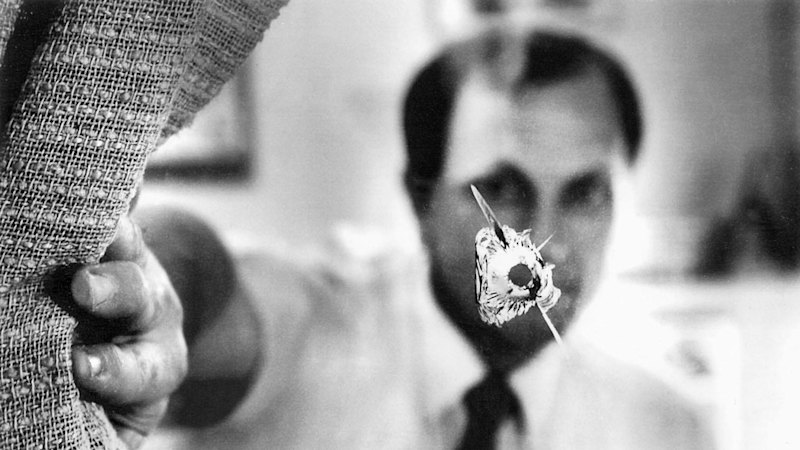
When someone threw red paint on his white Ford Fairlane, and his office answering machine filled up with death threats, Newman took it as a badge of honour. Ditto the old bullet-hole in his electoral office window, which he refused to repair and made a point of showing visitors.
That September evening, Newman was telling the Labor diehards at the Diggers Club he’d be meeting with the state’s police commissioner the next morning and laying down his demands: more cops, tougher sentences, Asian deportations.
‘Asian gangs don’t fear our laws. But there’s one thing they do fear, and that’s deportation. Send them back to the jungles.’
Slain MP John Newman
The branch meeting lasted only an hour. By 9.15pm, Newman was striding through the Diggers Club carpark and turning the key in his Fairlane. A shroud of hanging rain swallowed the headlights. In 10 minutes’ time, Newman would be at home.
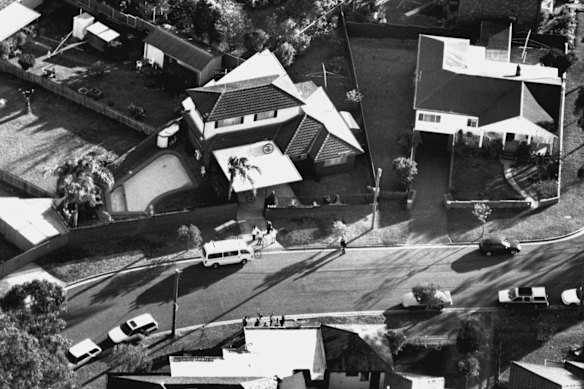
The MP lived in a quiet area, behind the main road, where Cabramatta was still the old suburbia: cul-de-sacs ending in scrappy patches of bushland; fibro and dying cars; the forward march of concrete driveways; some new blond bricks and Colorbond. Newman’s house, red brick with a cream weatherboard upstairs extension, sat at the bottom of a hill in Woods Avenue, near the corner of Bowden Street. When the paint-bombers found it, the police gave him a security camera, but it never showed anything, so he told them to take it away.
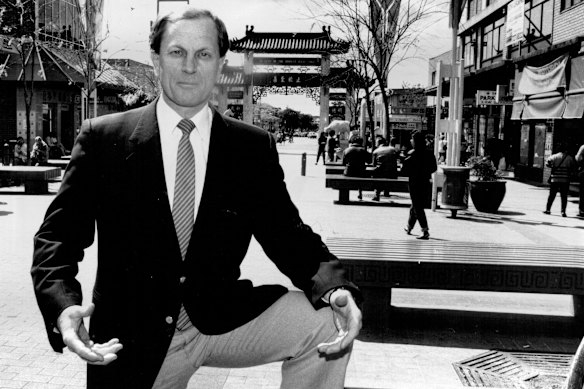
Newman, a sixth dan black belt and president of the Australian Karate Federation, didn’t need the police. He put in an alarm system, made his front wall more than two metres high, got himself a gun and bought a grey tarpaulin, which he kept in the boot of the Fairlane.
Every night, as soon as he arrived home, Newman – a man of discipline – made sure he pulled out the tarpaulin, covered his Fairlane and closed his metal gates. He’d been doing it every night for the past six months. Which meant that every night, Newman would be in his driveway. As anyone would know, if they happened to be watching him.
That Monday, September 5, 1994, it was just before 9.30pm when the white Fairlane came into view on the small crest in Bowden Street, drove down the hill and turned right into Woods Avenue. Newman pulled into his driveway and stopped under his carport. Nearby, in the shadows, somebody was waiting.
Inside, Newman’s fiancée of four months, Lucy Wang, turned off the TV, unlocked the front door and front security screen, and came out to help with the tarpaulin. Newman already had it spread over the back of the Fairlane. Wang, who was short-sighted and wore glasses, had taken a front edge of the tarp and was bending down between the bonnet and the house to pull it over the front bumper. Newman was near the back of his car, standing side-on to the road.
Suddenly, Wang heard a gunshot. She looked up. A man was standing in the driveway, his head cocked to one side, his arms stretched out straight in front of his body. Flame burst from where his hands were. Newman staggered and fell. Wang screamed. The shooter was too close to miss. The MP was shot twice through his chest. A third bullet ripped the tarpaulin, grazed the back window of the Fairlane and ricocheted up into the roof of the carport. Newman would die minutes later.
The shooter disappeared. But within hours, Cabramatta Police Station had been given the suspect’s name. “Politically, the person with the most to gain by John Newman’s death would be Phuong Ngo,” declared Ken Chapman, who worked in Newman’s office, in a statement made to Cabramatta police two hours after the murder. “It is general knowledge within political circles that Ngo desires a seat in parliament.”
John Newman’s murder shocked the country. It was instantly labelled Australia’s first political assassination and Phuong Ngo, the ambitious local politician on the rise, was just as quickly labelled the chief suspect. But, despite a massive investigation, it took the police three and half years, until March 1998, to arrest him and took prosecutors another three-and-a-half years and three trials to convict him.
Ngo’s first trial was aborted; his second ended with a hung jury. The third trial, in 2001, was three trials in one, with three men accused of the murder, one as the shooter, one as the getaway driver and Ngo as the mastermind. The jury acquitted the alleged shooter and driver but convicted Ngo. The sentencing judge found Ngo’s motive for killing Newman was “naked political ambition and impatience”, that Ngo wanted Newman’s seat in NSW parliament but couldn’t wait for the next election, where he’d be able to contest it. Ngo, in other words, couldn’t wait for the ballot and instead chose a bullet.
After his conviction, Ngo was sent to Goulburn Supermax, the toughest prison in Australia, where he remained in solitary confinement for almost 14 years. Over that time several lawyers, others who sat through the trials and Ngo’s two co-accused who the jury acquitted raised concerns about all three trials and the way Ngo was convicted. In 2007, working as a reporter for the ABC’s Four Corners, I began the mammoth task of collecting and reading thousands of pages of court transcript, statements and – significantly – secret hearings conducted by the NSW Crime Commission. Four Corners assembled a team and our program The Newman Case was broadcast in 2008.
We couldn’t tell the whole story – too much was subject to secrecy provisions – but even so, the NSW Chief Justice appointed a retired judge, David Patten, to look into the conviction. Judge Patten handed down his report in 2009. He found the evidence against Ngo was more conclusive than ever, that Ngo wasn’t an honest witness, and was highly critical of the lawyers and academics who made submissions to the inquiry and the journalism that prompted it.
NSW Police were in furious agreement. So was the NSW Attorney-General, who called the Four Corners program “garbage”. The Corrective Services Commissioner banned me from visiting any NSW prison for an unlimited period.
Through all this time, Ngo was in Supermax where, if he was lucky, he might be allowed to make three six-minute phone calls a week, including to his lawyers. Journalists were banned from visiting prisoners without official permission – which was rarely given and almost unheard-of in a case like his.
In 2016, Ngo was transferred to Lithgow Correctional Centre. I tried to visit but was told I had to leave. Then, in January 2020, my phone rang. Ngo had been moved to a newly built maximum-security prison, Macquarie Correctional Centre, in western NSW. For the first time in almost 22 years, since the day he was arrested, Ngo was relatively free to make phone calls. And for the first time in 14 years, I was able to ask him questions.
For the next three years, in more than 300 phone calls, we went through the murder, the investigation and the trials: informers, reluctant witnesses, shifting evidence, suppression orders, secret hearings in the NSW Crime Commission, prominent politicians who never thought the political motive made sense. Some of the story still can’t be told. But enough can. And it raises serious concerns.
I can’t say that Ngo is innocent. I wasn’t there. I didn’t see who pulled the trigger. But I do know there’s something very wrong with the way he was convicted.
Phuong Ngo is a “lifer”. He has no release date. His life sentence will only end with his death. He is now 68 and has spent more than 28 years in prison – a lot of time to think.
He has many questions. Why did it take seven years and three trials to convict him? Why did seven key prosecution witnesses want guarantees they wouldn’t face charges before they’d agree to give evidence against him? Why did so many change their stories and become prosecution witnesses after attending secret hearings at the NSW Crime Commission? Why were so many witnesses’ names and so much evidence kept secret? Why are whole days of trial still subject to non-publication orders? What should happen when a court makes a specific finding on criminal motive – naked political ambition and impatience – and it’s clearly contradicted by new evidence from some of the most senior Labor politicians of the day?
And then there’s the puzzle of the verdict. How could a jury acquit the two men said to have carried out the murder – the shooter and driver – but still convict the mastermind? Who did Ngo mastermind? And who shot Newman? Why is the killer still at large?
The Man Who Couldn’t Wait: The True Story of Australia’s First Political Assassination, by Debbie Whitmont (Allen & Unwin, $35), is out April 28.
Get the best of Good Weekend delivered to your inbox every Saturday morning. Sign up for our newsletter.
Read more from Good Weekend:
Read the full article here