



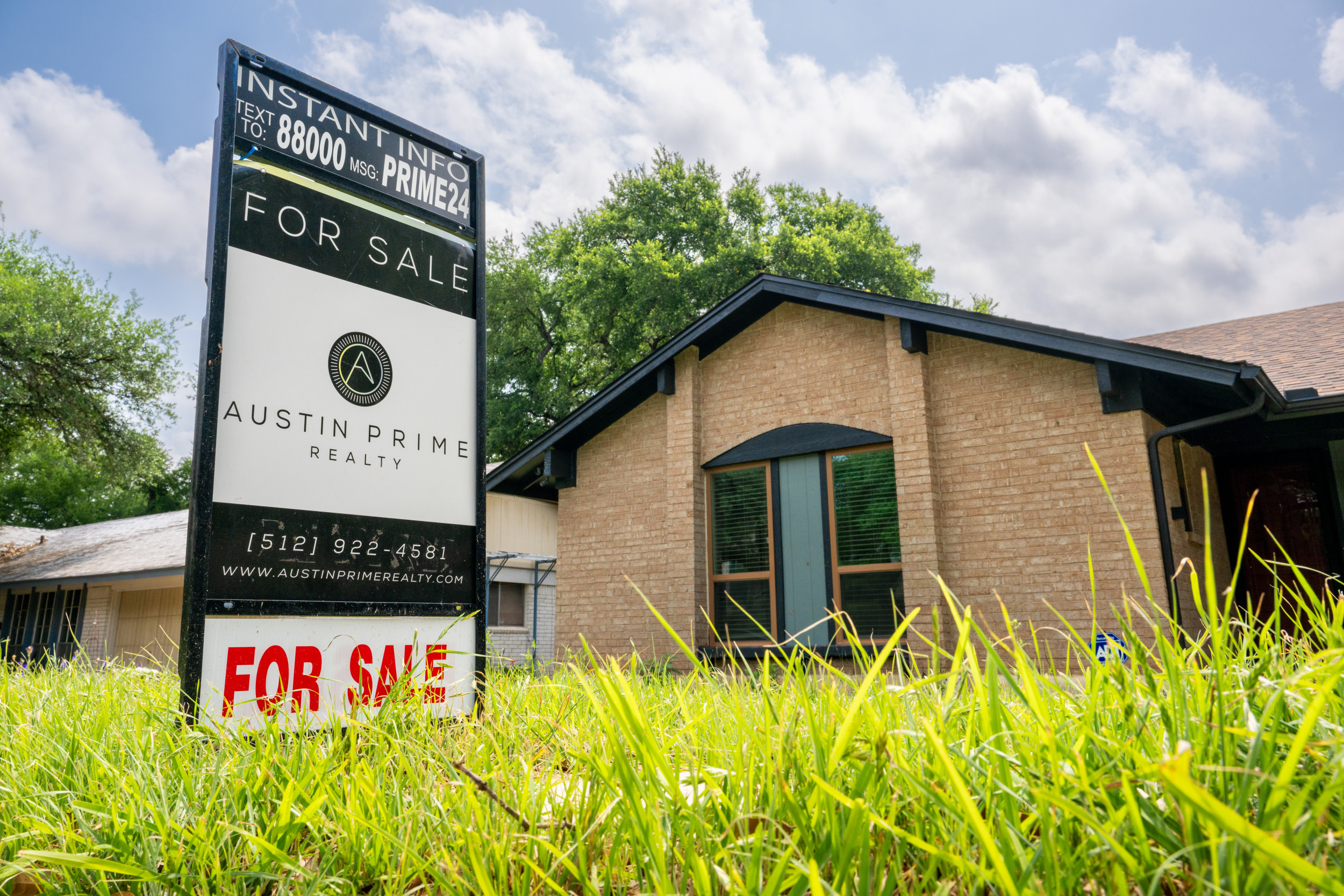
Homeowners selling real estate in some of the United States’ largest metro areas are falling short of reclaiming the full amounts they originally paid for their properties.
Why It Matters
The housing market remains contentious for many Americans who want to purchase starter homes or new builds but simply cannot afford elevated mortgage rates, rising home insurance premiums and property taxes, even as the national inventory is growing. Prices are rising and sales are falling.
What To Know
The current state of the market may benefit buyers rather than sellers as active U.S. listings last month reached a five-year high, according to data reported by real estate brokerage Redfin on Monday.
That is attributed to sales taking longer to complete, as the typical rate of 38 days represents the slowest May selling pace since 2020.
Roughly 6 percent of today’s U.S. home sellers are at risk of selling for less than their purchase price, according to Redfin, up from 4.4 percent a year ago but below pre-pandemic levels.
The major metros where sellers overall, no matter what kind of home, are finalizing deals with the biggest losses:
- San Francisco, California: -19.6 percent
- Austin, Texas: -13.8 percent
- Oakland, California: -11 percent
Major metros with the lowest share of homes at risk of selling for a loss:
- Providence, Rhode Island: -0.5 percent
- New Brunswick, New Jersey: -0.5 percent
- Anaheim, California: -1 percent
The report shows that nearly 1 in 6 (16.4 percent) of sellers who purchased their homes post-pandemic are at risk of selling for less than their purchase price, compared to 9 percent of sellers who bought their home during the pandemic and are at risk of selling at a loss.
Only 1.8 percent of sellers who bought homes prior to the pandemic are at risk of finalizing deals at a loss.
Redfin, which analyzed active listings on the MLS in May, defines the pandemic period as July 2020 to July 2022.
“We are seeing more opportunities for buyers to pay a little less than they would have just a year or two ago,” Redfin senior economist Asad Khan said in a statement. “That’s because sellers with significant equity in their homes—and therefore at no risk of selling at a loss—are more willing to be flexible on price.
“That’s a meaningful shift for anyone who’s been watching and waiting for prices to come down, especially first-time homebuyers.”
When it comes to single-family homes, about 13.2 percent of for-sale single-family homes in Austin are at risk of selling at a loss. That’s followed by San Antonio, Texas, (10.2 percent) and St. Louis, Missouri (10 percent).
More than one-third (35.6 percent) of for-sale condos in San Francisco are at risk of selling at a loss, drastically higher than the next two major metros on the list pertaining strictly to condos: Portland, Oregon, (24.8 percent) and Oakland (23.2 percent).
About 47.5 percent of for-sale homes in Austin that were bought after July 2022 are at risk of selling at a loss.
What People Are Saying
Redfin senior economist Asad Khan, in a statement: “The longer someone has owned their home, the more likely they are to come out ahead, but that’s little comfort for those who bought more recently and may be facing a loss. Not every homeowner is listing because they want to—some are listing because they have to. In those cases, it’s important to list at a realistic price for the market and be prepared to adjust depending on buyer interest.”
Denver Redfin Premier agent Andy Potarf, in a statement: “We are seeing the biggest price drops in the condo market. I had a seller who bought a condo for $570,000 in 2021 and it just sold for $525,000 last week. Sellers who have to sell are willing to take a bigger hit to get the deal done.”
What Happens Next
Housing affordability is unlikely to ease anytime soon, according to a new report by the Joint Center for Housing Studies of Harvard University.
While prices have continued rising this year, total existing-home sales in the U.S. dropped to a 30-year low of 4.06 million, the study found.
Read the full article here