




Rent prices are skyrocketing across the country, but some states saw more notable increases than others, according to a new report from Rentec Direct.
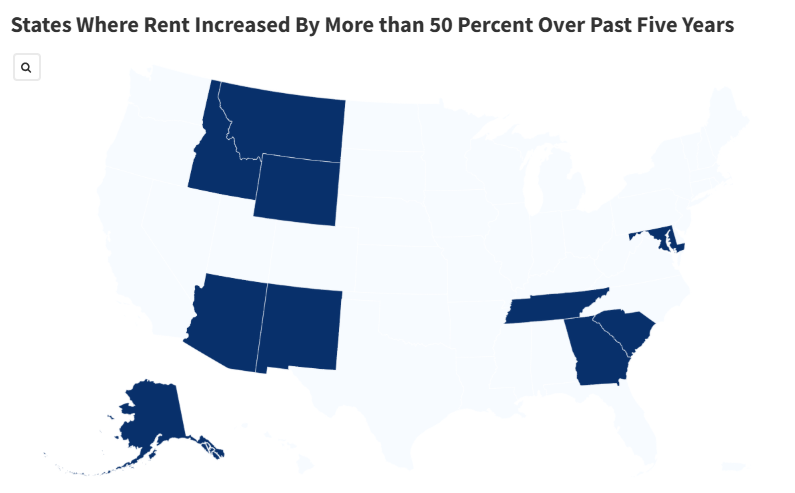
There were 10 states that saw rent prices climb by more than 50 percent from 2019 to 2024.
Why It Matters
Rent price trends are dependent on the specific market for that city and state. While some metros like Austin, Texas, have seen rent prices fall in recent years, other cities and states have observed notable upticks.
With rent becoming increasingly expensive, some areas will face an affordable housing crisis, with homes for sale also skyrocketing in value amid high interest rates.
What To Know
Arizona, Tennessee, New Mexico, Georgia, Maryland, South Carolina, Alaska, Idaho, Montana and Wyoming all saw rent prices surge more than 50 percent over the past five years.
While Arizona saw the highest uptick at a whopping 84 percent increase, Tennessee and New Mexico also saw sizable jumps of 67 percent and 65 percent, respectively.
Meanwhile, Alaska, Idaho, Montana and Wyoming saw rent prices climb just beyond 50 percent, between 53 and 54 percent, for the same time period.
The data was based on information from 301,524 tenants nationwide. Across the country, the national average monthly rent paid by tenants in 2024 was $1,302, reflecting a 31 percent increase over the past five years.
Renters saw the most substantial jump in prices from 2021 to 2022, when the national average rent paid jumped by 8 percent.
What People Are Saying
Kevin Thompson, the CEO of 9i Capital Group and the host of the 9innings podcast, told Newsweek: “Western states like New Mexico and Arizona have seen a surge in demand as people continue to migrate from California, drawn by lower costs and the flexibility of remote work. This has driven up not just home prices, but rents as well.”
Alex Beene, a financial literacy instructor for the University of Tennessee at Martin, told Newsweek: “It’s little surprise that some states that have experienced economic booms in the last five years are experiencing a greater-than-50-percent rise in rents. States like Arizona and Tennessee have benefited from the pandemic and post-pandemic economy by having expanding major metro areas and an inflow of new residents coming because of lower costs compared to other states and plentiful job opportunities.
“It’s about more than just those factors, though, as a housing shortage in several states equates to fewer locations for people moving in to rent. With limited housing options, it’s easy to see why rents have escalated dramatically.”
Michael Ryan, a finance expert and the founder of MichaelRyanMoney.com, told Newsweek: “The really scary part? These states don’t even have rent control. Landlords can basically raise prices to whatever they want. High demand, corporate rentals, no price controls—yeah, that’s a bad science experiment.
“I’m not saying the sky is falling, but holy smokes, something has to give. And right now? The housing market feels like a runaway train with no brakes.”
Realtor.com senior economist Joel Berner told Newsweek: “The states that saw the largest increases tend to be in the Sun Belt, where many people relocated to during and immediately after the pandemic. More demand chasing after already-limited supply drove rents up in 2021 and 2022, but builders have done well in some of these areas to respond by delivering more inventory, which has flattened the growth.”
What Happens Next
As more baby boomers enter retirement, there could be a new crop of people looking to rent in warmer climates, Thompson said.
“Some prefer the quiet, seasonal weather of New Mexico, while others opt for coastal regions like South Carolina or Florida,” he said. “As long as interest rates remain high and housing supply stays tight, we can expect these trends to continue, keeping upward pressure on rents and home prices.”
Read the full article here