




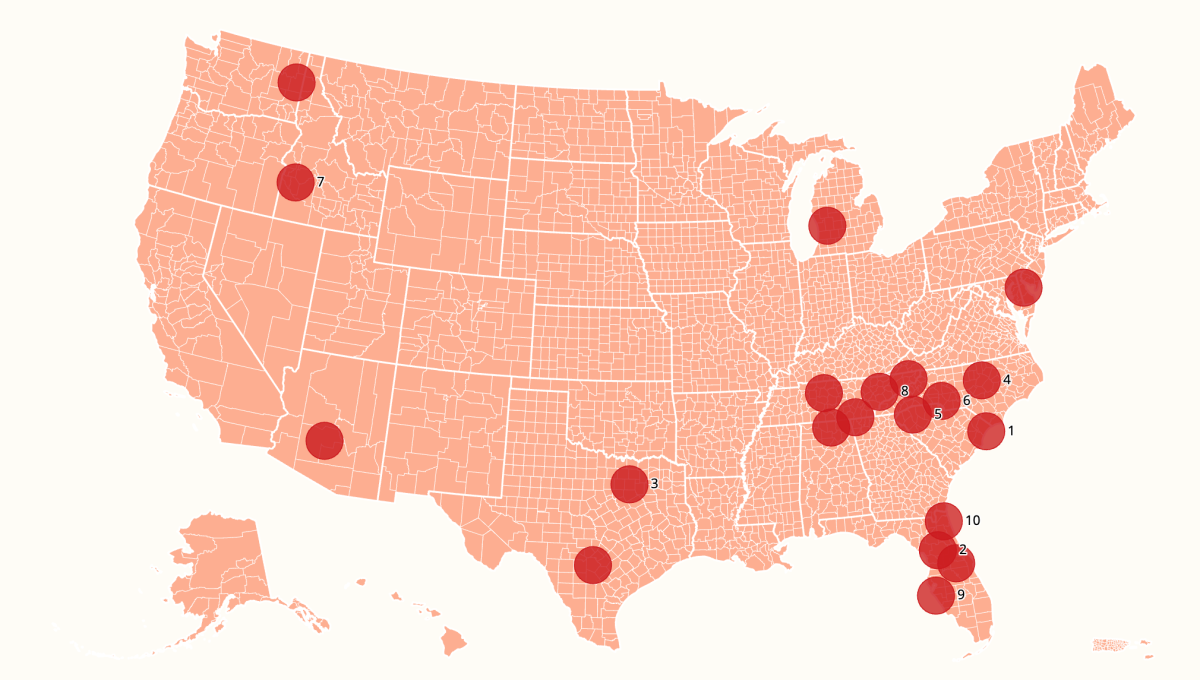
Affordability has overtaken career opportunities as the biggest reason Americans are relocating, according to a new report that highlights how rising housing costs continue to reshape migration patterns across the country.
Data from moving and storage company PODS found that 58 percent of long-distance movers cited affordability as the primary factor behind their move, while just 28 percent relocated for a job opportunity.
The trend is helping fuel continued population growth across lower-cost markets in the Southeast and Southwest, while some of the country’s most expensive metro areas continue to lose residents.
The findings add to growing evidence that Americans who can relocate are increasingly choosing markets where housing and everyday living costs remain lower, even if it means moving farther from traditional economic centers.
PODS analyzed customer moving data from January through March and found that eight of the top 10 destinations for move-ins were located in the Sun Belt.
For the fourth consecutive year, the Myrtle Beach-Wilmington metropolitan area topped the company’s list of destinations attracting the most new residents.
Meanwhile, Los Angeles ranked first among cities experiencing the largest number of move-outs for the fifth year in a row.
Which Cities Are Americans Moving To?
Florida and Tennessee dominated the list of top destinations this year.
Florida doubled its representation among the top-ranked move-in markets compared with last year’s report, while Tennessee maintained the same number.
The resurgence is notable because Florida’s pandemic-era migration boom appeared to slow in recent years as rising home prices, insurance costs and return-to-office policies reduced some of the state’s appeal.
Yet the latest rankings suggest demand remains strong in several Florida markets, particularly among retirees and households seeking lower taxes and warmer weather.
The top 20 cities with the highest number of move-ins between January and March, according to the PODS report, were:
- Myrtle Beach, South Carolina-Wilmington, North Carolina (1st in 2025)
- Ocala, Florida (2nd in 2025)
- Dallas-Fort Worth, Texas (5th in 2025)
- Raleigh, North Carolina (3rd in 2025)
- Greenville-Spartanburg, South Carolina (4th in 2025)
- Charlotte, North Carolina (6th in 2025)
- Boise, Idaho (7th in 2025)
- Knoxville, Tennessee (8th in 2025)
- Sarasota, Florida (unranked in 2025)
- Jacksonville, Florida (10th in 2025)
- Nashville, Tennessee (9th in 2025)
- Spokane, Washington (15th in 2025)
- Chattanooga, Tennessee (11th in 2025)
- Phoenix, Arizona (unranked in 2025)
- San Antonio, Texas (19th in 2025)
- Orlando, Florida (unranked in 2025)
- Grand Rapids, Missouri (unranked in 2025)
- Johnson City, Tennessee (14th in 2025)
- Dover, Delaware (20th in 2025)
- Huntsville, Alabama (12th in 2025)
Many of the cities share similar characteristics: relatively affordable housing, lower overall living costs, favorable weather and, in some cases, no state income tax.
Several destinations also remain popular with retirees. Sarasota, Dover, Boise and Phoenix have long attracted older Americans, though some now carry living costs above the national average.
A handful of cities that had appeared regularly on previous lists—including Portland, Maine; Atlanta, Georgia; and Greensboro, North Carolina—fell out of the top 20 this year.
Which Cities Are They Leaving?
The migration pattern is especially evident in California, which has experienced net domestic out-migration for much of the past two decades. as Evan White, executive director of the CPL at UC Berkeley, previously told Newsweek.
Data from the American Community Survey shows nearly 10 million people left California for other states between 2010 and 2024, while just over 7 million moved into the state from elsewhere in the country.
Those leaving often cite housing costs and affordability concerns, believing they can achieve a better quality of life in less expensive regions.
Although California’s population losses have slowed since the pandemic, the latest PODS report suggests the trend remains intact.
The company found that California again led the nation in move-outs, with seven cities appearing among the top 20 destinations residents were leaving.
South Florida, Washington, D.C., and parts of the Northeast also posted significant move-out activity.
The top 20 cities with the highest number of move-outs within the same period were:
- Los Angeles, California (1st in 2025)
- Miami, Florida (3rd in 2025)
- San Francisco, California (2nd in 2025)
- Washington, D.C. (14th in 2025)
- Long Island, New York (4th in 2025)
- Central Jersey, New Jersey (6th in 2025)
- Boston, Massachusetts (8th in 2025)
- Hudson Valley, New York (9th in 2025)
- Chicago, Illinois (7th in 2025)
- San Diego, California (5th in 2025)
- Seattle, Washington (12th in 2025)
- Denver, Colorado (10th in 2025)
- Baltimore, Maryland (unranked in 2025)
- Stockton-Modesto, California (13th in 2025)
- Santa Barbara, California (11th in 2025)
- El Paso, Texas (unranked in 2025)
- Bakersfield, California (19th in 2025)
- Fresno, California (17th in 2025)
- Hartford, Connecticut (15th in 2025)
- Memphis, Tennessee (unranked in 2025)
Why Are Americans Moving?
The survey found affordability has become a far more influential factor than employment opportunities in relocation decisions.
While 58 percent of respondents said affordability motivated their move, fewer than 3 in 10 cited a job opportunity as the primary reason.
“Affordability is now the primary driver behind where they choose to live,” James Shively, chief operating officer at PODS, said in a statement.
“As economic uncertainty continues to shape decision-making, people are moving to Sun Belt states perceived to offer a more sustainable cost of living without sacrificing job opportunities, community, or quality of life,” Shively said.
“Persistent move-outs from high-cost metro areas underscore the growing pressure many households face, which we have seen time and time again in cities like Los Angeles and Miami, which continue to surface at the top of our move-out list.”
The findings suggest affordability is becoming a more powerful force in migration decisions than employment opportunities, reshaping population growth across the country and strengthening the appeal of lower-cost Sun Belt markets.
Read the full article here