




Police also spoke with Russ Hamilton, a married cigarette salesman, who had been in a brief relationship with Bartlett and had stayed at the property just days before her murder. He was immediately cleared of any involvement.
Shearer Barry Woodard, who had been introduced to Armstrong on a blind date on Christmas Day in 1976, was also questioned by police at the force’s former Russell Street headquarters.
Homicide squad head Inspector Noel Jubb in 1977.Credit: Age archive
“They even took my fingerprints, but I didn’t mind. I have nothing to hide,” Woodard said to media just four days after Armstrong’s death. He was also cleared of any involvement.
Victoria Police, with the assistance of Interpol, also tracked down the Greek father of Armstrong’s son, Gregory, who was just 16 months old at the time of his mother’s murder. Armstrong had a fleeting relationship with the man on the Greek island of Naxos in 1975.
In what was hailed as a major breakthrough, detectives flew to Hobart in February 1977 to interview a then 31-year-old man who was being held in Risdon prison, after a blood-stained knife had been found in a Victorian-registered car.
The vehicle had been shipped to Tasmania just four days after the Easey Street murders.
It proved to be one of many red herrings in an investigation that has confounded police for decades.

Barry Woodard, then 31, was Suzanne Armstrong’s boyfriend at the time of her death.Credit: Age archive
Much of the media reporting at the time repeatedly referred to Armstrong as an “unmarried mother”, while the pair were also described as “party girls”.
Journalist Helen Thomas, who released a six-part podcast earlier this year, criticised senior police for implying in public statements that women who left their curtains open and lights on were advertising the fact they lived alone and had failed to take reasonable measures to protect themselves.
Thomas wonders if the police investigation would have panned out differently if the women had not been single, according to an interview with this masthead in March.
Former homicide detective Peter Hiscock agrees and says few people locked their doors at the time.
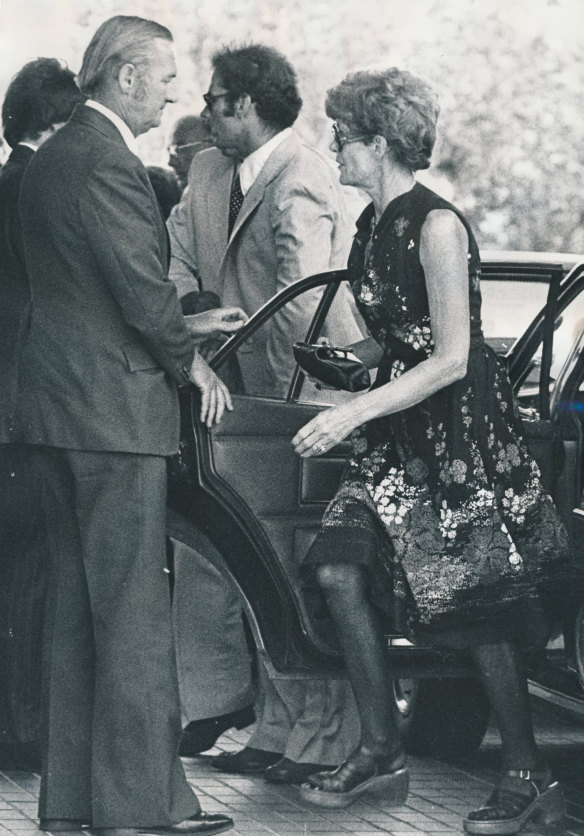
Susan Bartlett’s mother arrives at Springvale Crematorium for the service for her murdered daughter.Credit: Fairfax
“It was a different time and most people were very relaxed about security around the home. It was a time when you knew your neighbours and these types of crimes rarely happened,” he said.
Hiscock, who was one of the first detectives to discover the bodies, defended the police investigation.
Loading
“There were all sorts of information coming in, and much of it was unfounded or just rumour. But you have to remember, it was a time when there were no CCTV cameras, no DNA evidence and no database for fingerprints,” he said.
Now 77, Hiscock said he was stunned to learn of the arrest of Perry Kouroumblis in Rome on Friday.
“I never thought it would happen. I honestly thought too much time had passed.”
Read the full article here