




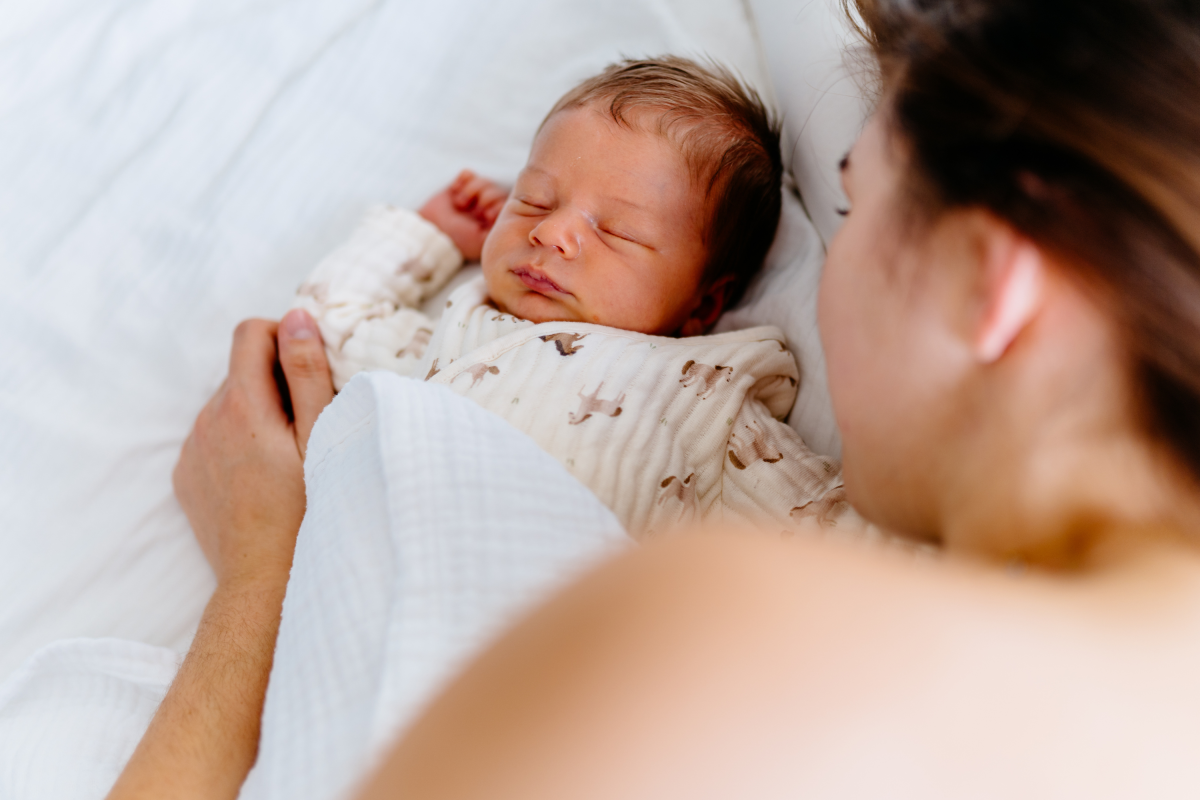
A mother has shared the “11 rules” she followed after giving birth to her second child—practices she says may seem unusual in modern Western culture, but are rooted in traditional postpartum care.
Chantal Wijbrandi, 38, and from the Netherlands, told Newsweek that her list included:
Other practices involved belly binding, herbal sitz baths, and prioritizing rest, nourishment and community support.
Wijbrandi, who has two children—Lilian, 4, and Lars, 17 months—with her husband Wietse, said she began exploring the practices after an intensive period of research following her first birth.
“After my first birth and difficult isolated postpartum experience, I went on a deep dive into postpartum culture across the world,” she said.
“I also started training to become a Holistic Postpartum Practitioner and became fascinated by the fact that almost all traditional and indigenous cultures share really similar postpartum practices like extended rest, warm nourishing foods, prioritizing bonding, and community.”
Wijbrandi pointed to traditions such as China’s “sitting the month,” Latin America’s la cuarentena, South Africa’s Zulu umsamo (reflecting her own heritage), and Europe’s historical “lying-in” period.
Her first postpartum experience, she added, was marked by a traumatic birth, lack of support and a belief that she needed to manage alone.
“I genuinely believed that being independent and not needing anything from anyone meant I was a good mom,” she said. “But I ended up feeling so alone, overwhelmed, and unprepared.”
Wijbrandi described experiencing postpartum rage and resentment, particularly as she adjusted to the demands of new motherhood without a wider support network.
By her second pregnancy, she said she was determined to approach postpartum recovery differently.
“I was really intentional about preparing for the experience to be peaceful and sacred,” Wijbrandi said.
“I wanted to just be able to rest and soak up the newborn bubble and feel connected in my relationship.”
Wijbrandi said the key difference between traditional and modern postpartum care is where attention is placed.
“Traditional cultures tend to center the mother after birth, whereas modern Western culture tends to center the baby,” she said.
“We have elaborate baby showers and gender reveal parties, and spend thousands on Pinterest perfect nurseries and as soon as the baby is born, everyone disappears back into their own lives and a new mom is left alone.”
Chantal, who posts on Instagram as @becomingthismama, outlined the practices in a reel, highlighted these three as having the biggest impact: rest, nourishment and community.
“Taking it slow the first 40 days was incredible for my physical healing,” Chantal said. “I really learned to reach out and be super specific about what I needed from my family and friends. I said no toys, just bring us food, keep me company and invest in my postpartum fund. I felt so held and supported.”
For mothers who may feel skeptical, she urged a shift in perspective.
“Ask yourself why being supported and loved on feels like a lot after you have been pregnant,” she said. “My advice is you should demand it. It’s your birth rite and it’s the bare minimum.”
Read the full article here