



In the hours before Helena Wright’s body was pulled from the waters off South Australia’s Limestone Coast, police received a call from her friend.
The details of that call are not publicly known, but it was enough to prompt a welfare check at the 36-year-old’s Compton home, on the outskirts of Mount Gambier.
The call came at 9.28am on Monday, and when police knocked shortly after, no one answered the door. No one was home.
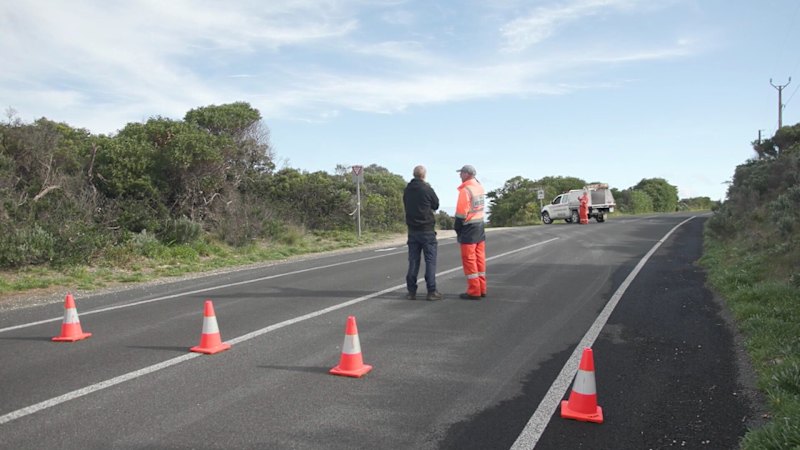
Less than two hours later, reports from the public led police to find a vehicle parked on a clifftop at Cape Northumberland, near Port Macdonnell, a 30-minute drive from Wright’s home.
The vehicle was empty, but its engine was still running.
Then, in the treacherous waters below South Australia’s southernmost point, police and local fishermen found Wright’s body, and the body of her 23-month-old daughter. Her three-month-old son could not be found.
As emergency services, community members, friends and family grapple with the tragic deaths and what led to them, police have confirmed Wright had visited a police station the day before, they believe she took her life, and the lives of her two young children.
“South Australia Police can confirm Helena Wright attended the Mount Gambier Police Station on Sunday 26 July where she spoke with police,” a police spokesperson confirmed to this masthead on Wednesday night.
“As this matter is now subject to a coronial investigation, SAPOL will provide all relevant information and evidence to the coroner. It is not appropriate to comment further while coronial proceedings are underway.”
Volunteers battled the harsh weather conditions for days, trying to find the body of Wright’s youngest child. On the water, on land and in the sky, help came from across the state and Victoria in the hopes of finding the baby. While Superintendent Trent Cox on Monday admitted it would be unlikely the infant would be found alive, he said he was holding out hope.
The last glimmer of that hope had faded when he again faced the waiting press pack on Wednesday, standing in the rain to announce the search would be unlikely to yield any positive result. Later, police confirmed they would cease searching altogether and, based on expert advice, declared the baby “could not have survived the period of time that has elapsed, either in the water or on land”.
“Additionally, a range of factors, including the search environment and prevailing weather conditions, significantly reduce the likelihood of locating the infant in the immediate term.
“The reality is, after three days, the chances of finding the baby alive are zero, sadly,” Cox said. “It’s a retrieval effort, but we don’t know where he is.”
Cox confirmed that, after days of investigation, the evidence police had gathered suggested no one else was believed to be involved in the deaths, and said the matter was now being handled as a murder-suicide.
When asked if Wright had been turned away by police when she visited the Mount Gambier station on Sunday, and told to come back another day, Cox said he wouldn’t “confirm anything or deny anything”.
“Any contact with police will form part of the brief that we provide the coroner,” he said. “I’m not aware of anything that I can release to you about the mother’s mental state or her personal medical issues.
“The investigation of any death is very delicate, but when it involves children as young as 23 months and three months, it adds another layer of complexity, but also trauma for those who are involved.
“It’s delicate in a number of ways. Obviously, the welfare aspect for my staff and for our volunteers. Also recognising it’s a local family.”
To those speculating on the tragedy without knowing the facts, Cox warned against adding to misinformed commentary.
“Public commentary without the facts is always dangerous,” he said. “Misinformed commentary doesn’t help anyone.”
To the wider community, who are struggling to come to terms with the circumstances of the deaths, Cox’s message was clear: “Wrap your arms around each other.”
“Look after yourselves, look after your loved ones,” he said. “Give your kids an extra tight hug.
“It will affect the community whether they have children or not because the deaths of such young children and a mother in these circumstances is tragic on so many levels.”
From our partners
Read the full article here