


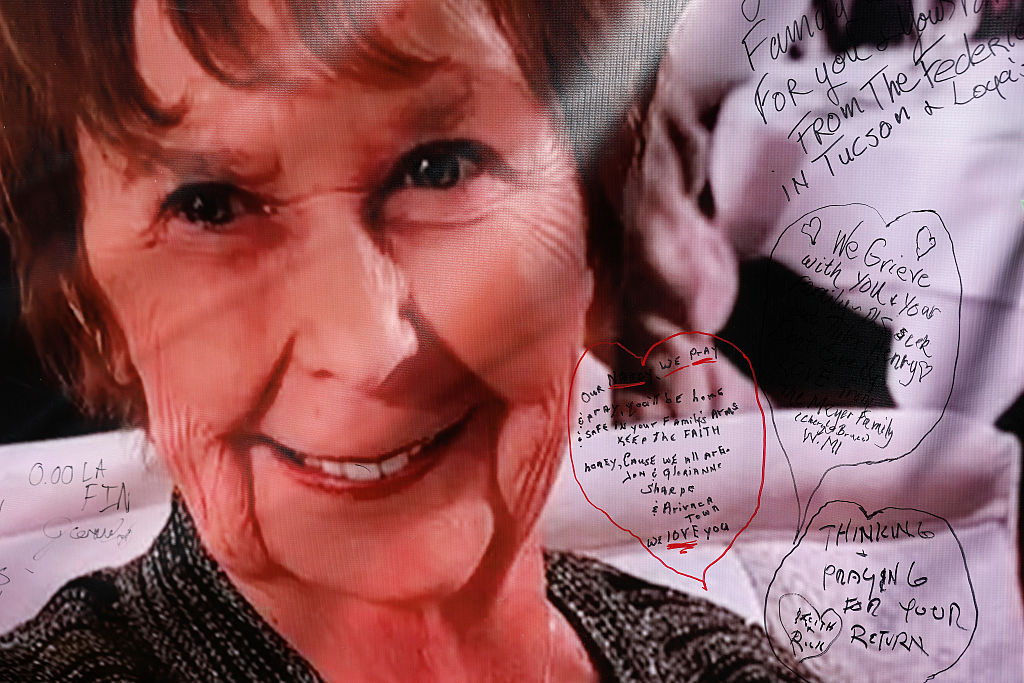
A new anonymous tip suggesting Nancy Guthrie’s remains may be buried near the Mexico–Arizona border has pushed investigators to reassess one of the most complex missing‑person cases of the year.
Authorities still have no confirmed remains, a factor that could shape whether this becomes a prosecutable homicide case. The uncertainty leaves Guthrie’s family—and the Tucson community—waiting as investigators weigh forensic evidence, digital data, and expert guidance on how to proceed without a body.
Experts tell Newsweek that a no‑body case is still legally viable, but only if investigators can assemble a chain of circumstantial and forensic evidence strong enough to prove Guthrie is dead and that a criminal act caused her disappearance.
When Did Nancy Guthrie Go Missing?
Nancy Guthrie, 84, vanished from her Tucson, Arizona home overnight between January 31 and February 1, 2026. Investigators quickly determined she had not left voluntarily: her pacemaker disconnected unexpectedly, blood was found on her porch, and surveillance footage captured a masked, armed individual near her front door in the early morning hours.
Her disappearance triggered a multi-agency search involving the FBI, Pima County Sheriff’s Department, and specialized forensic teams.
Criminal defense attorney Michael T. van der Veen says these early disruptions matter because they help establish the “body of the crime,” even without physical remains.
“Prosecutors can prove it circumstantially because judges give a jury instruction… that circumstantial evidence is just as strong or stronger than direct evidence,” van der Veen told Newsweek. “Through the circumstantial evidence, the prosecutor can prove the corpus delicti, or ‘body of the crime.’”
He added that Guthrie’s age and medical needs make voluntary disappearance highly unlikely: “She was 84 years old with a pacemaker and required daily medication… the odds that she voluntarily went missing are very low.”
Timeline of Nancy Guthrie Case
- Jan. 31, 5:32 p.m. – Guthrie arrives at her daughter’s home for dinner.
- 9:48–9:50 p.m. – Family drops her off at her home; garage opens and closes.
- Feb. 1, 1:47 a.m. – Doorbell camera disconnects.
- 2:12 a.m. – Surveillance software detects a person near the property.
- 2:28 a.m. – Guthrie’s pacemaker app disconnects, a key timestamp for investigators.
- 11:56 a.m.–12:03 p.m. – Family checks on her after she misses virtual church; they call 911.
- 12:15 p.m. – Deputies arrive, find signs of forced entry and blood at the scene.
- Feb. 2–3 – Ransom notes demanding Bitcoin surface; case becomes public.
- Feb. 4–6 – Guthrie’s children issue emotional pleas; reward increases to $50,000.
- Feb. 10 – FBI releases footage of a masked suspect carrying a Walmart-exclusive backpack.
- Feb. 13 – SWAT detains three people near the home for questioning; no charges filed.
- June 11 – A YouTuber is arrested outside the Guthrie home after repeated disturbances.
- June 2026 – Anonymous tip claims Guthrie’s remains may be in Nogales, Mexico; investigators assess credibility.
Arrests Made Near Nancy Guthrie Home: What We Know
The only arrests publicly linked to the case involve Alexander Zabel Jr., a YouTube personality who repeatedly livestreamed outside Guthrie’s home.
Deputies arrested him on June 11 after multiple complaints from neighbors and an incident in which a sergeant was knocked to the ground. Zabel faces charges of resisting arrest and public nuisance.
Authorities emphasize that these arrests are not connected to Guthrie’s disappearance.
Are There Any Suspects Associated with the Case?
No individual has been formally named a suspect. However, investigators are focused on:
- The masked individual captured on Guthrie’s doorbell camera
- DNA from a glove found near the home, belonging to an unidentified male
- A 25‑liter Ozark Trail backpack, sold only at Walmart, carried by the suspect
The FBI is reviewing purchase records, surveillance footage, and digital forensics to trace the bag and identify the person seen in the video.
How a No-Body Case is Fought
Former police officer and criminal investigation professor Daniel K. Maxwell says investigators must first prove a homicide occurred — even without a body — and then link a specific person to it.
“The essential elements to prove… are that a crime has been committed and the person arrested was responsible for the crime,” Maxwell told Newsweek. “This would also include eliminating all non‑criminal causes.”
He notes that in no‑body cases, physical and behavioral evidence becomes even more important. “There is a premium on any physical evidence,” he said. “Direct evidence includes photos, videos, and eyewitness testimony. Indirect evidence includes fingerprints, blood, hair, fibers. Circumstantial evidence also plays a big part… including suspect behavior both prior to and after the disappearance.”
What’s Next
Regarding the new tip from Mexico, Maxwell says investigators follow a clear standard.
“Assessing the credibility of a tip includes specificity, plausibility, and consistency with the facts of the case. The more detailed and verifiable the tip, the better.”
He adds that someone becomes a suspect only when the evidence reaches the legal threshold for arrest. “What usually moves someone into the suspect category is a combination of evidence… that points toward the probable cause threshold.”
Read the full article here