


More than 2.6 million Australians are forecast to be living with a cancer diagnosis by 2050 – an increase of 1 million people over the next 25 years.
For the first time, researchers have used scientific modelling to estimate the prevalence of cancer in Australia in the future, including those in active treatment and people who have survived the disease, but require ongoing care.
The study, published in The Lancet Regional Health Western Pacific medical journal, predicted breast cancer would be the nation’s most prevalent cancer in 2050, followed by prostate, melanoma, colorectal and kidney cancer.
Almost 1.7 million Australians have cancer or are in the post-treatment phase of the disease, but by 2050, researchers have predicted the total number of people living with cancer will rise by 57 per cent to more than 2.6 million.
Currently, the nation’s population is about 28 million, but by 2050, the Australian Bureau of Statistics estimates it could grow to between 32 and 38 million, depending on fertility rates, migration and life expectancy.
Population growth, a rise in ageing Australians and a soaring incidence of certain cancer types are expected to prompt a surge in people being diagnosed.
Roughly 44 per cent of the 2.6 million Australians forecast to be living with cancer by 2050 are expected to have an incurable cancer that will require ongoing treatment.
“Our projections suggest that in 2050, while more than half of people with a past cancer diagnosis will be potentially cured (1.47 million), about 1.15 million people will be living with cancer (cancers not yet cured) and requiring active treatment or ongoing care,” the researchers wrote.
But in hopeful news, researchers predicted that in the future, cancer survival rates would improve thanks to earlier detection and advancements in treatments such as pioneering immunotherapy. They predicted this would lead to a record rise in people living longer with the disease or being declared “cancer-free” following treatment.
Professor Michael Jefford, a co-senior author of the research, and the director of the Australian Cancer Survivorship Centre at Peter MacCallum Cancer Centre, said national survival rates had improved remarkably in the past 20 years.
“The five-year survival rate for all cancers in Australia is over 70 per cent, which is the highest it’s ever been,” the medical oncologist said.
“People are having cancer detected at an early stage and at a stage where it can be cured.”
Jefford said while the number of cases diagnosed would continue to climb, the research highlighted a “huge” increase in cancer survivors, many of whom would have other illnesses or ongoing health issues as a result of the disease or their age.
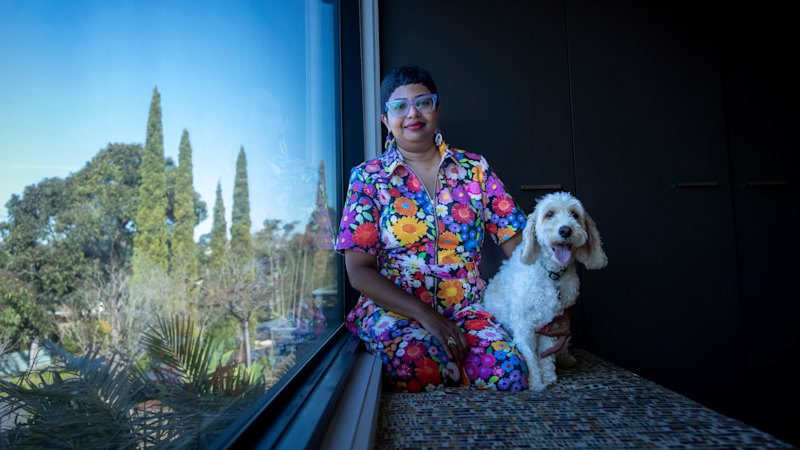
Melbourne woman Naveena Nekkalapudi was diagnosed with breast cancer in 2014 at age 39.
Nekkalapudi is now cancer-free and counts herself lucky. But bouts of intensive chemotherapy permanently damaged her nerves, leading to a condition known as peripheral neuropathy.
“In my case, it’s ongoing chronic pain, it’s pins and needles, it’s shooting and burning pain,” she said. “I call it the gremlins jabbing a pin into my big toe at night … you can’t do anything about it.”
For more than eight years, Nekkalapudi, 51, needed a pain management specialist, and she continued to take medication to control her symptoms.
Jefford warned an overhaul of Australia’s healthcare system was urgently needed to meet the mounting demand.
He said managing the large numbers of people surviving or living with the disease would require new models of care. This could include care led by general practitioners or nurses, and remote monitoring of lower-risk patients to ease pressure on hospitals and cancer centres.
“We know that survivors have significant unmet needs and that existing models of care do not adequately manage these,” Jefford said.
“Survivorship care should focus not just on surveillance for possible recurrence and second cancers but should also focus on the management of physical and psychosocial issues, health promotion and disease prevention, and management of chronic health conditions.”
Nekkalapudi, who is a carer for her mum who has also survived breast cancer, called for a focus on early prevention of the disease.
She also wanted patients to be provided support “before, during and after” treatment to help them prevent or manage any long-term toxicity complications, which might arise as a result of their treatment.
The study was a collaboration between Melbourne’s Peter MacCallum Cancer Centre, the University of Sydney, the Daffodil Centre and the Cancer Council NSW.
The study’s lead author, University of Sydney’s Associate Professor Qingwei Luo, said the findings demonstrated that cancer was increasingly becoming a long-term, chronic condition rather than a short-term illness.
However, the epidemiologist at the Daffodil Centre, a partnership between Cancer Council NSW and the University of Sydney, warned the largest increase in cancer prevalence was predicted to occur among Australians aged 80 and over, a demographic projected to more than double from 481,000 in 2025 to more than 1 million by 2050.
“Many of these [people] will have complex needs, multiple chronic conditions, and long-term treatment effects,” Luo said.
Breast cancer is projected to be Australia’s most prevalent cancer in 2050, with more than 485,000 cases up from 298,109 in 2025. This is predicted to be followed by prostate cancer, which researchers estimate will increase from 309,663 cases to 468,991 in the next 25 years.
Meanwhile, melanoma cases are forecast to reach 331,909 and colorectal cancer cases are forecast to rise to 237,053. The number of people being given a kidney cancer diagnosis is also set to increase by 121 per cent, soaring from 48,908 last year to 108,101 cases in 2050.
The increase in diagnoses is due to more people living beyond the age of 60, and more people living longer with the disease due to targeted therapies and early detection.
These five conditions would account for more than 62 per cent of all Australians living with or beyond a cancer diagnosis by mid-century, the researchers said.
Start the day with a summary of the day’s most important and interesting stories, analysis and insights. Sign up for our Morning Edition newsletter.
 Melissa Cunningham is a health reporter for The Age. She has previously covered crime and justice.Connect via X or email.
From our partners
Read the full article here