


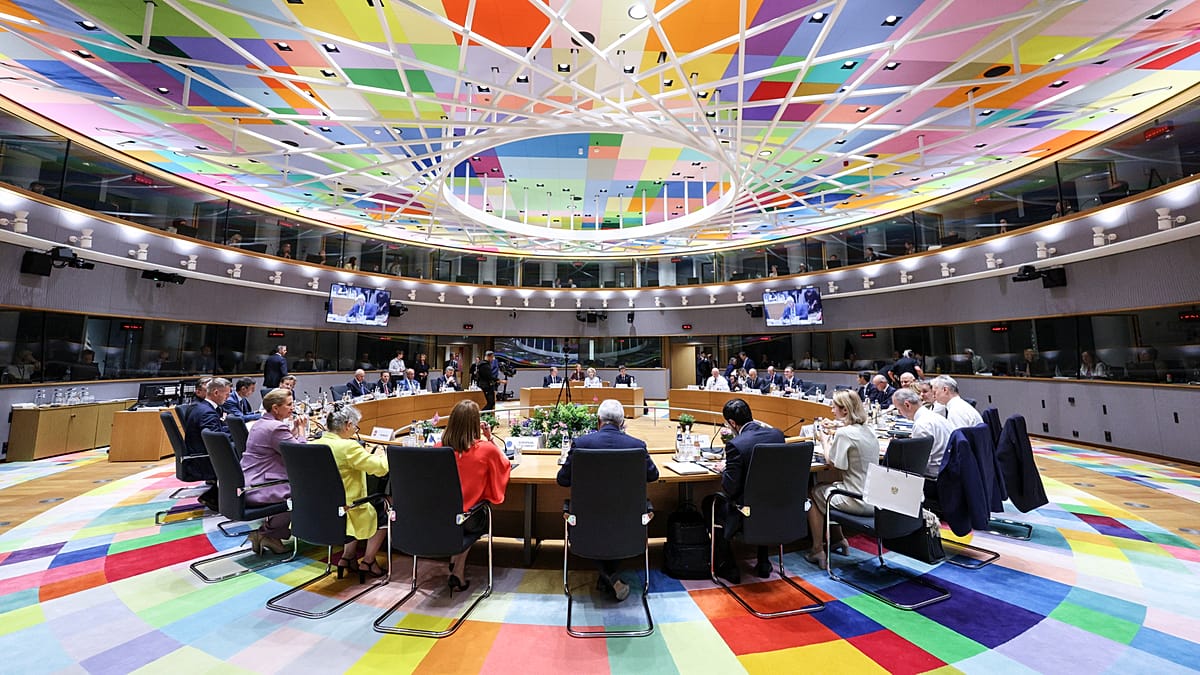
Good morning from Brussels, where the second day of the EU summit is getting underway. I’m Mared Gwyn.
Let’s first bring you up to speed on last night’s EU summit talks, which dragged on longer than expected and were dominated by European Council President António Costa‘s surprise decision to lay the groundwork for talks with the Kremlin by opening a diplomatic channel to Moscow.
As my colleagues Jorge Liboreiro and Maria Tadeo report, several leaders expressed concern that they had not been consulted before Costa’s chief of cabinet, Pedro Lourtie, held phone calls with a top aide to Russian President Vladimir Putin.
Yet an EU official said that “a number of leaders” indicated that Costa would be the “natural representative” of the bloc’s interests, suggesting there is some support for potentially appointing him as a special envoy for direct talks with Russia. The Belgian Prime Minister, Bart de Wever, one of the leaders who has backed talks with Moscow, later supported Costa’s potential role in peace negotiations.
The official also said that the aim was to “be ready, when the right moment comes, to defend the EU’s interests”, as the bloc does not currently consider Russia ready to engage. Jorge and Maria have a full analysis.
Meanwhile, Ukrainian President Volodymyr Zelenskyy, who joined the first phase of the talks last night, urged leaders to allow the remaining phases of Kyiv’s EU membership negotiation to be opened in the coming weeks, and to eventually endorse Kyiv’s fast-track membership bid, something that continues to divide leaders. Our Ukraine correspondent Sasha Vakulina has more.
Getting tough on China: The second core issue on the menu last night was the EU’s response to unfair Chinese trading competition, with leaders agreeing to give European Commission President Ursula von der Leyen a mandate to develop new tools to contain the increasingly devastating effects of the glut of low-cost, heavily subsidised goods coming from China.
Von der Leyen, considered a China hawk, has already held a debate with her top team of Commissioners on the kind of instruments that could be used to re-balance the EU’s ballooning trade deficit with China, which last year reached a staggering €360 billion. They include anti-dumping and anti-subsidy duties, and tariffs targeted at specific sectors.
But uniting all 27 members around a common response will require a significant effort, as some capitals are sceptical about escalation into a trade war, with Beijing already threatening to retaliate if Brussels goes down the assertive road.
Today, talks shift to money: Today’s discussions are expected to focus on the thorny issue of the EU’s next long-term budget, known as the Multi-Annual Financial Framework (MFF), which is splitting countries firmly into two camps of frugals calling for cuts and free-spending nations informally dubbed the ‘Friends of Cohesion’ who want money for agriculture to be preserved.
As our economy reporter Eleonora Vasques explains, a first proposal by the Cypriot EU Presidency (known as the nego-box) pitching a €32.8 billion to the overall €2 trillion pot originally tabled by the European Commission has been firmly rejected by the frugals, with the Dutch rejecting the pitch as a “no-go box”.
Speaking to Euronews live from the summit on Thursday evening, Sweden’s Minister for EU Affairs, Jessica Rosencrantz said that while she welcomes the proposal’s focus on security and competitiveness, the volume is “way too high” and “needs to come down substantially”.
“From the Swedish point of view, we want a budget that’s around 1% of GNI, so that’s a substantial decrease,” she added. “A lot of member states are doing tough priorities back home, the EU needs to do the same. It’s about taking responsibility for taxpayers’ money.”
Yet the so-called “Friends of Cohesion”, which includes 16 governments, are likely to stand firm, meaning tough negotiations ahead. There is also a sense of urgency to get the deal closed as soon as possible for fear that major elections in countries such as France and Poland could torpedo the talks next year.
You can keep up to speed with all the action from the European Council today on our live blog.
In other news this morning: A planned Memorandum of Understanding signing ceremony and talks in Switzerland between Iran and the United States over their efforts to reach a permanent peace deal have been delayed. Fighting between Hezbollah and Israel in southern Lebanon also continued overnight.
Kaja Kallas responds after Israeli foreign minister says he will ‘sever all contact’ with her
The EU’s foreign policy chief Kaja Kallas has responded to Israeli Foreign Minister Gideon Sa’ar’s threat to sever all contacts with her over comments she reportedly made comparing Israel to South Africa’s former racist apartheid regime.
Speaking to reporters upon her arrival to the EU summit on Thursday evening, Kallas sought to take the heat off the dispute, without confirming or denying her reported comments. “We don’t always see eye to eye with the Israelis,” she said.
“I’ve had very good, open, frank and sometimes very difficult discussions with Minister Sa’ar that I found very constructive. We are willing to continue with this, but we can’t deny the criticism,” Kallas added.
Earlier on Thursday, Sa’ar posted on social media that Israel had not received a “denial, clarification or response” in relation to her “severe statement”, concluding that he had “no choice but to sever all contact” with Kaja Kallas.
Nathan Rennolds has the details.
More from our newsrooms
Foreign aid cuts and climate change pushing up migrant flows, IOM chief warns. Cuts in development aid by wealthy countries tend to drive up displacement away from the world’s poorest regions, the head of the UN’s International Organisation for Migration warned on the sidelines of the Berlin Climate Mobility Forum on Thursday. Gavin Blackburn has more.
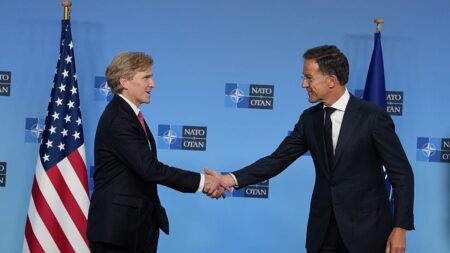
Hegseth announces review of US forces in Europe as he lambasts NATO allies in Brussels meeting. US Defence Secretary Pete Hegseth lashed out at NATO allies on Thursday as he announced a six-month Pentagon review of his country’s forces in Europe whose outcome will depend on how fast the Europeans take responsibility for their own security. Malek Fouda has more.
We’re also keeping an eye on
- EU leaders continue summit talks. Focus shifts to the EU’s long-term budget.
- European Parliament President Roberta Metsola travels to Munich, Germany.
That’s it for today. Jorge Liboreiro, Maria Tadeo and Sasha Vakulina, Eleonora Vasques contributed to this newsletter.
Read the full article here