




There is a certain illogic in the great immigration debate. Much is said about the need to contain the number of migrants admitted to Australia, but little, if anything, is said about the reverse migration of Australian jobs occurring under our noses (“Coles to outsource several hundred jobs to India”, August 8). Jessica Yun reports not only on Coles, but to a much wider practice. Large corporations including Qantas, BWS and Telstra have also moved Australian jobs offshore. This produces some of the same economic consequences that dominate the immigration debate, but in reverse. The workers never arrive in Australia, never participate in our communities and pay no Australian income tax, yet Australian jobs and the income associated with them have moved overseas. Large businesses take advantage of offshoring because it reduces their costs, yet those savings seldom seem to translate into lower prices for Australian consumers. Instead, the benefits accrue largely to the corporations and their shareholders, while Australian jobs, wages and taxation revenue disappear offshore. If governments are genuinely concerned about the economic consequences of migration, perhaps they should pay rather more attention to the migration of Australian jobs. Chris Rivers, Port Macquarie
Labor’s complacency
Nick Bryant’s piece on Pauline Hanson is depressing (“Like her soulmate Trump, Hanson hasn’t flamed out. We need to understand why”, August 8). I think that the main reason for her rise in popularity is the uselessness of the major parties. Labor just doesn’t listen when it should. When the Voice referendum was not facing bipartisan support, Albanese still proceeded with it. The climate is in peril, but they continue to approve new mines. Serious gambling reform is supported by a vast majority, but Labor is not listening. The Coalition is on life support. Meanwhile, the independents are increasingly relevant, suggesting taxation reforms, housing initiatives and leading the charge against pathetic gambling reforms. Before backing Hanson, we should do whatever we can to elect enough independents to both houses, and gift them the balance of power. Labor’s crushing win at the last election has rendered them complacent and they deserve a kick in the pants. Tom Meakin, Port Macquarie
It’s interesting to see all of these new One Nation candidates popping up and claiming to fight for the ordinary voter (“One Nation takes the fight to Andrew Hastie”, August 8). They’re all banging the drum loudly but their policy cupboard is still bare and they’re backtracking quickly on their personal history of conspiracy theories. And in Andrew Hastie’s electorate they are inciting the mob against him for giving evidence in the Ben Roberts-Smith defamation case. Talk about witch hunts. And these people propose to govern our country? Tell ’em they’re dreaming. Ian Ferrier, Long Jetty
Your headline (“Hanson used party funds for her lavish trip”, August 8) reminded me of the Lesley Gore hit in the 60s It’s my party and I’ll cry if I want to. Fast-forward to 2026 and Pauline Hanson could have an even bigger hit with It’s my party and I’ll do what I want to. Robert Pallister, Punchbowl
Slavery stand-off
NSW Nationals leader Gurmesh Singh has opted for the oldest tactic in the political playbook – if you are unhappy with the message, attack the messenger (“Untenable: Nationals leader calls for anti-slavery commissioner to quit over Labor donations”, August 8). Dr James Cockayne has alerted us to the extent of exploitation and modern slavery in some sectors of horticulture, particularly on the Mid North Coast. It is shameful and it needs to stop. A more appropriate response from the Nationals leader would have been a joint press conference, standing side by side with the commissioner and pledging support for effective measures to combat a human rights tragedy happening in his electorate. Tony Judge, Woolgoolga

Price of climate resilience
Given the world’s current emissions trajectory, we can expect at least another 0.5 degrees of warming by the end of the century (“Ready or not: How can we prepare for a hostile climate?,” August 8). Hence, it is imperative that we start preparing for what is to come. The question is, who will foot the bill? Certainly, the fossil fuel companies will not want to do so, but this goes against the principle of “polluter pays”. Those companies are not just causing the problem, they have spent years trying to convince us that it doesn’t exist. Now they must pay the price. For every tonne of carbon they emit, via the coal, gas and oil they produce, they must contribute to a fund that will be used to render the nation more resilient to climate change. Hopefully, that will be enough to persuade them to join the energy transition, rather than stand in its way. Ken Enderby, Concord
The Good Weekend series shows how little co-ordination we have in this country when it comes to planning for and dealing with the effects of climate change. Climate Change Minister Chris Bowen blames our federation: “Federal government can provide a framework … but not lead adaptation efforts.” Nick Reece, Melbourne’s Lord Mayor, sums up the problem: “The federal government has all the money, the state government has all the laws, and the local government has all the problems.” Until our prime minister recognises the urgency of climate adaptation and forms a cohesive and unified body to actively build our climate resilience, time, effort and money will continue to be wasted. And worse, we simply won’t be prepared. Andrew Raymond, Parramatta
We absolutely need to prepare and adapt to a rapidly changing climate. The Climate Council reported that between 2019 and 2023, 80 per cent of Australians experienced some form of climate-related disaster. Half of them said their mental health was also significantly affected. This will only get worse. The science is clear, the risks are documented and the need for action is urgent. What’s missing is sustained funding. A levy on big coal and gas producers, whose pollution drives much of the risks and damage, could help pay for the resilience measures communities now need. The Albanese government needs to implement practical ways to build a safer future for all Australians. There is no time to waste. Karen Lamb, Geelong (Vic)
Australia may generate just 1 per cent of global emissions directly, but our coal and gas exporters make us the indirect source of 4.5 per cent. We rank fifth in the list of 15 countries responsible for nearly 80 per cent of oil and gas extraction worldwide since the Paris Agreement. Appallingly, we lead all 15 for rate of gas and oil production increase, which are up 77 per cent, including a doubling of gas production. And we don’t even tax these planet wreckers properly. I am angry and ashamed at the harm we have inflicted on the world. Lesley Walker, Northcote (Vic)
Despicable slur
I wouldn’t say I was a member of the Gina Rinehart fan club, but I certainly agree with her that the ABC’s revolting and humiliating segment in its Race Around The World program deserves further action ( “Hancock slams ‘dehumanising’ ABC Rinehart skit despite apology”, August 8). ABC boss Hugh Marks made a belated and somewhat mealy-mouthed apology, but the most disturbing aspect of this is that the ABC itself said the insult was within its guidelines for “satirical and exaggerated commentary”. This is the clearest demonstration that the ABC’s standards need a total overhaul to drag them out of the murk into which they have sunk. What was said about Rinehart was a despicable slur and had it been said about me, I would not only sue but demand significant compensation. Lance Dover, Pretty Beach
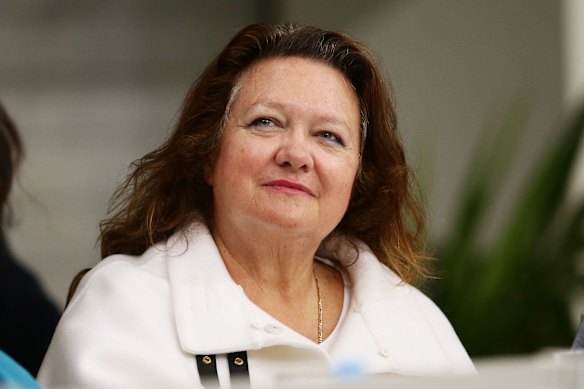
Gina Rinehart said she felt dehumanised by the Race Around The World skit featuring her. Rinehart has the hide of an elephant to demand an apology from the national broadcaster when she herself continues to support the racist views of her friend, One Nation Party leader Pauline Hanson, who for 30 years has dehumanised Indigenous Australians as well as Muslim, Asian and African migrants. Eric Palm, Gympie (Qld)
Whether or not you like mining magnate Gina Rinehart, this Australian is entitled to her place in the sun without the disgusting segment on Race Around The World. We love and support the ABC, but have stopped watching RATW after this program. The segment was neither witty nor clever. Greg Lilly, Kincumber
As a fan of ABC’s Race Around The World, I was surprised to see the obscene reference regarding Gina Rinehart. The look on Leigh Sales’ face said it all. Those few moments should not have made the cut. I think that it was a desperate attempt to attract publicity for a clip that was wanting. Jan Strong, Sandigo
Pre-digital roaming
Julia Baird’s reflections on her youthful European travels brought back memories of my low-budget 1970s adventures there in my early twenties (“My daughter’s European backpacker odyssey is nothing like mine. That’s her loss”, August 8). A girlfriend and I broadly planned our nine-month itinerary, only specifying which city we would be in on a particular week each month. Before we left we snail mailed our itinerary to family and friends, including American Express office addresses, so we could collect letters there. In between our specified cities no one knew where we were. Phone calls home were way too expensive. We slept in youth hostels, our tent or combi, carried heavy backpacks and sleeping bags, seldom went to a café and took just one photo of each must-see sight to conserve our film. We gained a huge amount of self-reliance and confidence, shared experiences with fellow travellers from around the world and formed friendships that still stand 50 years later. It seems young travellers today often miss out on these amazing opportunities to grow and learn, negated by the ability to contact home at any time. Margaret Nash, Randwick
Ore else
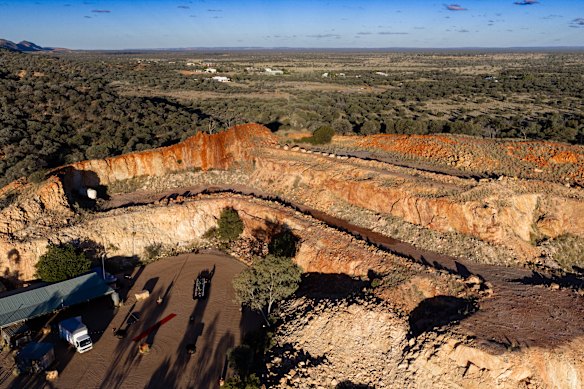
Australia has rare earths that are the next economic and military must-haves, and we are sitting on a fortune yet again. But as usual, we are getting ready to let foreigners with capital to invest to dig up the ores and export them in a completely raw form (“Pentagon ploughs $560 million into ‘world-first’ Australian mining project”, August 8). We shouldn’t get ourselves into anything like a Strait of Hormuz situation, but we certainly should cash in on more of our mineral wealth than we are accustomed to doing. The federal government should forbid the export of rare earths unless they have gone through at least one stage of the processing necessary for use elsewhere. And we should also ensure that this wealth is spread around the states. Grant Agnew, Coopers Plains (Qld)
Defined points
Jodie McGregor deplores the lack of affordable housing in the Minns government’s push to reach housing targets (Letters, August 8). What is missing from her letter is the fact that the government’s definition of “affordable” is housing that is leased for 80 per cent of its market value for 15 years. After that, the property reverts to market rates. The City of Sydney has an alternative definition – housing that is rented at 30 per cent of a household’s income, in perpetuity. In one proposed residential development in Pyrmont, one-bedroom apartments are selling off the plan for more than $1 million! Elizabeth Elenius, Pyrmont
The oddity
Being served in a bookshop, I noticed the name tag of the young employee read “Homer” (“What’s old is new as epic tale becomes a bestseller”, August 8). In an attempt to connect with the “youff” and appear jiggy with it, I asked him: “Were your parents fans of The Simpsons?” His deadpan reply: “No, of the classics.” I wanted to tell him I was familiar with The Odyssey, but it felt naff to backtrack, so I just stood there awkwardly, saying nothing. In hindsight, I should have just said, D’oh! Alicia Dawson, Balmain
Minor errors
Richard Glover is understandably traumatised by the childish actions of his now-adult sons. Me too (“Dear kids, your invoice is attached”, August 8). My son once hid treasure in his mouth during a solo game of “being hunted by pirates” and promptly swallowed it. X-rays revealed the treasure (a fake gold nugget) making its way through his alimentary canal – at which point his father went missing. It was “the mum” who for days had to dig for the nugget and scrub it up for class show and tell. Alison Stewart, Riverview
Byline bonds
I assume Mandy Burns of Lugarno (Letters, August 8) is the better half of letters contributor Col Burns. They join other published duos – the Bathurst Clydesdales, the Dulwich Hill Miltons and the Green Point Hickeys, among others. I now await Mrs Deeth of Como West to write in so we can join this exclusive club. Michael Deeth, Como West
Congratulations to Paul and Jennifer Fergus from Croydon – having lead letters published within the same week must be a first for the Herald (Letters, August 8, Letters August 6). Croydon seems to have unearthed some brilliant letter writers in recent years. Is it the water, the air or the relaxed village atmosphere of a still-beautiful suburb? Michael Walsh, Croydon
Wanna bet?
Correspondent Zuzu Burford is having a small punt that the PM will have changed gambling legislation before the next election (Letters, August 8). What are the odds? Tom Pinkey, Newtown
- To submit a letter to the Sydney Morning Herald, email letters@smh.com.au. Click here for tips on how to submit letters.
- The Opinion newsletter is a weekly wrap of views that will challenge, champion and inform. Sign up here.
Read the full article here